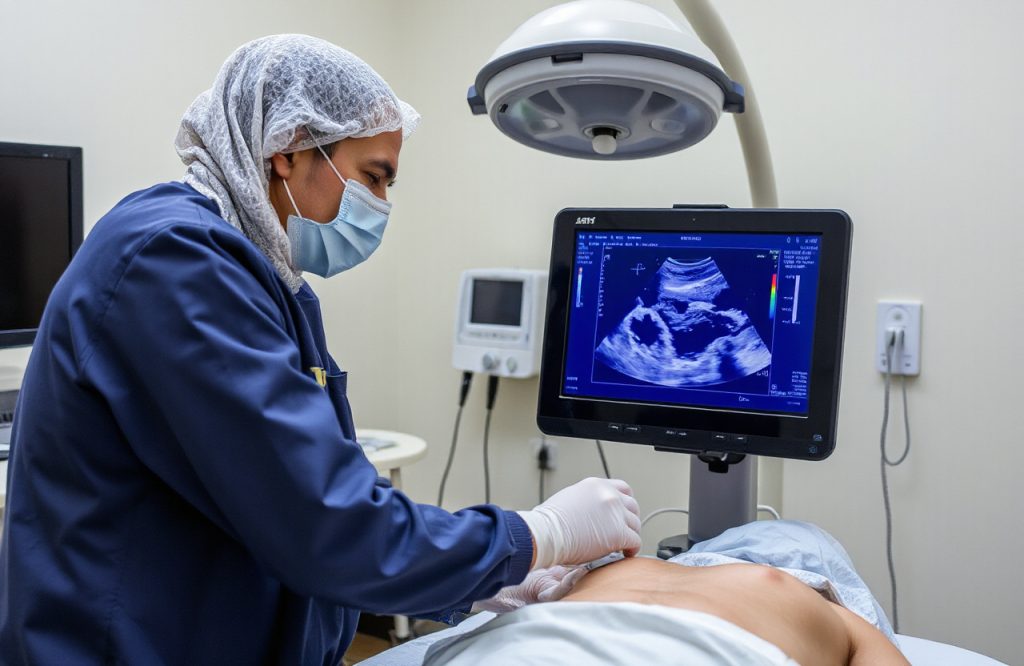
Innovative Focused Ultrasound Treatment for ALS at Sunnybrook Health Sciences Centre
Understanding ALS
Amyotrophic lateral sclerosis (ALS), commonly referred to as motor neuron disease, is a serious and fatal neurological disorder. As the condition advances, individuals with ALS experience paralysis due to the brain’s inability to send signals to the muscles. This deterioration leads to a loss of essential functions, including walking, talking, eating, swallowing, and eventually breathing. Currently, there is no cure for ALS.
Prevalence and Challenges
In Canada, approximately 3,000 individuals are diagnosed with ALS each year, with 250 new cases identified annually. Despite ongoing research, significant gaps remain in understanding the physical changes associated with the disease. Existing treatments only marginally slow disease progression, and many therapeutic delivery methods require invasive surgical interventions, which carry substantial risks.
A New Direction in ALS Treatment
Researchers at Sunnybrook Health Sciences Centre are pioneering a groundbreaking treatment approach using focused ultrasound to address ALS. The findings of this landmark trial were recently published in *Nature Communications*. This innovative method provides a direct, non-invasive way to access the brain, allowing for the testing of promising therapeutics aimed at slowing or halting disease progression.
Mechanism of Focused Ultrasound Therapy
Focused ultrasound therapy employs the power of up to one thousand sound waves. In this study, the therapy was applied at a low frequency to target specific brain areas. Microbubbles, injected into the bloodstream, begin to vibrate in response to the ultrasound. This gentle vibration temporarily opens the blood-brain barrier, which, while protective against toxins and bacteria, also restricts the delivery of beneficial medications and therapeutics for ALS patients.
Study Findings and Future Directions
The initial phase of the study aimed to demonstrate the feasibility and safety of this novel approach in humans. Results indicated that the focused ultrasound method effectively and safely opened the blood-brain barrier, with no serious adverse events reported among participants.
The next phase, set to commence in the coming months, will focus on delivering ALS-specific therapeutics and further exploring the direct-to-brain interaction enabled by this technique. The preliminary findings suggest that focused ultrasound could represent a significant advancement in the treatment of ALS patients.
References
Sunnybrook research helps take future treatment of ALS patients to a new level. Sunnybrook Health Sciences Centre website https://sunnybrook.ca/media/item.asp?c=1&i=1979&f=als-research-new-level. Accessed September 27, 2019.
Abrahao A, Meng Y, Llinas M, Huang Y, Hamani C, Mainprize T, Aubert I, Heyn C, Black SE, Hynynen K, Lipsman N, Zinman L. First-in-human trial of blood-brain barrier opening in amyotrophic lateral sclerosis using MR-guided focused ultrasound. Nat Commun. 2019 Sep 26;10(1):4373. doi: 10.1038/s41467-019-12426-9.
Image by Raman Oza from Pixabay.