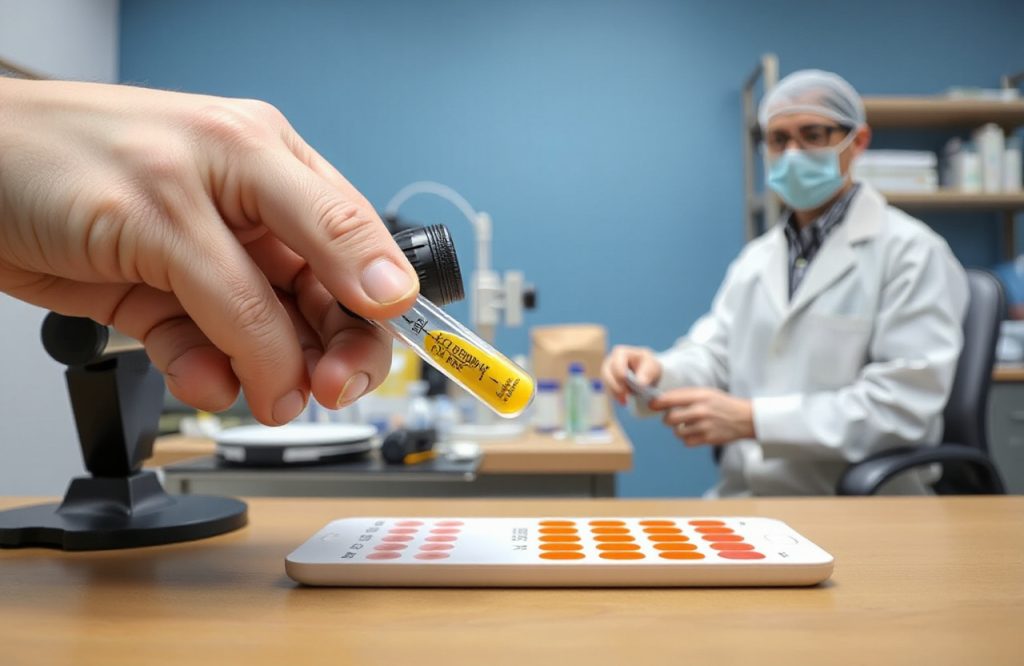
New Urine Test for Cancer Shows Promise in Mouse Study
Importance of Early Cancer Detection
A recent study involving mice has highlighted a potential breakthrough in cancer screening through a novel urine test developed by engineers from Imperial College London and the Massachusetts Institute of Technology (MIT). Early cancer detection is crucial, particularly for individuals in at-risk populations, as it significantly enhances patient survival rates and quality of life.
Challenges in Current Cancer Screening Methods
Despite the advantages of early cancer screening, existing methods can be costly and often necessitate multiple visits to medical facilities, which limits accessibility, especially for individuals residing in rural or remote areas. To combat these challenges, researchers are increasingly focused on creating point-of-care cancer detection technologies that are more affordable, faster, and user-friendly.
Development of the Novel Urine Test
The innovative urine test developed by the engineering teams from Imperial and MIT utilizes a unique chemical reaction that occurs within the body, eliminating the need for expensive laboratory equipment. Initial results from tests conducted on mouse models were published in the journal Nature Nanotechnology.
Targeting Colon Cancer
The research specifically targeted colon cancer, focusing on tumor proteins known as matrix metalloproteinases (MMPs). These enzymes are released by tumors to facilitate their growth and invasion into surrounding healthy tissue. The engineers designed a specialized nanosensor that is broken down by MMPs in the tumor’s environment.
Mechanism of the Nanosensor
Once the nanosensors are broken down by MMPs, they become small enough to be filtered through the kidneys, resulting in a chemical reaction that changes the urine color to blue. This color change is visible to the naked eye, indicating the presence of a tumor. In contrast, in healthy mice where MMPs are absent, the nanosensors remain intact and do not alter the urine color.
Testing and Results
To evaluate the efficacy of their technology, the researchers tested 28 mice, half of which had colon tumors and the other half were healthy. The results showed that mice with tumors exhibited bright blue urine, while the healthy mice displayed no color change.
Safety and Future Directions
The team ensured that the nanosensors were designed to evade detection by the immune system, minimizing the risk of immune reactions or side effects. Follow-up studies over four weeks revealed no adverse effects or residual nanosensor particles in the mice.
The initial findings of this urine test for cancer are encouraging and point to a promising future for point-of-care cancer diagnostics. Researchers are now focused on refining the formulation for easier administration and exploring methods to distinguish between various cancers and diseases.
Reference
Leung, M. (2019, September 3). Color-change urine test for cancer shows potential in mouse study. Retrieved from: https://www.eurekalert.org/pub_releases/2019-09/icl-cut090219.php
Image by PublicDomainPictures from Pixabay