New Methods for Identifying Depression and Anxiety in Children
Rising Rates of Internalizing Disorders
A recent study published in PLoS ONE highlights an innovative approach to identifying depression and anxiety in children. The prevalence of internalizing disorders, such as depression and anxiety, is increasing, with one in five children affected by these conditions, often beginning as early as preschool. Detecting these disorders can be challenging because children often struggle in silence, making it difficult for parents to recognize the symptoms. Without intervention, children with these issues may face serious consequences, including substance abuse and potential suicidal tendencies as they grow older.
Research Overview
Researchers from the University of Vermont, in collaboration with the Department of Psychiatry at the University of Michigan, explored various screening tools aimed at early detection of anxiety and other internalizing disorders in children. Their study involved 63 children, aged three to eight, all of whom were fluent in English and had caregivers over 18 years old. Children with existing developmental disorders, serious medical conditions, or those taking medications affecting the central nervous system were excluded from the study.
Methodology
Caregivers completed questionnaires and participated in clinical interviews, while the children underwent assessment in a separate room. During the evaluation, researchers utilized a mood induction task, which is a standard method for identifying specific behaviors and emotions associated with anxiety and depression. The children were mentally stimulated with prompts, such as “I have something to show you” or “Let’s be quiet so it doesn’t wake up,” before being introduced to a fake snake. The researchers reassured the children about the snake’s nature and encouraged them to touch it, during which their behaviors and reactions were recorded.
Data Collection and Analysis
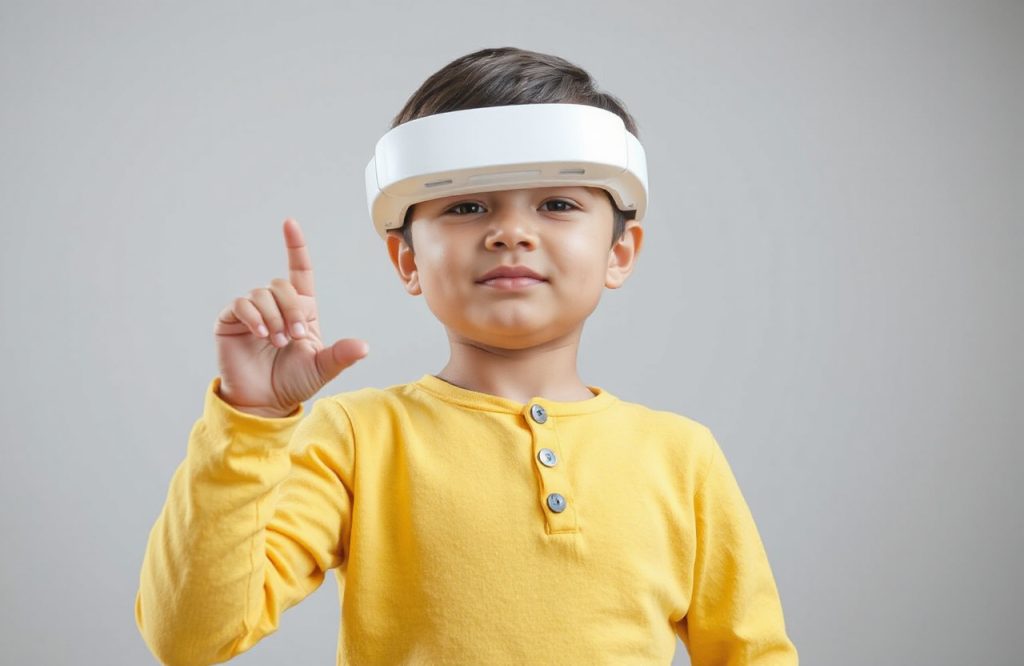
Participants received compensation for their involvement. Each child wore motion sensors to track their movements, and a machine learning algorithm was employed to analyze the data for signs of anxiety associated with depression. The machine learning approach demonstrated an 81% accuracy rate in distinguishing children with internalizing diagnoses from control subjects. Notably, the study found that just 20 seconds of data from wearable sensors could effectively indicate anxiety in young children.
Study Limitations and Future Research
The study acknowledged several limitations. One major issue is that children under eight years old are often unreliable reporters of their feelings, and parental assessments may not always accurately reflect the child’s issues. Additionally, the sample size was relatively small, suggesting that a larger group could enhance the understanding of how different types of disorders manifest in motion patterns.
The findings of this study lay the groundwork for future research. The researchers recommend further exploration of alternative device placements and the development of more sophisticated models to enhance detection performance.
Relevant Topics of Interest
– Smartphones more useful than wearables as remote patient monitoring devices
– Wearable devices can detect COVID-19
– Top Benefits of Wearable Technology in Home-Based Healthcare
– Can wearable devices screen for depression?
– Can activity tracker apps and wearable devices improve mental health treatment?
– Can wearable activity monitors help monitor cancer development?
– Do wearable defibrillators save lives?
References
McGinnis, R.S., McGinnis, E.W., Hruschak, J., Lopez-Duran, N.L., Fitzgerald, K., Rosenblum, K.L., et al. (2019) Rapid detection of internalizing diagnosis in young children enabled by wearable sensors and machine learning. PLoS ONE Retrieved from: https://doi.org/10.1371/journal.pone.0210267
Wakefield, J. (2019). Wearable sensor can detect hidden anxiety, depression in young children. University of Vermont. Retrieved from https://www.eurekalert.org/pub_releases/2019-01/uov-wsc011119.php