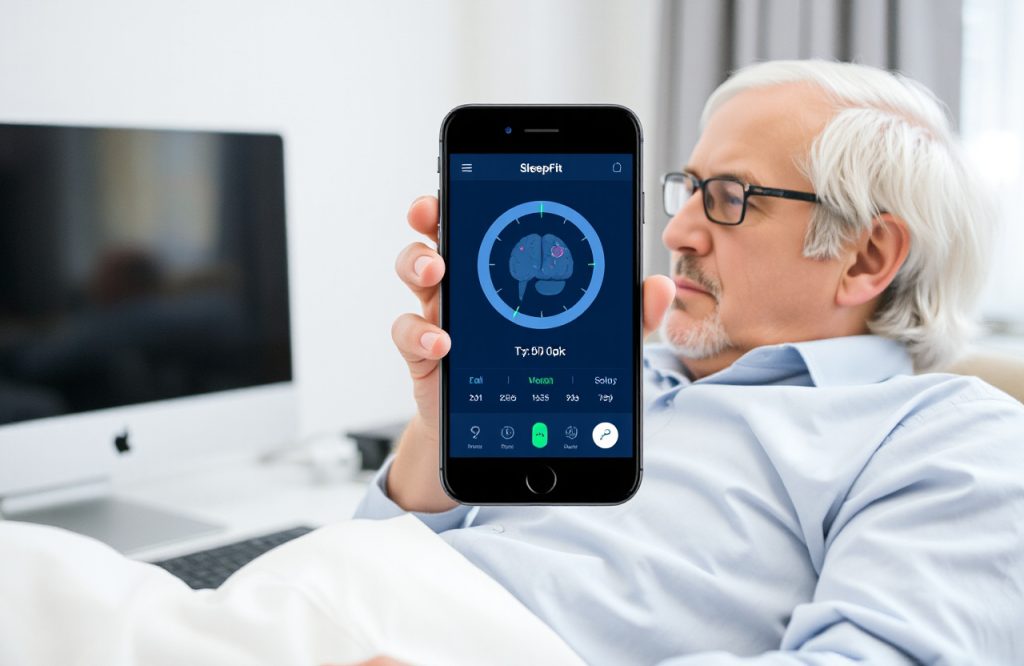
The SleepFit App: Enhancing Monitoring for Parkinson’s Patients
Introduction to Parkinson’s Disease
Parkinson’s Disease (PD) is characterized by motor symptoms such as tremor, muscular rigidity, and slowness in initiating and repeating voluntary movements. In addition to these physical symptoms, cognitive dysfunction that can impact memory is also common among patients.
The Challenge of Symptom Monitoring
For physicians, monitoring PD symptoms poses a significant challenge. Typically, patients report their symptoms during doctor visits rather than at the time of occurrence. This delay in reporting can hinder the effective management of the disease, as Parkinson’s medications are prescribed at their minimal efficient doses to optimize mobility while minimizing side effects. Tools that facilitate real-time symptom tracking would be invaluable for improving patient care.
Study Overview of the SleepFit App
Research Background
A recent study published in the Journal of Parkinson’s Disease explored the effectiveness of the SleepFit app, a home-based tablet application designed to record motor symptoms throughout the day. The study involved 42 patients with mild-to-moderate Parkinson’s disease, aiming to assess the app’s ability to enhance symptom reporting compared to traditional methods.
Functionality of the SleepFit App
The SleepFit app incorporates the motor portion of the Scales for Outcomes in Parkinson Assessment Diary Card (m-SCOPA-DC) and the Visual Analogue Scale (m-VAS). It allows patients to document their mobility regarding objective, subjective, and repetitive symptoms. Additionally, the reported data can be accessed remotely by physicians and researchers.
Study Methodology
Participants used the SleepFit app four times daily over a 14-day period to report their experiences related to hand dexterity, walking, position changes, involuntary movements, and overall mobility while engaging in daily activities at home. Following this period, patients were asked to recall their symptoms during an office visit with a neurologist, where the Movement Disorders Society Unified Parkinson’s Disease Rating Scale (MDS-UPDRS) quantified their mobility levels.
Results and Findings
After matching the questions and scales from the SleepFit app with the office consultation outcomes, the researchers analyzed the differences using the Root Mean Square Difference (RMSD) method. A difference of 0% indicated perfect agreement, while a difference of at least 20% suggested a significant change in agreement between the scales. The findings revealed notable discrepancies between real-time symptom reporting via the app and the retrospective reporting during doctor visits, particularly in patients with more advanced stages of Parkinson’s disease.
Implications of the Study
Benefits of Real-Time Reporting
The study highlighted the advantages of using home-based, real-time symptom tracking, especially for patients facing cognitive difficulties or those who tend to inaccurately report their symptom severity. Accurate real-time reporting can significantly enhance physicians’ ability to prescribe appropriate medications, optimizing dosages while reducing undesirable side effects.
Conclusion
Overall, the findings suggest that the SleepFit app could be a transformative tool for managing Parkinson’s disease, enabling more precise treatment adjustments and improving patient outcomes.
References
Ratti, P., et al. (2019). Journal of Parkinson’s Disease. A New Prospective, Home-Based Monitoring of Motor Symptoms in Parkinson’s Disease.
Murray, D. (2019). EurekAlert! Researchers develop a new home-based app to better monitor Parkinson’s Disease.
Edwards, C, et al. (2019). Davidson’s Principles and Practice of Medicine. 17th London, England: Pearson Professional Limited, 1996.
Image by Jan Vašek from Pixabay.