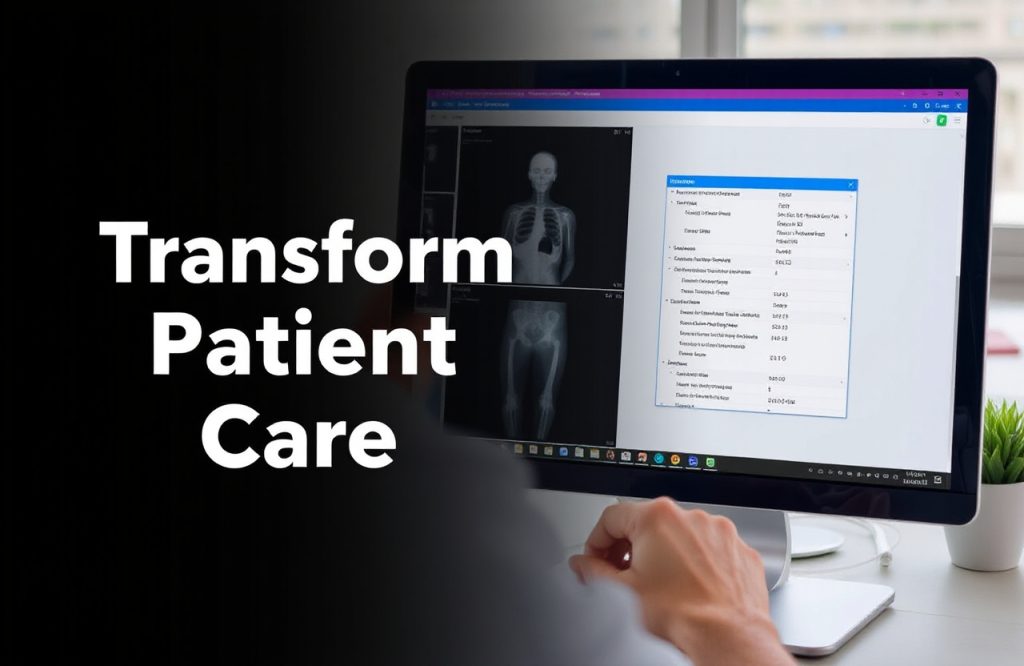
The Promise of Electronic Health Record (EHR) Software
Enhancing Patient Care with EHRs
Imagine a healthcare environment where doctors and nurses dedicate more time to patient care rather than managing paperwork. This vision is realized through Electronic Health Record (EHR) software, which has transformed healthcare by replacing outdated paper records with efficient digital solutions. Notably, not all EHR systems are equal; an effective EHR must be intuitive, customizable, and secure to truly enhance patient care.
Challenges of Traditional EHR Systems
Traditional EHR systems often present significant obstacles, including a steep learning curve, inflexible templates, and concerns regarding data security. These issues can impede the effectiveness of EHRs and lead to frustration among healthcare professionals. Thus, it is essential to design EHR systems that address these challenges. For insights on building an EMR system, consider checking the latest article on Topflightapps.
The Evolution of EHR Systems
From Paper to Digital Solutions
The development of EHR systems started with the basic digitization of paper records. Initially, these systems offered limited functionality, often resembling their paper counterparts. However, as technology progressed, so did EHRs. Government regulations and incentives led to widespread adoption, prompting developers to create more advanced and user-friendly solutions.
Modern EHR Capabilities
Today, EHRs have evolved beyond simple digital filing systems. They serve as comprehensive platforms that integrate various healthcare technologies, support telemedicine, and provide predictive analytics. This evolution has been crucial in enhancing patient outcomes and optimizing administrative processes.
The Importance of Intuitive Design in EHR Software
Enhancing Usability for Healthcare Providers
Consider the user-friendly apps you enjoy; their ease of navigation is a key factor. This principle applies to EHR software as well. An intuitive design enables healthcare providers to efficiently locate and input information without unnecessary complications. This efficiency minimizes errors, boosts productivity, and allows for increased patient interaction.
Key Design Principles
Effective design principles include clear layouts that emphasize essential information, consistent workflows that align with real-life processes, and accessibility features that accommodate diverse users. By focusing on these elements, EHRs can become valuable tools rather than cumbersome tasks.
Customizable Templates: Tailoring EHRs to Specific Needs
Addressing Unique Medical Practices
Each medical practice has its own requirements; for instance, a pediatrician’s needs differ from those of a cardiologist. Customizable templates allow healthcare providers to adapt forms and workflows to their specific specialties, significantly improving efficiency.
Benefits of Customization
Imagine templates pre-filled with common diagnoses and treatment plans tailored to a specialty. This level of customization decreases documentation time, reduces repetitive data entry, and ensures all pertinent information is accurately captured, ultimately enhancing patient care and workflow.
Secure Data Management: Protecting Patient Information
The Importance of Data Security
In an era where data breaches are commonplace, safeguarding patient information is both a legal and moral obligation. Patients trust healthcare providers with their sensitive information, making data protection imperative.
Implementing Robust Security Measures
Employing strong encryption methods ensures that data remains confidential during transmission and storage. Access controls limit information to authorized personnel, and audit trails provide clear records of access. Compliance with regulations such as HIPAA in the U.S. and GDPR in Europe is essential, not only for avoiding penalties but also for maintaining the integrity of the healthcare profession.
Key Features for an Effective EHR Software
Essential Elements for User-Centric Design
To design an EHR system that effectively serves its users, several essential features should be included:
– **Intuitive Interfaces**: A user-friendly design minimizes the learning curve, allowing healthcare providers to navigate the system with ease. Transparent menus, logical organization, and responsive design ensure that users can prioritize patient care.
– **Customizable Templates**: Flexibility is vital. Templates that can be tailored to various specialties and personal preferences accommodate a wide range of medical fields, leading to more accurate documentation and workflows aligned with clinical practices.
– **Secure Data Management**: Advanced security measures, including end-to-end encryption and multi-factor authentication, protect patient data from unauthorized access. Regular security audits and adherence to international standards bolster the system’s reliability.
– **Interoperability**: Effective integration with other healthcare systems, labs, and pharmacies allows for seamless patient information flow, reducing redundancy and enhancing collaboration.
– **Patient Portals**: Providing patients with access to their health records encourages engagement and transparency. Features such as appointment scheduling, direct communication with providers, and access to test results empower patients to take an active role in their healthcare.
Challenges in EHR Implementation
Navigating Obstacles in Transition
Transitioning to a new EHR system can present various challenges. The initial investment may be significant, covering software costs, hardware upgrades, and staff training. Resistance to change from some team members, who may prefer familiar routines, can also occur.
Addressing Technical Issues
Technical challenges, such as data migration from legacy systems and ensuring compatibility with existing workflows, can complicate implementation. Engaging all stakeholders early in the process, providing thorough training, and partnering with a vendor that offers strong support are crucial strategies for overcoming these obstacles.
Future Trends in EHR Software
Innovations Shaping EHR Systems
The EHR software landscape is continually evolving. Innovations like Artificial Intelligence (AI) are introducing predictive analytics to forecast patient outcomes and suggest personalized treatment plans. Additionally, voice recognition technology is simplifying data entry, allowing providers to dictate notes effortlessly.
The Role of Blockchain Technology
Blockchain is emerging as a promising solution for secure data sharing, ensuring that patient information remains tamper-proof and transparent. These advancements are set to make EHR systems more efficient, secure, and user-friendly, ultimately enhancing patient care.
Conclusion
Designing an effective EHR system is a complex task that requires a deep understanding of healthcare workflows, a commitment to user-centered design, and a robust approach to data security.