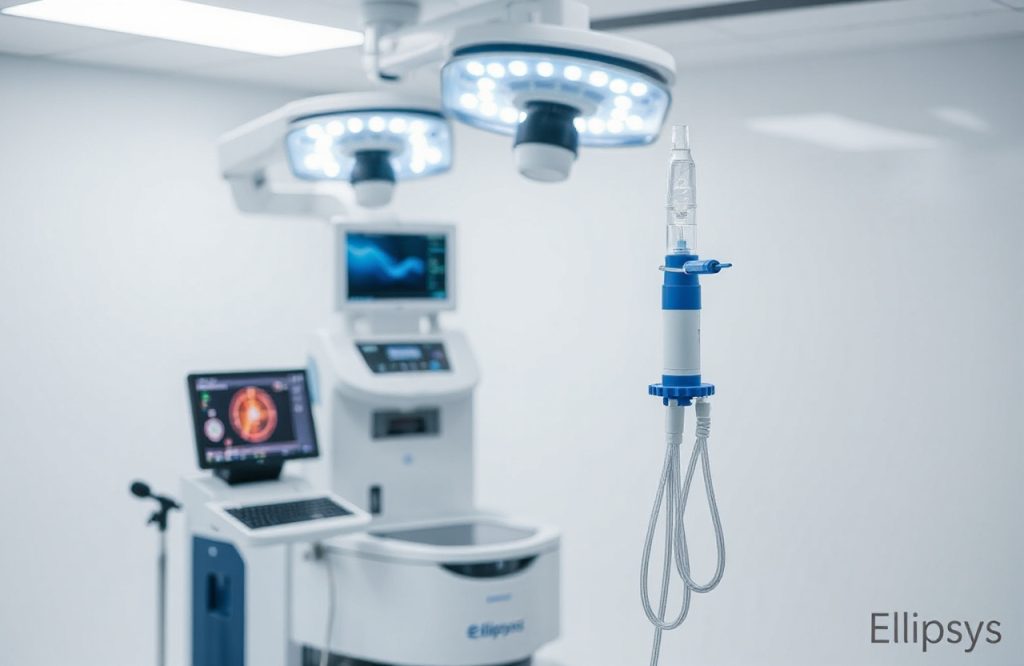
New Ellipsys Vascular Access System Enhances Patient Quality of Life
The Impact of Kidney Diseases
Kidney diseases significantly diminish patients’ quality of life. The World Health Organization estimates that 5 to 10 million individuals die each year due to these conditions. Many patients must undergo dialysis multiple times weekly, which often results in severe pain, trauma, and scarring from repeated incisions.
Benefits of Minimally Invasive Procedures
To improve patient outcomes, the introduction of a minimally invasive procedure that facilitates easier access to the bloodstream is crucial.
Study on the Ellipsys Vascular Access System
A recent study published in The Journal of Vascular Access highlights the innovative Ellipsys vascular access system, which is designed to be less invasive and more patient-friendly. Researchers analyzed health records from 105 patients over a two-year period and found that this system not only enhances functionality but also promotes a higher level of patient satisfaction.
Advantages Over Traditional Methods
The Ellipsys system employs a single needle-stick approach, simplifying the procedure and reducing recovery time compared to traditional surgical methods, which are often more complex and painful.
Conclusion
This groundbreaking advancement presents a significant improvement in patient care, alleviating many challenges faced by individuals with kidney diseases. The Ellipsys vascular access system has a notable positive effect on quality of life and correlates with increased patient satisfaction.
References
– Arizona physicians pioneer groundbreaking technology to help dialysis patients. (n.d.). Retrieved from https://www.eurekalert.org/pub_releases/2020-02/ddp-vpp022120.php
– Beathard, G. A., Litchfield, T., & Jennings, W. C. (2019). Two-year cumulative patency of endovascular arteriovenous fistula. The Journal of Vascular Access, 112972981987778. doi: 10.1177/1129729819877780
– The global burden of kidney disease and the sustainable development goals. (2018, May 31). Retrieved from https://www.who.int/bulletin/volumes/96/6/17-206441/en/
– Image by OpenClipart-Vectors from Pixabay