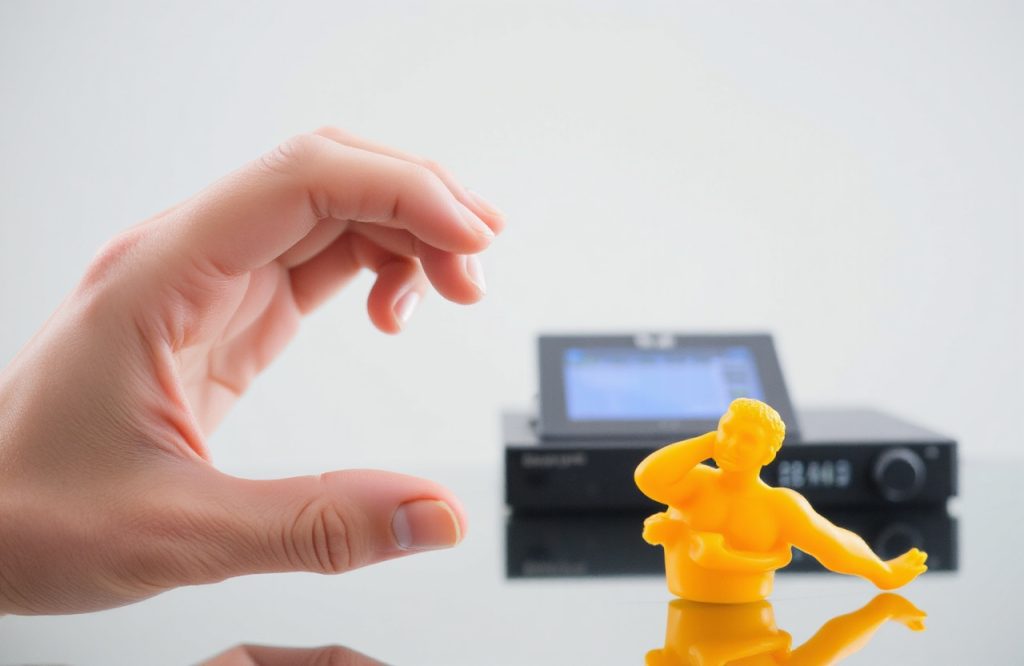
Exploring the Impact of 3D Printing on Drug Development
Introduction
A review from University College London examines the transformative potential of 3D printing in drug development and its implications for pharmaceutical manufacturing. The pharmaceutical industry, known for its conservative approach, tends to prioritize risk aversion due to substantial research and development costs associated with bringing new drugs to market. This financial pressure has led to the persistence of traditional manufacturing practices, which, while cost-effective, lack flexibility and adaptability to evolving clinical needs.
Advancements in Pharmaceutical Manufacturing
Recent technological innovations, particularly 3D printing (3DP), have the capacity to significantly alter how pharmaceuticals are produced and administered. 3D printing facilitates the on-demand creation of three-dimensional objects of varying sizes and shapes. Different 3D printers operate through distinct mechanisms, presenting various trade-offs in speed, resolution, and structural integrity. The versatility of 3D printing extends from simple toys to complex automobile parts, highlighting its broad applicability.
In the pharmaceutical sector, 3D printing could enable the rapid and flexible production of small drug batches, allowing for customization in dosage, physical characteristics, and release profiles. This shift represents a move away from the traditional “one-size-fits-all” model towards personalized medicine.
Insights from UCL’s Review
The recent review by researchers from the UCL School of Pharmacy, published in Trends in Pharmacological Sciences, provides a comprehensive analysis of the opportunities presented by incorporating 3D printing into pharmaceutical manufacturing. The authors advocate for the adoption of this innovative technology while addressing existing challenges. The review highlights two primary areas where 3D printing could be particularly beneficial: early-phase drug development and patient applications.
Early-Phase Drug Development
Early drug development stages are critical for assessing a molecule’s therapeutic potential and safety profile, with a high failure rate necessitating swift and cost-effective identification of viable candidates. While computational tools enhance screening processes, promising drugs must undergo pre-clinical experimentation, often involving animal models, before advancing to clinical trials. This phase typically requires testing various formulations and dosages to evaluate their efficacy.
3D printing has the potential to expedite this process by enabling the quick and adaptable production of small drug batches with diverse compositions. Traditional manufacturing methods often impede these practices, leading to delays and significant resource investments.
Patient Applications
The trend in medicine is increasingly leaning towards personalization, driven by advancements in molecular biology and genetics. 3D printing can facilitate the creation of tailored pharmaceuticals that align with an individual’s genetic makeup, health status, age, weight, and other relevant characteristics. This technology offers the potential to develop complex drug tablets with unique properties, where the geometry and distribution can influence metabolism and distribution within the body.
Moreover, specific patient populations, such as children and the elderly, frequently require precise medication dosages. Current manufacturing limitations often force patients to alter tablet forms to achieve accurate dosing, introducing uncertainty that 3D printing could eliminate by providing customized solutions.
Challenges Ahead
Despite the promising prospects of 3D printing in drug development and administration, significant challenges remain, particularly concerning regulation and safety. The rigorous quality controls currently implemented in pharmaceutical manufacturing raise concerns about applying the same oversight to 3D printing processes. Additionally, achieving standardization may prove difficult due to potential variations between different printers.
While the optimal 3D printing process for drug development is yet to be established, the recent FDA approval of the first 3D printed tablet signals a positive step toward integrating this technology into pharmaceutical manufacturing.
Conclusion
The advancements in 3D printing present a compelling case for its potential to revolutionize drug development and patient care. As the industry navigates regulatory hurdles and strives for standardization, the future of pharmaceutical manufacturing may be significantly shaped by this innovative technology.
Written by Adriano Vissa, PhD
Reference: Trenfield SJ, et al. 3D Printing Pharmaceuticals: Drug Development to Frontline Care. Trends in Pharmacological Sciences. 2018.