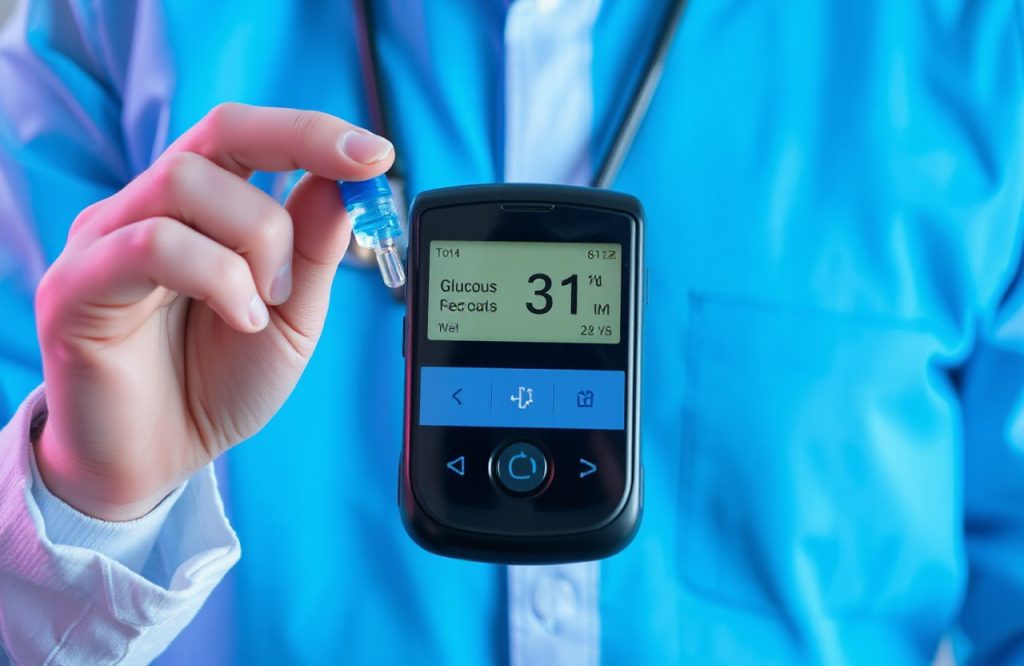
New AI Tool for Blood Sugar Detection
Introduction to the Technology
Researchers have developed an innovative artificial intelligence (AI) tool designed to detect glucose levels in the blood, commonly referred to as blood sugar. This technology utilizes non-invasive wearable sensors to monitor glucose levels derived from electrocardiogram (ECG) signals.
Importance of Tracking Blood Sugar Levels
Monitoring fluctuations in blood sugar levels is crucial for individuals with diabetes. High blood sugar, or hyperglycemia, can lead to serious long-term health issues that may damage the kidneys, nerves, and blood vessels in the eyes. Conversely, low blood sugar, or hypoglycemia, can cause immediate health problems, such as confusion, irritability, and severe attention loss, which can be life-threatening due to its impact on heart function.
Current Methods of Blood Sugar Monitoring
Traditional methods of measuring blood sugar typically involve needles and frequent finger pricks throughout the day. These invasive techniques do not facilitate continuous monitoring. An alternative, Continuous Glucose Monitors (CGMs), utilize a small needle sensor to measure glucose surrounding cells and transmit data to a display device. However, most CGMs still require calibration through finger pricking twice a day and are often expensive, limiting their use for continuous glucose monitoring. Additionally, some studies indicate that their reliability in detecting hypoglycemia may be insufficient.
Heart Rate Signals as a Detection Method
A recent study published in *Scientific Reports* has successfully detected low blood sugar levels in healthy individuals. Leveraging advanced artificial intelligence, this non-invasive sensor technology can automatically identify hypoglycemia using just a few heartbeats of ECG signals. The new tool demonstrates an 82% reliability rate in detecting low glucose levels, which is on par with the performance of existing CGM devices. These findings suggest that this innovative approach could potentially replace the traditional finger-prick method.
Mechanics of the AI Tool
The ECG waveform exhibits changes when blood glucose levels fall below normal thresholds. The proposed AI model assists clinicians in visualizing specific sections of the ECG signal that correlate with blood sugar concerns in their patients. According to the study’s author, Dr. Pecchia, the AI-driven approach allows for personalized tuning of the detection algorithms for low glucose levels. This technology can also highlight the impact of low glucose levels on ECG readings in individual patients, enabling tailored therapeutic interventions. However, further clinical research is necessary to validate these results across broader populations.
References
Porumb, M., Stranges, S., Pescapè, A. et al. Precision medicine and artificial intelligence: A Pilot study on deep learning for hypoglycemic events detection based on ECG. Sci Rep 10, 170 (2020). https://doi.org/10.1038/s41598-019-56927-5
AI can detect low-glucose levels via ECG without fingerprick test. (2020, January 13). Retrieved from https://www.eurekalert.org/pub_releases/2020-01/uow-acd011320.php