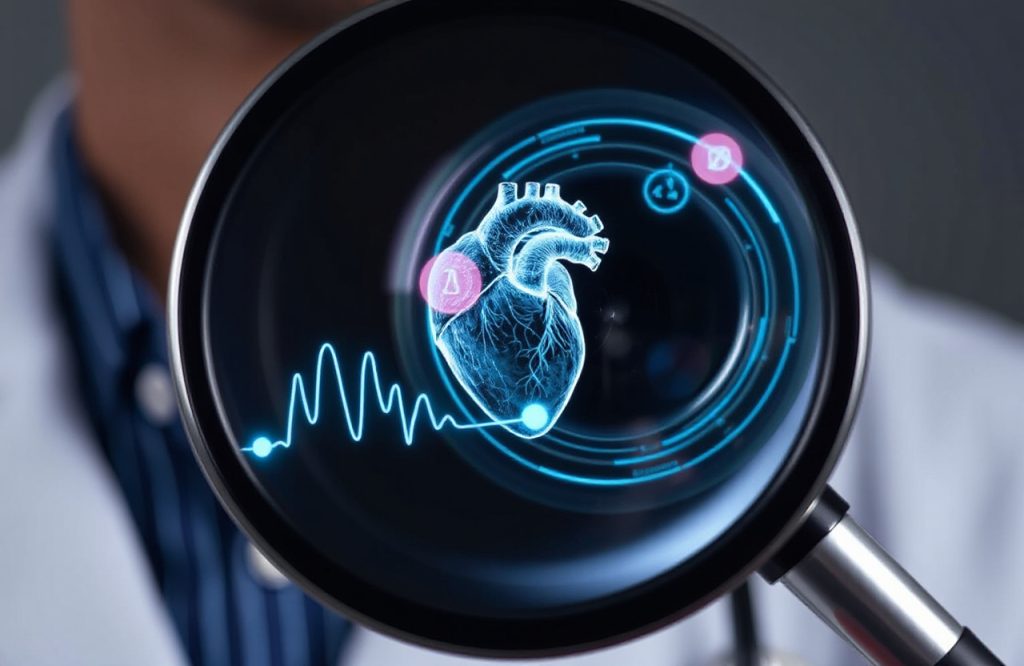
AI-Assisted Stethoscopes for Early Detection of Valvular Heart Disease
Promising Study Results
Recent findings from two studies indicate that AI-assisted stethoscopes can identify valvular heart disease significantly earlier than traditional methods. One study revealed that an artificial intelligence system accurately detects 98% of patients with severe aortic stenosis and 94% with severe mitral regurgitation using brief heart sound recordings from digital stethoscopes.
Enhanced Sensitivity and Efficiency
Another study demonstrates that AI stethoscopes exhibit greater sensitivity compared to conventional options, proving to be twice as efficient in detecting valvular heart disease in clinical settings. This technology holds the potential to serve as a rapid, cost-effective screening tool in primary care, enabling healthcare providers to pinpoint patients who require echocardiography while minimizing unnecessary referrals.
Early Diagnosis Through Acoustic Patterns
AI technology can identify subtle acoustic patterns, even in patients who do not display apparent heart murmurs, facilitating earlier diagnoses of valve disease. Early detection is critical, as it allows for timely treatment when interventions are most effective and outcomes are favorable.
The Challenge of Valvular Heart Disease
Understanding Heart Valve Disease
Heart valve disease occurs when one or more of the heart’s four valves do not function properly, disrupting blood flow through the heart. This condition often results from stiffening or leakage of the valves, identified as stenosis or regurgitation, respectively.
Global Health Implications
Valvular heart disease presents an increasing global health challenge. The risk escalates with age, with estimates suggesting that 1 in 8 adults over the age of 75 suffers from significant valve disease. In the U.S., this condition affects approximately 2.5% of the adult population and contributes to over 60,000 fatalities annually.
Diagnosis Challenges
Diagnosing heart valve disease can be complex, as individuals are often asymptomatic until the condition progresses, leading to delayed detection. Many symptoms are nonspecific or attributed to normal aging, complicating the diagnosis further. Current diagnostic methods, including traditional auscultation and echocardiography, may yield mixed results regarding accuracy and can be costly and time-consuming. Consequently, a considerable number of cases remain undiagnosed, emphasizing the importance of timely detection and early intervention to enhance patient outcomes.
AI’s Role in Improving Diagnosis
Research Findings
Recent research indicates that AI can consistently surpass clinicians and traditional stethoscopes in identifying heart valve disease, providing more reliable results, especially for severe cases. A study conducted by the University of Cambridge, published in npj Cardiovascular Health, supports the potential of this technology as a rapid screening tool in primary care environments. Similarly, a study from the U.S., featured in the European Heart Journal – Digital Health, underscores the capabilities of AI-enabled digital stethoscopes in improving diagnostic accuracy.