Robotics in Healthcare: The Rise of RoboCap
Understanding Robotics
Robotics in healthcare is an engineering field that integrates technologies and nanotechnologies, such as machinery and artificial intelligence, to enhance human capabilities. This evolving domain includes innovations that enable observation and sensing within the body at a microscopic level. Additionally, robotics contributes to precision medicine, a significant advancement in healthcare that aims to overcome natural obstacles the body may present against treatments.
The Importance of Robotics
A common challenge in healthcare is drug delivery and bioavailability, which refers to how efficiently the body can absorb medication. Certain medications require specific methods of administration, such as oral intake or injections by healthcare practitioners (HCPs). When drugs are taken orally, they undergo “first-pass metabolism,” which can diminish their effectiveness by limiting the quantity that reaches the bloodstream at the right time.
Robotics can address these issues by ensuring effective treatments while minimizing the risks associated with oral medication. Furthermore, technologies that reduce reliance on HCPs for drug administration can enhance patient compliance with their medication regimens and allow HCPs to focus on more pressing needs.
Introducing RoboCap
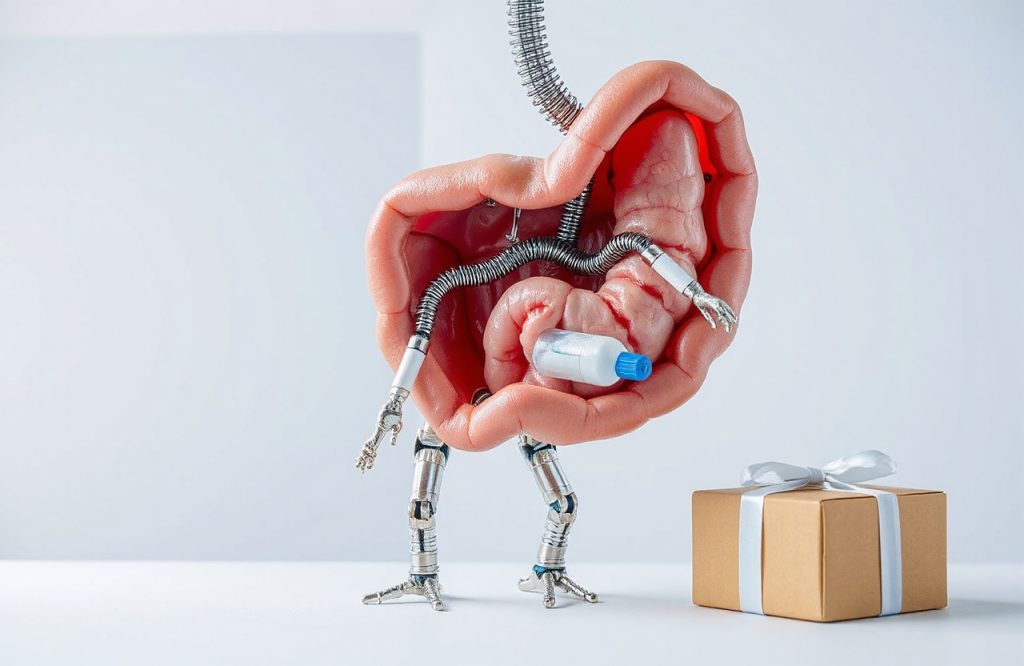
RoboCap is an innovative robotic capsule designed to enhance the delivery of oral medications. It effectively tackles the challenge posed by the stomach lining’s sticky mucus, which can obstruct drug particles from entering the bloodstream. This technology not only clears mucus but also safeguards the medication from excessive breakdown. RoboCap is equipped with a motor and a cargo space for medicines that typically require intravenous (IV) administration.
Prior attempts to create effective oral drug delivery systems faced significant challenges, but RoboCap successfully delivers medications while improving bioavailability.
How RoboCap Works
Once ingested, RoboCap travels to the intestine, where its motor activates to facilitate spinning. This rotation allows the capsule’s studded surface to interact with intestinal tissue, effectively clearing mucus and gradually releasing the medication. After approximately 35 minutes of spinning, the capsule naturally exits the body.
Evidence of Effectiveness
In studies conducted on pigs, medications such as vancomycin (an antibiotic) and insulin were administered using RoboCap. Results indicated that vancomycin levels in tissues were twenty times higher in pigs treated with RoboCap compared to those that did not receive it. Additionally, the concentrations of vancomycin and insulin in the bloodstream were found to be 20-40 times higher than those achieved with standard oral medication.
Future Goals for RoboCap
Further research and testing are essential to explore RoboCap’s potential for delivering a broader range of medications, enhancing dosing accuracy, adherence, and safety. The successful implementation of RoboCap could lead to cost savings and improved resource management in healthcare. Ultimately, robotics in healthcare, exemplified by RoboCap, offers promising solutions for patients and healthcare practitioners alike, providing more accessible and convenient medication options.
References
Whelan S. RoboCap – The robotic capsule designed to improve drug delivery in the Gut. Published Sept 28, 2022. Accessed November 17, 2022. https://www.technologynetworks.com/drug-discovery/news/robocap-the-robotic-capsule-designed-to-improve-drug-delivery-in-the-gut-366073
Rosen M. This Robotic Pill Clears Mucus from the Gut to Deliver Meds. Published Sept 28, 2022. Accessed November 16, 2022. https://www.sciencenews.org/article/robotic-pill-mucus-gut-deliver-medicine
Srinivasan SS, Alshareef A, Hwang AV, Kang Z, Kuosmanen J, Ishida K, Jenkins J, Liu S, Madani WAM, Lennerz J, Hayward A. RoboCap: Robotic mucus-clearing capsule for enhanced drug delivery in the gastrointestinal tract. Science Robotics. 2022;7(70). doi: 10.1126/scirobotics.abp9066