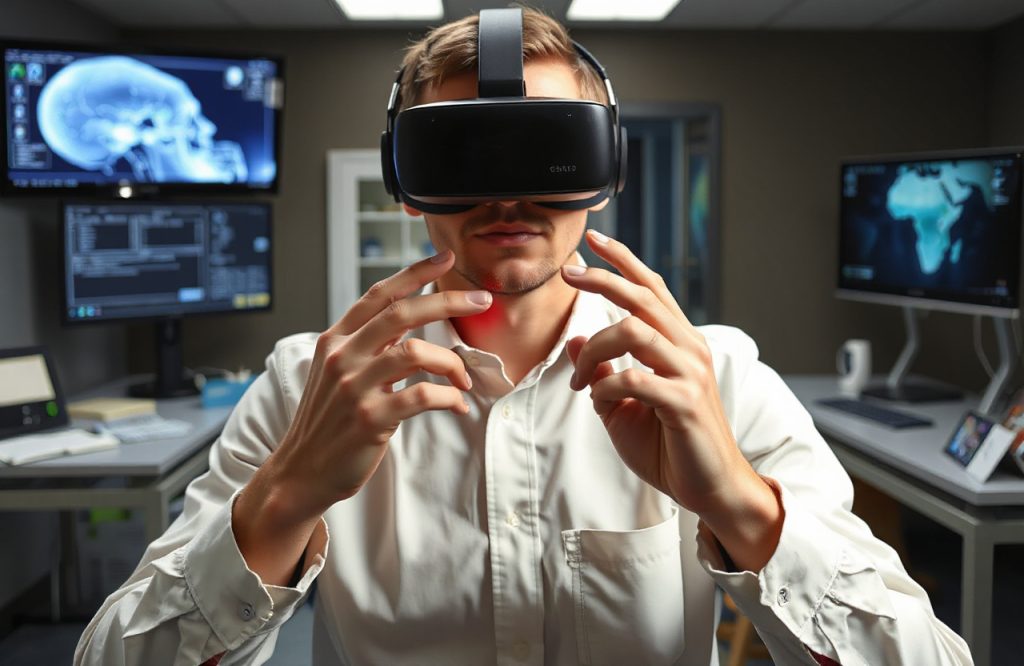
Exploring Virtual Reality Pain Management
Introduction to Pain Management Strategies
A recent study examined the potential benefits of virtual reality (VR) as a pain management strategy, particularly focusing on whether its effectiveness varies based on an individual’s awareness of bodily sensations. Pain is a common issue associated with various medical conditions and often hinders patients from achieving a high-quality, functional life. Healthcare providers currently utilize multiple pain management techniques, including medications, lifestyle adjustments, and physical or occupational therapy. However, these methods do not always yield the desired results, prompting ongoing research into alternative approaches like virtual reality.
Previous Findings on Virtual Reality and Pain Perception
Recent research has indicated that virtual reality can significantly diminish the perception of pain and the effort individuals believe they are exerting. Studies have highlighted a correlation between pain severity and an individual’s awareness of their bodily sensations. Specifically, individuals who are highly aware of their bodily states tend to experience more frequent and intense pain compared to those with lower awareness.
Study Overview and Methodology
A study published in the “Psychology of Sport and Exercise” by Matsangidou and colleagues aimed to investigate the relationship between virtual reality pain management and bodily awareness. The research involved 21 healthy males and 59 healthy females, who were randomly assigned to either a virtual reality group or a non-virtual reality group. Participants completed questionnaires to evaluate their Private Body Consciousness (PBC), a metric for assessing awareness of internal bodily sensations.
To induce pain, participants were instructed to hold a dumbbell tailored to their individual strength levels. Those in the virtual reality group wore a Samsung Galaxy Gear heat-mounted display (HMD) that presented a virtual environment mirroring their physical surroundings. Throughout the study, several parameters were recorded, including heart rate (HR), self-reported pain intensity ratings (PIR), ratings of perceived exertion (RPE), and time to exhaustion (TTE).
Findings on Pain Intensity and Physical Endurance
The study’s findings indicated that participants using the virtual reality headset reported lower pain intensity and perceived exertion ratings. Notably, the PBC measure did not impact these relationships. Additionally, participants in the VR group demonstrated a greater ability to hold the weight for longer periods compared to those in the non-virtual reality group, with the PBC measures again showing no significant effect. While there was a trend suggesting lower heart rates in the VR group, this finding did not achieve statistical significance.
Conclusion and Future Research Directions
In conclusion, this research reinforces the effectiveness of virtual reality in reducing exercise-induced pain and the perception of effort. These results align with previous literature indicating that psychological distractions—such as imagery, meditation, relaxation, hypnosis, and positive thinking—can alleviate pain and enhance endurance. Nonetheless, the underlying mechanisms of these effects remain largely unexplored and merit further investigation. Future studies should aim to replicate these findings across different populations to assess their generalizability.
Written by Haisam Shah, BSc
Reference: Matsangidou, M., Ang, C. S., Mauger, A. R., Intarasirisawat, J., Otkhmezuri, B., & Avraamides, M. N. (2018). Is your virtual self as sensational as your real? Virtual Reality: The effect of body consciousness on the experience of exercise sensations. Psychology of Sport and Exercise.