New Non-Invasive Biopsy Method for Skin Cancer Developed
Rising Incidence of Skin Cancer
Researchers in the United States have introduced a novel and non-invasive technique for producing skin cancer biopsies. The prevalence of skin cancer is rising globally. In the U.S., it is projected that by 2050, there will be 125 million individuals aged 55 to 85, with around 20% likely to develop skin cancer by age 70. Over recent decades, the incidence of skin cancer has been on the rise, with one in three new cancer diagnoses being skin-related. This accounts for 2-3 million non-melanoma skin cancers and 132,000 melanoma skin cancers diagnosed annually. Therefore, prompt diagnosis of skin lesions, defined as any skin abnormalities, is crucial.
Challenges with Traditional Biopsy Methods
Traditionally, diagnosing skin lesions often requires surgical biopsies, which can lead to scarring. In some instances, physicians may be uncertain if the biopsy will be adequate, as the size of the lesion may not be clear before the procedure begins. If the lesion is too large, the biopsy cannot be completed, necessitating a referral to a specialist for further tissue removal, which might involve subsequent plastic surgery.
Introduction of Vibrational Optical Coherence Tomography (VOCT)
Overview of the New Diagnostic Technique
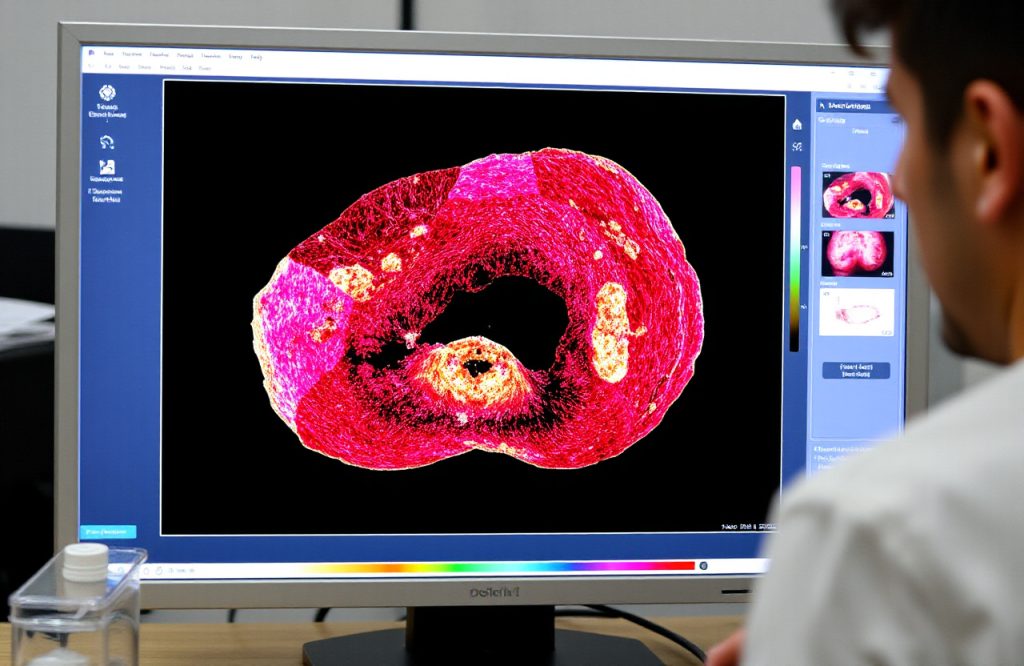
Researchers from Rutgers University have developed a cutting-edge diagnostic technique called vibrational optical coherence tomography (VOCT). This method employs a combination of near-infrared light and sound vibrations, applied perpendicularly to the lesion area, to create a “virtual biopsy” quickly and painlessly. The laser diode light generates a three-dimensional image of the lesion to assess its size and shape, while soundwaves from a small speaker evaluate the lesion’s stiffness and density. This assessment is significant, as tumors and cancerous cells typically exhibit greater stiffness than surrounding healthy tissue.
Trial Results and Efficacy of VOCT
The efficacy of VOCT was evaluated during a six-month trial, which included four skin excisions and examinations of eight volunteers without skin lesions. The results indicated that VOCT could effectively differentiate between cancerous and healthy tissue, offering preliminary support for its potential as a non-invasive biopsy method for skin cancer.
Future Prospects and FDA Approval
With further trials and enhancements, VOCT is currently awaiting FDA approval for larger-scale studies. This innovative technique has the potential to revolutionize the biopsy process for skin cancer patients, transforming a procedure that many find daunting into a simple 15-minute examination that can be conducted in a doctor’s office.
References
Written by Raymond Quan, MASc, MBA
Silver et al. “Comparative ‘virtual biopsies’ of normal skin and skin lesions using vibrational optical coherence tomography.” Skin Res Technol. 2019;00:1–7. https://doi.org/10.1111/srt.12712
Press release: https://www.eurekalert.org/pub_releases/2019-06/ru-rsc061319.php
Skin biopsy fact sheet. Mayo Clinic. Available at: https://www.mayoclinic.org/tests-procedures/skin-biopsy/about/pac-20384634
Skin cancer fact sheet. WHO. Available at: https://www.who.int/uv/faq/skincancer/en/index1.html