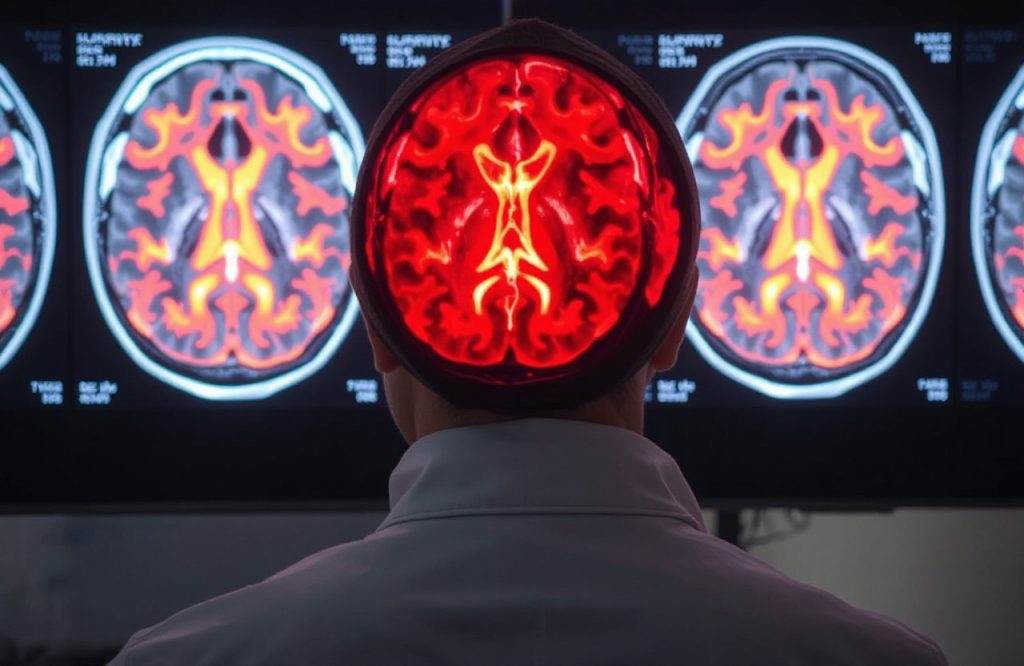
Advanced MRI Analysis Identifies Stroke-Related Dementia Risks
The Impact of Strokes on Cognitive Abilities
Strokes occur when blood flow to the brain is obstructed, leading to potential cognitive impairments and dementia. Specifically, when small blood vessels in the brain are affected, this condition is referred to as cerebral small vessel disease. Factors such as atherosclerosis, characterized by plaque accumulation in these vessels, can result in blockages that deprive the brain of oxygen (ischemia) or lead to hemorrhage from leaking vessels. Notably, cerebral small vessel disease accounts for approximately 45% of dementia cases and 20% of strokes globally, contributing to a decline in cognitive function.
Diagnosis and Imaging Techniques
Diagnosing small vessel disease typically relies on advanced imaging techniques, particularly MRI scans. Abnormalities associated with this condition manifest as distinct imaging changes in various brain regions. By utilizing these changes to create a cumulative marker, researchers aim to enhance diagnostic accuracy.
Research Study Overview
Researchers from the University of London have investigated the diffusion tensor image segmentation (DSEG) technique as a predictive tool for dementia risk and cognitive decline among patients with cerebral small vessel disease. This MRI methodology allows for detailed characterization of the brain’s micro-structural features. The study focused on developing a unified DSEG score to encapsulate the various markers of small vessel disease.
Study Results and Findings
The findings were published in the journal Stroke and involved an evaluation of 99 patients with small vessel disease due to ischemic stroke, averaging 68 years of age. Participants underwent MRI scans over three years and cognitive assessments over five years. Eighteen patients developed dementia within the study period, with an average onset time of just over three years. The combination of the DSEG score and cognitive testing indicated that patients exhibiting significant brain damage and cognitive decline at the study’s outset faced a considerably higher risk of dementia. Remarkably, this analysis was able to predict three-quarters of dementia cases that arose during the study.
Limitations and Future Implications
While the study provided valuable insights, the use of a single reference point and the limited patient subset may restrict the generalizability of the results to other forms of the disease. Nonetheless, the DSEG method’s potential for accurately forecasting dementia risk could play a crucial role in early identification of at-risk patients, allowing for timely interventions to mitigate cognitive decline.
Conclusion
As noted by the study’s senior author, Dr. Rebecca A. Charlton, the development of this tool provides an effective means for monitoring patients at risk of dementia and targeting those who may require early treatment.
References
Williams OA, Zeestraten EA, Benjamin P, Lambert C, Lawrence AJ, Mackinnon AD, Morris RG, Markus HS, Barrick TR, Charlton RA. Predicting Dementia in Cerebral Small Vessel Disease Using an Automatic Diffusion Tensor Image Segmentation Technique. Stroke. 2019 Sep 12:STROKEAHA119025843.
Press release retrieved from https://www.eurekalert.org/pub_releases/2019-09/aha-amb090919.php
Information on cerebral small vessel disease.
Information on the prevalence of cerebral small vessel disease in patients with dementia and strokes obtained from de Leeuw FE, de Groot JC, Achten E, Oudkerk M, Ramos LM, Heijboer R, Hofman A, Jolles J, van Gijn J, Breteler MM. Prevalence of cerebral white matter lesions in elderly people: a population-based magnetic resonance imaging study. The Rotterdam Scan Study. J Neurol Neurosurg Psychiatry. 2001 Jan;70(1):9-14.
Image by WikiImages from Pixabay.