Exploring Virtual Reality in Stroke Rehabilitation
Background on Stroke Rehabilitation
Researchers have initiated a study to examine the potential benefits of virtual reality (VR) training systems in stroke rehabilitation. Stroke survivors frequently face both physical and cognitive challenges, with nine out of ten individuals experiencing some level of upper limb motor impairment. This condition is the most common disability resulting from a stroke. Effective rehabilitation must be sustained, repetitive, task-specific, and sufficiently challenging while also being motivating and intensive.
The Role of Virtual Reality
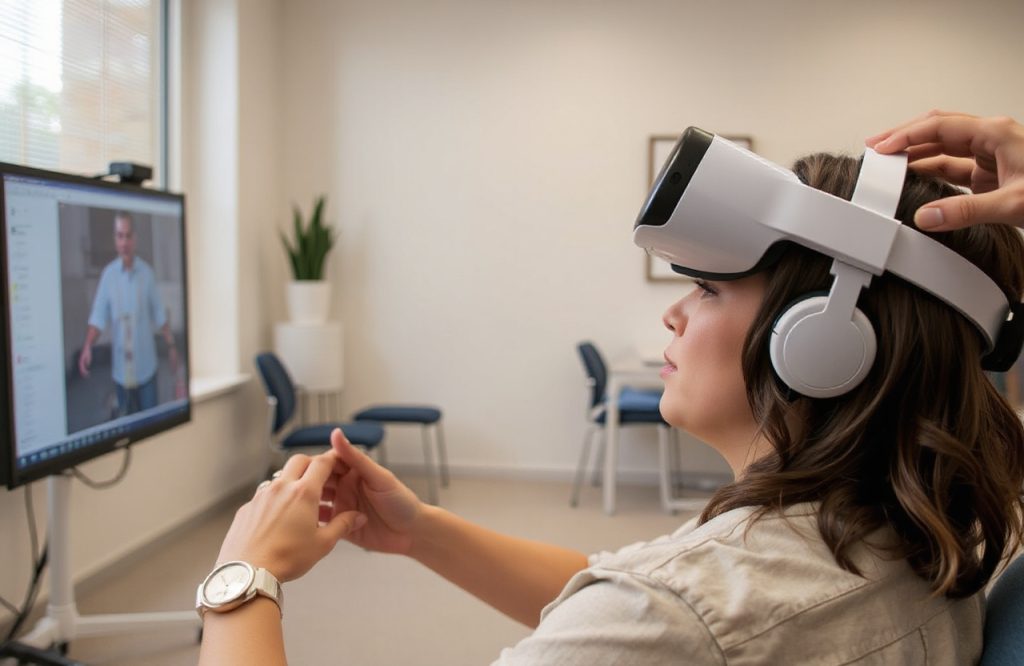
Virtual reality represents a modern approach to stroke rehabilitation, demonstrating moderate effectiveness in enhancing motor functions. By utilizing motion capture technology, VR provides embodied sensorimotor feedback, allowing patients’ movements to be mirrored in a virtual setting. This immersive experience has been shown to boost patient motivation and activate neural circuits within the motor system, facilitating functional recovery.
Study Overview
In a pilot study published in the *Journal of NeuroEngineering and Rehabilitation*, Swiss researchers explored the use of a VR-based stroke rehabilitation program aimed at improving upper limb motor functions. The primary objectives included assessing training intensity (defined as the number of repetitions per minute of active therapy) and rehabilitation dosage (total repetitions). Additionally, the study measured improvements in functional upper limb outcomes along with the safety and tolerance of the VR technology.
Methodology
The study involved ten stroke patients with unilateral weakness who participated in sessions using the Mind Motion PRO VR-based motor rehabilitation system. Each participant attended two one-hour sessions a week over five weeks, with guidance from a physical therapist who tailored tasks to individual needs. Assessments were conducted at baseline, post-treatment, and during a four-week follow-up. The VR exercises simulated shoulder, elbow, forearm, and wrist movements through engaging tasks, such as pointing, reaching, and grasping virtual objects.
Effectiveness of Virtual Reality Therapy
All ten participants successfully completed the full ten training sessions. The results revealed that the median training duration increased by approximately ten minutes, with the effective training time per session doubling by the final session. The training intensity—measured by goal-directed movements per minute—progressively improved from the start to the end of the intervention.
The study also assessed upper limb function, active range of motion, and muscle strength, all of which showed significant improvements from baseline. Participants reported no adverse events, and levels of pain and stress remained low throughout the treatment, indicating good tolerance for the VR therapy. Moreover, participants exhibited high concentration and comfort with the movements, expressing interest in continuing training beyond the initial ten sessions. This enthusiasm reflects a strong level of adherence and motivation, crucial for successful stroke rehabilitation outcomes.
Conclusion and Future Directions
Overall, this pilot study highlights the potential of VR-based treatment to deliver efficient training sessions, achieving an efficiency rate of 86.3%, which surpasses that of conventional therapies. The findings support further investigation into VR interventions as viable stroke rehabilitation therapy options aimed at improving functional and motor outcomes. Future studies should include control groups, larger sample sizes, stratified groups, and more intensive interventions featuring diverse motor assessments.
Reference
Perez-Marcos, D., Chevalley, O., Schmidlin, T., Garipelli, G., Serino, A., Vuadens, P., … Millán, J. D. (2017). Increasing upper limb training intensity in chronic stroke using embodied virtual reality: a pilot study. *Journal of NeuroEngineering and Rehabilitation*, 14(1). doi:10.1186/s12984-017-0328-9