Breakthrough Research on Personalized Cancer Vaccines
Understanding Melanoma
Melanoma, a severe form of skin cancer, originates from the continuous growth of pigment-producing skin cells. The prognosis for stage IV melanoma is concerning, with a five-year survival rate of only 16.2%. This highlights the urgent need for effective treatments. Recent clinical trials have shown that combining conventional treatments with personalized anti-melanoma vaccines can yield significantly better clinical outcomes compared to conventional methods alone. These encouraging findings pave the way for more extensive clinical studies in the future.
Key Facts about Melanoma
Melanoma is recognized as the most dangerous type of skin cancer, affecting approximately 96,480 Americans in 2019. It can manifest in various parts of the body, including the eyes, digestive tract, or sinuses, although it predominantly occurs on the skin due to excessive ultraviolet (UV) light exposure, such as sunlight. Genetic alterations in melanoma cells lead to their uncontrolled growth. Researchers are actively investigating these genetic changes to develop targeted treatments. Additionally, doctors analyze biopsy samples to understand tissue characteristics and determine the most effective treatment strategies.
Personalized Anti-Cancer Vaccines
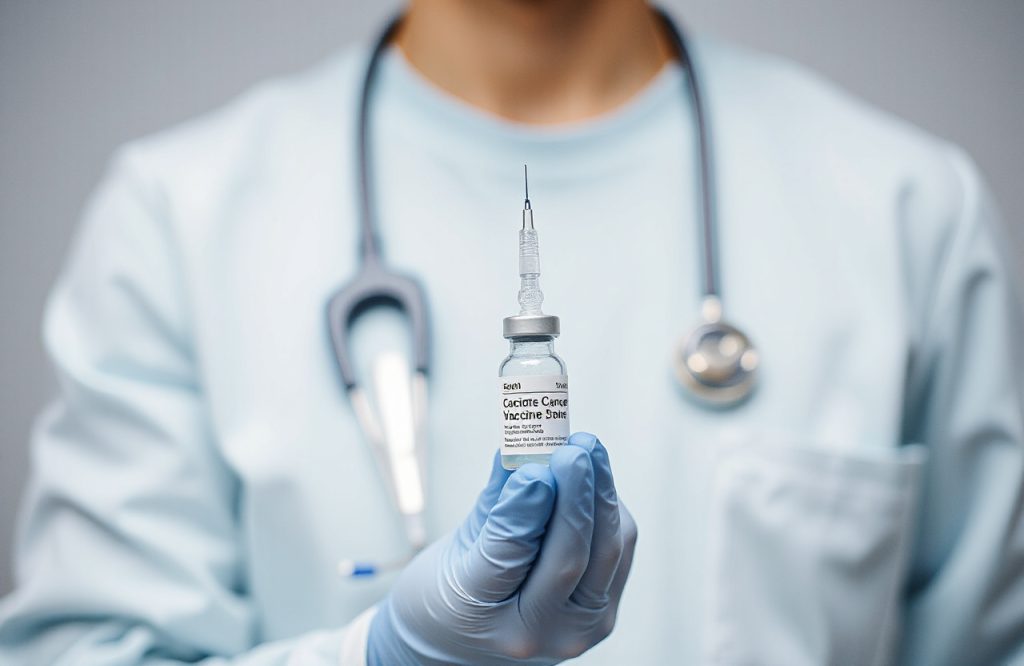
Personalized anti-cancer vaccines are emerging as a promising avenue in cancer research. These vaccines aim to mitigate the adverse effects of conventional cancer treatments. Neoantigens, which possess cancer-specific features, can initiate an immune response. The role of anti-cancer vaccines is to stimulate T-cell responses that target these neoantigens. As neoantigens differentiate cancer cells from healthy cells, they are being explored as potential vaccine candidates. The goal is to train the immune system to identify and attack only the cancer cells unique to each patient.
Unlike traditional vaccines designed to combat infectious agents, the genetic characteristics of cancer cells differ significantly from person to person. Therefore, developing a cancer vaccine tailored to an individual’s specific cancer cells offers a truly personalized approach.
Promising Developments in Anti-Melanoma Vaccines
One noteworthy development is the mRNA-4157/V940 vaccine, currently under investigation in clinical trials. This innovative vaccine contains a single fragment of genetic material capable of encoding up to 34 neoantigens unique to a patient’s cancer cells. In a recent smaller clinical trial, patients with advanced melanoma received either an existing melanoma treatment or a combination of that treatment with the new vaccine. Preliminary results indicate that the risk of cancer recurrence was reduced by 44% for those who received the anti-melanoma vaccine compared to those who did not. Additionally, the likelihood of death was similarly reduced in the vaccinated group. Full results from this trial are expected to be published soon.
Looking Ahead
These early findings provide a sense of optimism for a potential breakthrough in cancer therapy. However, it’s important to note that the results are preliminary and based on a limited patient sample, making them not yet applicable to the broader population of melanoma patients. The findings from this early-phase clinical trial will be communicated to health authorities, and researchers anticipate starting a larger phase III study in 2023. This next phase will enable the examination of the vaccine in a more extensive patient cohort. For now, the scientific community remains cautiously hopeful as research on this promising candidate progresses.
References
1. Moderna. Moderna and Merck announce mRNA-4157/V940, an investigational personalized mRNA cancer vaccine, in combination with Keytruda(R) (Pembrolizumab), met primary efficacy endpoint in phase 2B KEYNOTE-942 trial. Accessed March 9, 2023. https://investors.modernatx.com/news/news-details/2022/Moderna-and-Merck-Announce-mRNA-4157V940-an-Investigational-Personalized-mRNA-Cancer-Vaccine-in-Combination-with-KEYTRUDAR-pembrolizumab-Met-Primary-Efficacy-Endpoint-in-Phase-2b-KEYNOTE-942-Trial/default.aspx
2. Jenkins RW, Fisher DE. Treatment of advanced melanoma in 2020 and beyond. J Invest Dermatol. Jan 2021;141(1):23-31. doi:10.1016/j.jid.2020.03.943
3. Blass E, Ott PA. Advances in the development of personalized neoantigen-based therapeutic cancer vaccines. Nat Rev Clin Oncol. Apr 2021;18(4):215-229. doi:10.1038/s41571-020-00460-2