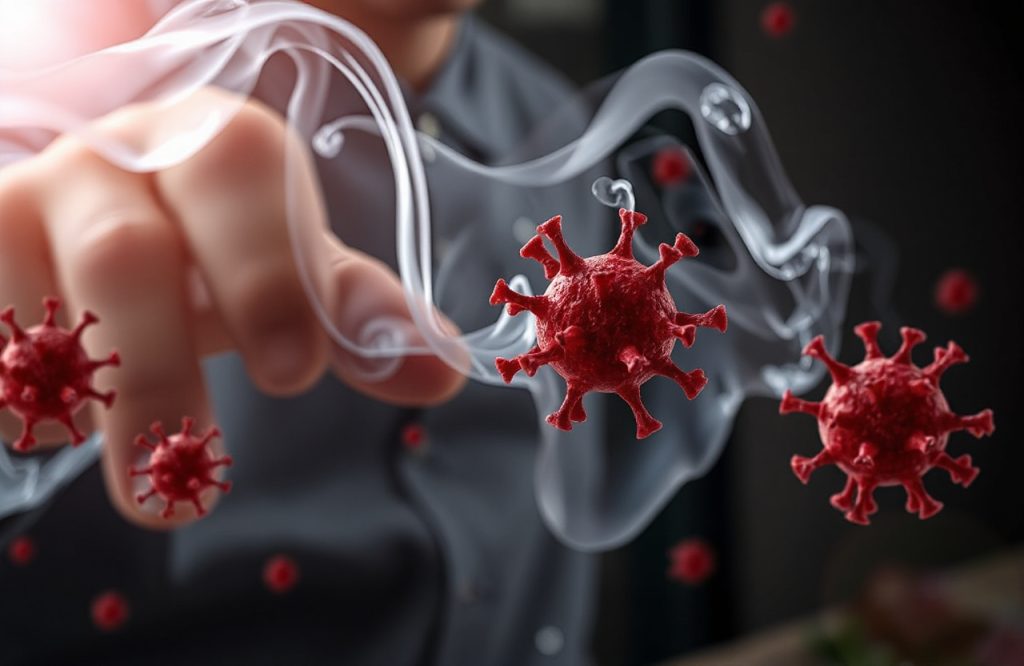
Impact of Cigarette Smoke on Drug Resistance in MRSA
Introduction to the Research Findings
Recent research indicates that exposure to cigarette smoke may enhance drug resistance in methicillin-resistant Staphylococcus aureus (MRSA) strains. Tobacco smoking is the leading preventable cause of death globally, linked to various health issues such as lung cancer, cardiovascular disease, and chronic obstructive pulmonary disease. Furthermore, smoking can increase vulnerability to infectious diseases.
Previous Research on Smoking and Immune Response
Prior studies have established that smoking diminishes the immune system’s ability to combat infections. A team from the University of Bath has discovered that cigarette smoke can alter the DNA and properties of pathogenic bacteria, leading to more persistent infections.
Focus on Staphylococcus aureus
The researchers concentrated on Staphylococcus aureus, a microbe found in the nasopharynx of 30-60% of individuals. This bacterium is responsible for a range of infections, from mild skin conditions to severe illnesses like pneumonia and endocarditis. Although antibiotics are typically the primary treatment, the rise of antibiotic-resistant strains like MRSA poses a significant global health threat.
Study Overview and Methodology
The findings of this study are published in Scientific Reports. The authors conducted laboratory experiments involving six clinically relevant and genetically diverse MRSA strains. Their goal was to examine how cigarette smoke influences bacterial virulence, which is the capability of a microorganism to cause disease.
Effects of Cigarette Smoke on Bacterial Behavior
Bacteria were cultivated in environments containing cigarette smoke and subsequently added to cultured human lung cells to evaluate toxicity and invasiveness. The results indicated that smoke-exposed S. aureus exhibited traits that facilitated disease progression, including enhanced biofilm formation, reduced toxicity, and increased intracellular persistence. However, the response to cigarette smoke varied among different strains, with not all strains showing identical reactions.
Formation of Small Colony Variants
Critically, exposure to cigarette smoke led to the emergence of small colony variants (SCVs) in certain strains. SCVs are resilient, slow-growing bacterial subpopulations associated with the recurrence of chronic infections in smokers. The study found that cigarette smoke initiates an intracellular stress response, resulting in an increased mutation rate and SCV development. Notably, S. aureus SCVs demonstrated improved resistance to the antibiotic rifampicin, suggesting that exposure to smoke could also heighten resistance to other antibiotics.
Research Insights and Implications
Dr. Maisem Laabei, a researcher in the Department of Biology & Biochemistry at the University of Bath and the study’s lead author, stated, “We expected some effects but we didn’t anticipate smoke would affect drug-resistance to this degree. While lab conditions differ from long-term smoke exposure, it seems reasonable to hypothesize that the stress induced by smoking prompts microbial cells to adapt to harsh environments, ultimately increasing virulence and infection potential.”
Conclusion and Call for Smoking Cessation
Laabei and her colleagues believe that the connection between cigarette smoke and increased bacterial virulence underscores the critical need for smoking cessation efforts.
References
Melvin, C. Cigarette smoke makes MRSA superbug bacterium more drug-resistant. EurekAlert! (2019).
Lacoma, A. et al. Cigarette smoke exposure redirects Staphylococcus aureus to a virulence profile associated with persistent infection. Sci Rep 9, 10798 (2019).
Image by Ralf Kunze from Pixabay