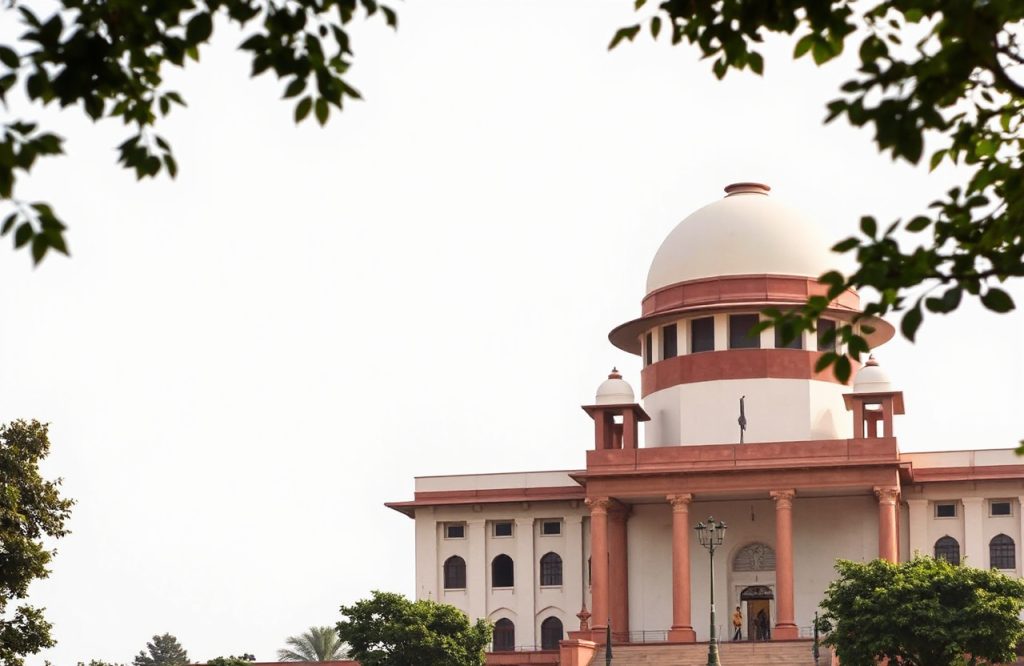
Supreme Court Reviews Case of Patient in Vegetative State
Background of the Case
In a significant ruling, the Supreme Court of India has addressed the case of a 31-year-old man, Harish Rana, who has been in a vegetative state for 13 years due to quadriplegia with 100 percent disability. The court emphasized the need to alleviate the suffering of the patient, directing the All India Institute of Medical Sciences (AIIMS) to form a secondary medical board to evaluate his condition. The objective is to determine whether life-sustaining treatment can be withheld under the provisions of passive euthanasia.
Understanding Passive Euthanasia
Passive euthanasia refers to the intentional decision to let a patient die by withholding or withdrawing essential life support or treatment. This complex ethical issue has been the subject of various legal discussions in India.
Court’s Observations
A bench comprising Justices JB Pardiwala and KV Viswanathan remarked on the unfortunate condition of Rana, stating, “This is very very unfortunate. The boy seems to be in a pathetic condition.” The court underscored the seriousness of his health status, noting the presence of painful bedsores, which indicate inadequate care and hygiene.
Justice Pardiwala highlighted the importance of proper medical care to prevent such conditions, stating, “Bedsores are the end of everything. Now, we have waterbeds etc. to prevent formation of bedsores.” The bench expressed urgency in addressing the situation, asserting, “We can’t allow him to live like this.”
Legal Proceedings and Expert Evaluations
Advocate Rashmi Nandakumar, representing Rana’s father, referenced a previous 2018 Supreme Court ruling that necessitated consulting a secondary medical board. She argued that the existing primary board, consisting of five medical experts, had already evaluated Rana’s condition and recommended moving forward with passive euthanasia.
The Supreme Court acknowledged the findings of the primary board, which included a letter from a medical team indicating that Rana’s health has deteriorated significantly over the years. The letter described extensive bedsores and concluded that the likelihood of recovery is negligible.
Next Steps Ordered by the Court
In light of the findings, the Supreme Court has instructed AIIMS to establish a secondary medical board to further examine Rana’s health. The court requested a report by the following Wednesday and ordered that all relevant documents be sent to the AIIMS director promptly.
Previously, on November 26, the court had instructed a Noida district hospital to form a primary board to assess the possibility of passive euthanasia for Rana, whose condition had reportedly worsened.
Previous Legal Context
This is not the first instance where Rana’s parents have sought legal intervention regarding passive euthanasia. In November 2022, the Supreme Court reviewed the Union Health Ministry’s report suggesting that Rana could receive home care, with oversight from the Uttar Pradesh government. The court had previously noted the challenges faced by Rana’s elderly parents, who have struggled to provide ongoing care due to financial constraints.
In July 2022, the Delhi High Court denied a request to refer Rana’s case to a medical board for passive euthanasia, asserting that he was not being kept alive through mechanical means.
Conclusion
The Supreme Court’s recent directives reflect a growing recognition of the ethical complexities surrounding passive euthanasia within the Indian legal framework. As the case progresses, the establishment of a secondary medical board will be pivotal in determining the appropriate course of action for Rana, who has endured a prolonged and challenging health crisis.