Supreme Court Questions NBEMS on NEET PG 2025 Cut-Off Reduction
Affidavit Request from NBEMS
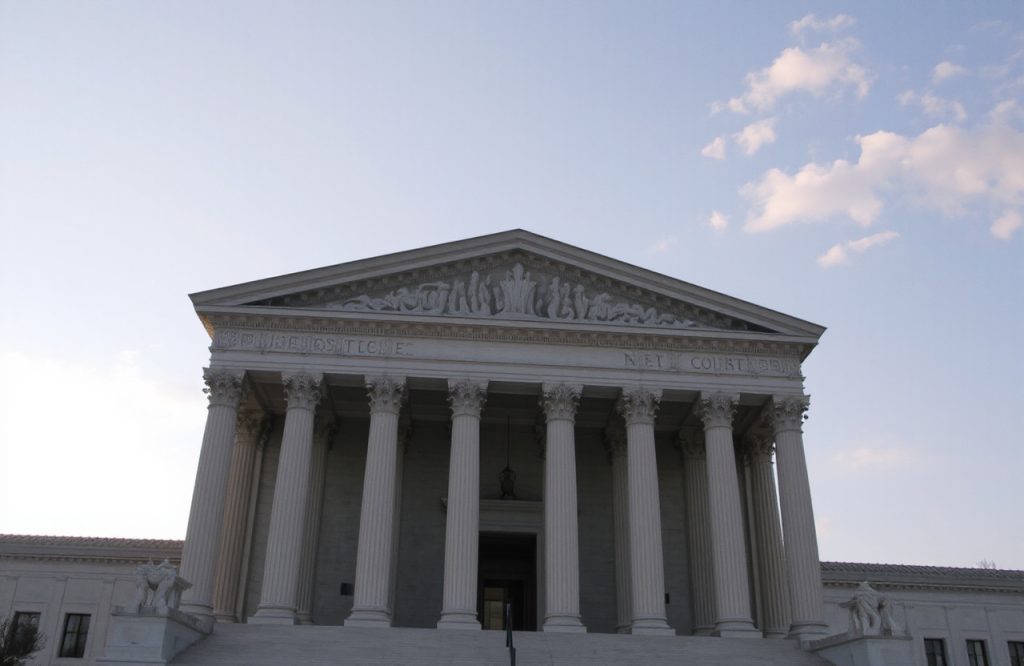
New Delhi: The Supreme Court of India has directed the National Board of Examinations in Medical Sciences (NBEMS) to provide an affidavit explaining the rationale behind the substantial decrease in qualifying cut-off percentiles for NEET PG 2025. The Court underscored the necessity of ensuring that this decision was not influenced by any “devious reason.”
Concerns Over Standards
During the hearings, the Division Bench, comprising Justice Pamidighantam Sri Narasimha and Justice Alok Aradhe, highlighted the need to address two primary concerns. On one hand, there is the risk of medical seats remaining vacant, and on the other, a substantial reduction in standards could threaten the quality of postgraduate medical education.
Petition Background
The Supreme Court was reviewing petitions that challenge a notification issued by NBEMS on January 13, 2026, which lowered the minimum qualifying percentile for the third round of NEET-PG 2025 counseling. The Bench remarked, “The Court will examine whether the decision taken was drastically wrong,” and further stated, “Our conscience has to be satisfied that there is no devious reason.”
Notices Issued to Government Bodies
On Wednesday, the Supreme Court issued notices to the Union Government of India, NBEMS, and the National Medical Commission, requesting their responses within one week. The petitions contest the January 13 notification, which reportedly lowered the qualifying cut-off to unusually low levels, including zero and negative percentiles.
Concerns from Medical Professionals
The United Doctors Front (UDF), led by National President Dr. Lakshya Mittal, has submitted a plea to the Supreme Court seeking to annul the NBEMS notification and reinstate minimum qualifying standards in postgraduate medical education. The UDF criticized the reduction of qualifying cut-off percentiles for NEET-PG 2025-26 as arbitrary and unprecedented.
Details of the Revised Cut-Off
The petition, filed under Article 32 of the Constitution of India, contests the notification that weakened the minimum qualifying standards for postgraduate medical admissions. According to the revised cut-off for NEET-PG 2025, the new qualifying percentiles for various categories are set at the 7th, 5th, and 0th percentiles for General/EWS, General PwBD, and SC/ST/OBC (including PwBD of SC/ST/OBC) categories, respectively. The corresponding cut-off scores are now 103 for General/EWS, 90 for General PwBD, and -40 for SC/ST/OBC.
Implications for Medical Education
The petitioners argue that allowing candidates with abnormally low or negative scores to qualify for postgraduate medical training could significantly compromise patient safety and the integrity of the medical profession. They contend that the NBE’s decision is arbitrary, unconstitutional, and violates Articles 14 and 21 of the Constitution of India.
Legal Arguments Presented in Court
During the hearing on February 6, 2026, Senior Advocate Gopal Sankarnarayanan, representing the petitioners, asserted that regulations permit lowering cut-offs only when there are insufficient eligible candidates. He pointed out that around 80,000 medical seats are available, while over 128,000 candidates meet the qualifying percentiles across various categories.
Call for Balance in Standards
Sankarnarayanan emphasized that standards should be stricter at the postgraduate level, referencing the Preeti Srivastava judgment, which advocates for higher standards in advanced education. Justice Narasimha acknowledged the competing interests of ensuring that medical seats are filled while also maintaining rigorous academic standards.
Future Proceedings
Through this petition, the UDF seeks the Supreme Court’s intervention to annul the NBEMS notification and restore minimum qualifying standards in postgraduate medical education. This issue is anticipated to be listed for further consideration in the upcoming days. A segment of the medical community has expressed strong opposition to the cut-off reduction, warning that admitting candidates with negative scores could undermine the merit-based admissions process.