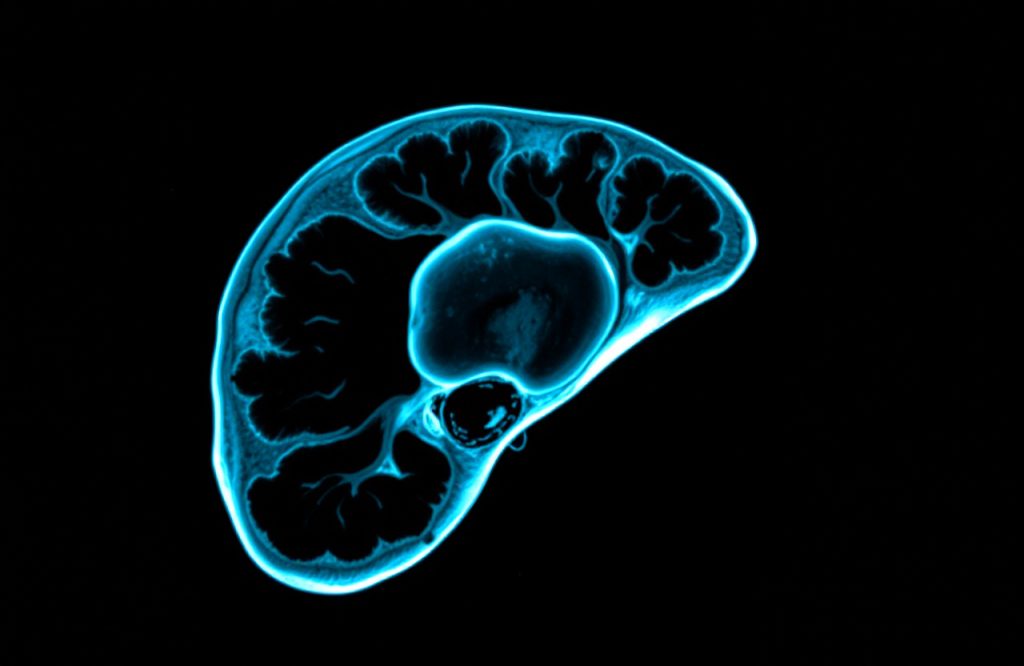
Advancement in MRI Technology for Liver Disease Detection
Introduction to Liver Disease
Chronic liver disease is a significant global health concern, contributing to approximately two million deaths annually. From 2000 to 2015, the mortality rates associated with chronic liver disease and cirrhosis in the United States rose by 31% among individuals aged 45 to 65. This condition can arise from various factors, including viral infections, metabolic disorders, autoimmune issues, and alcohol consumption. Notably, nonalcoholic steatohepatitis (NASH), characterized by excessive fat accumulation in the liver, affects an estimated 80 to 100 million Americans.
The Importance of Early Detection
Liver disease typically progresses slowly, often without symptoms in its initial stages. Early detection is crucial, as it allows for intervention that can prevent severe damage. The early phases of liver disease involve inflammation, which can lead to fibrosis—scarring of liver tissue that diminishes liver function. If untreated, fibrosis can progress to cirrhosis, ultimately resulting in liver failure as scar tissue replaces healthy tissue.
Current Diagnostic Techniques
There is a pressing need for effective early detection methods for liver disease. While liver biopsy remains the gold standard for diagnosis and staging, it is invasive and carries risks such as bleeding and infection. Non-invasive techniques like ultrasound, magnetic resonance elastography (MRE), and magnetic resonance imaging (MRI) are available. However, conventional MRI techniques have limitations in detecting early-stage liver disease.
Innovative MRI Contrast Agent Development
To enhance the sensitivity of MRI imaging in detecting liver damage, researchers at Georgia State University have developed a novel protein-targeted contrast agent named ProCA32.collagen1. This agent specifically binds to collagen, which is more prevalent in damaged liver tissue. The development addresses existing challenges related to the specificity, sensitivity, and safety of current contrast agents.
Research Findings and Implications
The researchers validated ProCA32.collagen1 in animal models and confirmed its effectiveness using human tissue samples. Dr. Yang, the lead researcher, remarked on its significance: “It’s a revolutionary change for the field as the first robust detection of the early stage of liver fibrosis. This would help doctors monitor treatment before it is irreversible and assist pharmaceutical companies in selecting appropriate candidates for clinical trials or drug discovery.” The findings were published in the journal Nature Communications.
Tests conducted on mice indicated that ProCA32.collagen1 accumulated predominantly in early-stage fibrotic liver tissue, distinguishing it from healthy liver tissue. Its application also facilitated the detection of early stages of nonalcoholic fatty liver disease (NASH) in animal models. Importantly, ProCA32.collagen1 can be administered at lower dosages than standard contrast agents, thereby minimizing toxicity risks. The imaging capabilities of this agent allow for the differentiation between fibrotic and healthy liver regions, offering a non-invasive alternative to traditional biopsy techniques.
Future Directions
Dr. Yang emphasized the importance of early detection in preventing severe liver conditions: “Most people do not believe they have liver fibrosis and don’t want to change their lifestyle. Without early detection, they may progress to later-stage fibrosis, leading to severe cirrhosis and an increased risk of liver cancer.” The next steps involve advancing this research from animal studies to clinical trials, promising a new tool for the early identification of liver disease.
Conclusion
The development of ProCA32.collagen1 represents a significant step forward in the non-invasive detection of liver disease, potentially transforming how healthcare providers manage and treat this critical condition.
References
Data on prevalence of chronic liver disease – Asrani SK, Devarbhavi H, Eaton J, Kamath PS. Burden of liver diseases in the world. J Hepatol. 2019 Jan; 70(1):151-171.
Mani Salarian et al. (2019). Early detection and staging of chronic liver diseases with a protein MRI contrast agent. Nature Communications. 10:4777
Eurekalert Press release – https://www.eurekalert.org/pub_releases/2019-10/gsu-rlb102919.php
Image by Michal Jarmoluk from Pixabay