Understanding the Impact of Maternal Behavior on Pregnancy
The Importance of Maternal Diet and Behavior
Pregnancy is a critical period for both the mother and the developing fetus. While much emphasis is placed on the mother’s diet, her behavior and exposure to environmental toxins are equally significant. Behaviors such as smoking can lead to lasting negative effects on both the mother and her baby.
Smoking During Pregnancy
Smoking is a major risk factor during fetal development, associated with numerous adverse health outcomes. Maternal smoking can reduce blood flow and oxygen delivery to the placenta, while also altering gene expression in the fetus. Nicotine is capable of crossing the placenta, leading to further neurological development issues. Additionally, tobacco smoke contains various neurotoxins. Exposure to tobacco smoke in utero has been linked to increased risks of premature or stillbirths, low birth weight, malformations, and attention deficit hyperactivity disorders in children. It can also result in structural brain changes, particularly reductions in cortical grey matter, which is vital for many active brain functions.
Research indicates that women who smoke during the first trimester may face challenges such as lower rates of breastfeeding, higher instances of postpartum depression, and decreased attachment to their children. Smoking patterns often correlate with other factors, including socioeconomic status and education.
The Role of Highly Unsaturated Fatty Acids (HUFA) in Maternal Health
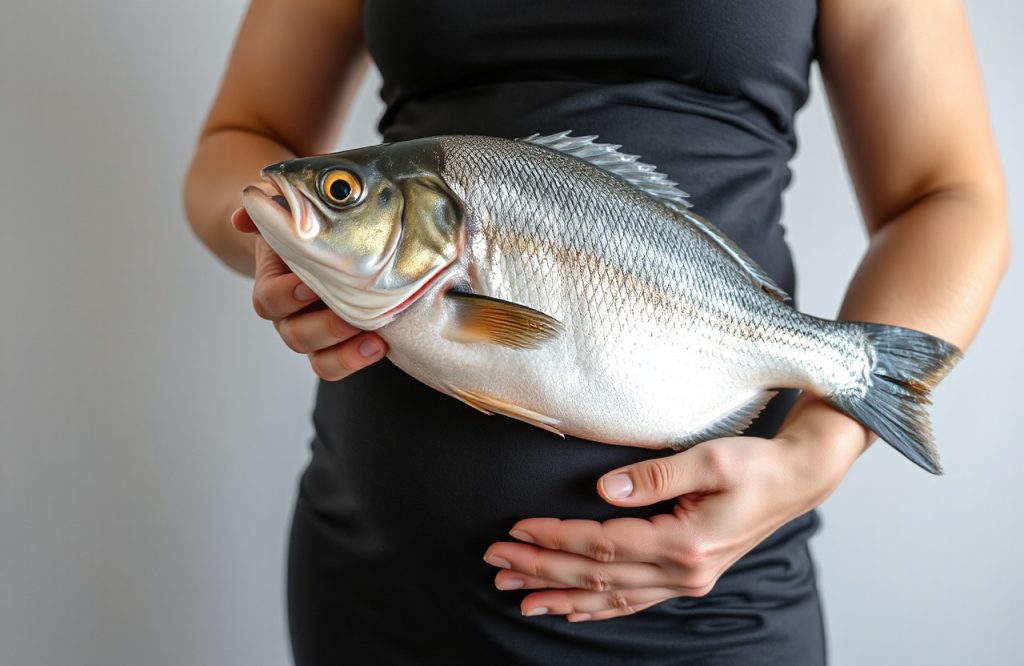
Seafood, particularly fish, is a rich source of n-3 highly unsaturated fatty acids (HUFA). These fats are essential for maintaining cardiovascular and nervous system functions. HUFAs are crucial for neuronal membranes and complex cellular processes, including gene expression, and they may influence behavior. Moreover, HUFAs play a significant role in the brain’s dopaminergic function, which is responsible for releasing dopamine, the “feel-good” neurotransmitter. Previous studies have shown that deficits in HUFAs correlate with increased addiction disorders. Supplementation with HUFAs, compared to a placebo, has been found to reduce cigarette dependence and the number of cigarettes smoked.
Research on Maternal Fish Consumption and Smoking Behavior
Researchers in the United Kingdom investigated the connection between maternal fish consumption, a significant source of HUFAs, and smoking behavior during pregnancy. The findings, published in the British Journal of Nutrition, addressed three key questions:
1. Can increased fish consumption reduce the risk of smoking during pregnancy?
2. Can it improve the chances of quitting?
3. Can it lower the risk of relapse?
Data for the study was collected from the Avon Longitudinal Study of Parents and Children, involving 9,640 mothers with estimated delivery dates between April 1991 and December 1992. The participants self-reported their dietary intake of fish and shellfish through food frequency questionnaires, conducted at an average gestational age of 32 weeks. Maternal smoking patterns were also gathered via self-reported questionnaires, and regression models were utilized to analyze the relationship between these datasets.
Findings on Fish Consumption and Smoking Patterns
The study revealed that maternal fish consumption during pregnancy was associated with reduced smoking behavior among 3,044 mothers who reported regular smoking before pregnancy. This association persisted even after adjusting for confounding variables such as socioeconomic status and education. Most mothers reported consuming less than 340 grams of fish per week, while those consuming more than this amount exhibited an even lower risk of smoking. Additionally, increased fish consumption correlated positively with the likelihood of quitting smoking during pregnancy.
The researchers attributed these findings to potential biological effects on the dopaminergic system. Although there was some evidence suggesting that high fish consumption might reduce relapse rates, the results were not statistically significant after accounting for confounding factors.
Implications for Pregnant Mothers and Public Health
While the study had limitations, including reliance on self-reported data and the timing of food questionnaires, its results offer valuable insights for pregnant mothers seeking to quit smoking. Increasing fish consumption may aid in reducing or quitting smoking, ultimately benefiting both mother and child. The researchers emphasized the importance of educating the public about the harmful effects of cigarette smoke on fetuses and suggested that higher fish intake could be beneficial in reducing addictive behaviors. However, further studies are necessary to confirm these associations on a broader scale.
Reference
Gow, R. V., Heron, J., Hibbeln, J. R., Davis, J. M., & SanGiovanni, J. P. (2018). Maternal fish consumption during pregnancy and smoking behavioral patterns. British Journal of Nutrition, (19), 1–9. http://doi.org/10.1017/S0007114517003592