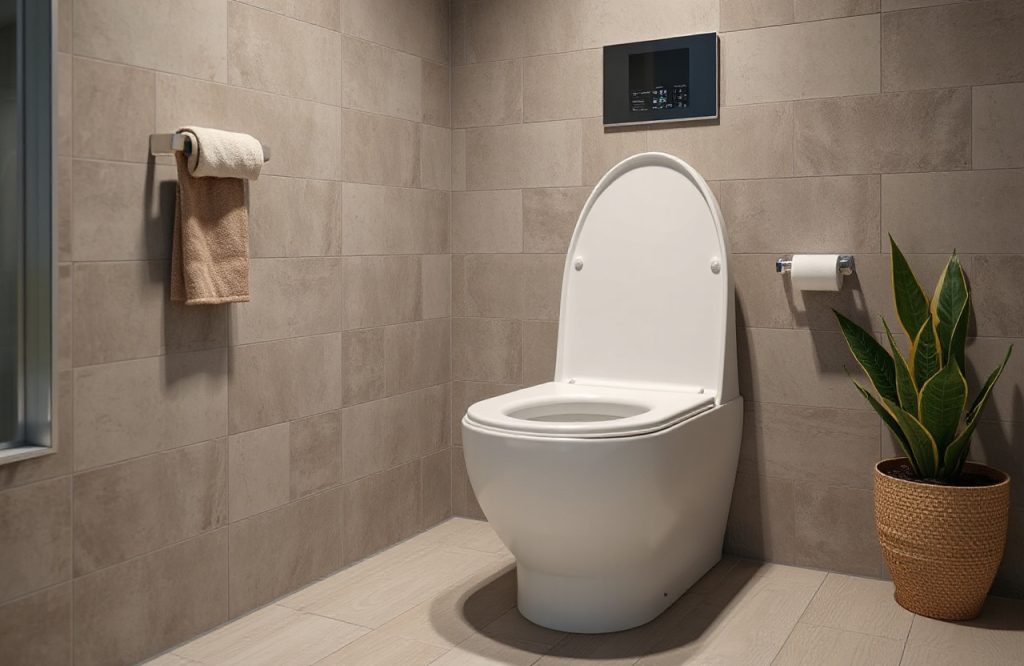
Analyzing Health Through Urine: The Concept of a Smart Toilet
The Role of Wearables and Mobile Health Technologies
Wearable devices and mobile health technologies play a crucial role in the passive and continuous collection of medically relevant information. These technologies establish a baseline of an individual’s physiology, which is essential for tracking health changes over time. For instance, Apple has recently received FDA approval to notify users when atrial fibrillation is detected, a condition characterized by a rapid and irregular heartbeat that can increase the risk of stroke and heart attack. However, while these technologies can diagnose symptoms, they often fall short in providing insights into the underlying causes of health issues.
Understanding the Causes of Illness
To uncover the causes of various illnesses, clinicians frequently utilize precision medicine tools for diagnosis and treatment planning. The modern era is saturated with -omics data, where extensive datasets related to specific biological components of cells are gathered and analyzed. This includes fields such as genomics (the study of DNA), transcriptomics (the study of RNA), proteomics (the examination of proteins and their interactions), and metabolomics (the analysis of metabolites produced by cells). While these methodologies offer valuable insights into disease mechanisms, they often require invasive procedures like blood draws or biopsies, making continuous monitoring of molecular signatures challenging.
What is Metabolomics?
Metabolomics involves the comprehensive analysis of small molecules, known as metabolites, using analytical chemistry and computational techniques to explore complex biochemical mixtures found in biofluids such as blood, urine, and saliva. This approach helps identify biological markers (biomarkers) that can facilitate the early diagnosis of diseases.
Continuous Monitoring of Metabolomics Through Urine
Recent Research Findings
A recent study published in Digital Medicine by U.S. researchers has explored a method that integrates wearables with a metabolomics approach to continuously monitor health status. The research team combined data from a smartphone app—tracking calorie intake and sleep—with continuous metabolomics data derived from urine samples. By opting for urine, which is non-invasive and allows for long-term collection, the researchers followed two patients over ten days, gathering a total of 109 urine samples. Utilizing gas chromatography and mass spectrometry (GC-MS), they established distinct metabolomics profiles for each individual, demonstrating the feasibility of urine samples in continuous health monitoring and personalized medicine.
Identifying Disease-Associated Metabolites
The researchers successfully identified metabolites linked to various diseases, including cancer and Alzheimer’s, although it is important to note that these metabolites have not yet been validated as diagnostic biomarkers. By merging their metabolomics data with biometric information from nutritional and fitness apps, the team tracked caffeine and alcohol consumption and identified the intake of acetaminophen by one participant. This advancement could enhance treatment monitoring and enable tailored dosages for patients.
Challenges and Considerations
While the study establishes urine collection as a viable method for tracking metabolomics data, several factors warrant further discussion. The isolated disease markers were not clinically validated, complicating the diagnosis of medical conditions until a wider database of validated markers is developed. Additionally, comparisons between urine metabolomics analysis and conventional clinical assays (such as blood tests) were not conducted, and certain variables, including age, lifestyle, and hydration status, were not accounted for, potentially impacting the dilution of samples. Lastly, the study’s limited sample size of two participants raises concerns about the applicability of findings to broader populations.
Envisioning a Smart Toilet for Health Monitoring
Addressing Practical Challenges
The participants in this study were the researchers themselves, Joshua Coon and Ian Miller, who collected urine samples every four to eight hours. Both researchers highlighted the logistical challenges of frequent sample collection and storage on dry ice. Coon’s research group proposed the concept of a smart toilet designed to automatically collect urine samples and connect to a miniature GC-MS system for analysis. While this idea is promising, the economic feasibility is questionable, as a single GC-MS machine costs around $300,000.
Future Perspectives
Despite the study’s limitations, Dr. Joshua Coon, the lead author, remains hopeful about the smart toilet concept. In a press release, he stated, “And we’re pretty sure we can design a toilet that could sample urine. I think the real challenge is we’re going to have to invest in the engineering to make this instrument simple enough and cheap enough. That’s where this will either go far or not happen at all.”
Conclusion
The integration of metabolomics and wearable technology through innovative approaches like a smart toilet has the potential to revolutionize personalized medicine. Continued research and validation are necessary to enhance the reliability and applicability of these findings in clinical settings.
References
Steinhubl, S. R., Muse, E. D. & Topol, E. J. The emerging field of mobile health. Science translational medicine 7, 283rv283-283rv283 (2015).
Wishart, D. S. Emerging applications of metabolomics in drug discovery and precision medicine. Nature reviews Drug discovery 15, 473 (2016).
Zhang, A., Sun, H., Yan, G., Wang, P. & Wang, X. Metabolomics for biomarker discovery: moving to the clinic. BioMed research international 2015 (2015).
Wu, J. & Gao, Y. Physiological conditions can be reflected in human urine proteome and metabolome. Expert review of proteomics 12, 623-636 (2015).
Miller, I. et al. Real time health monitoring through urine metabolomics. bioRxiv, 681742 (2019).
Mattmiller, B. Can ‘smart toilets’ be the next health data wellspring? (2019).