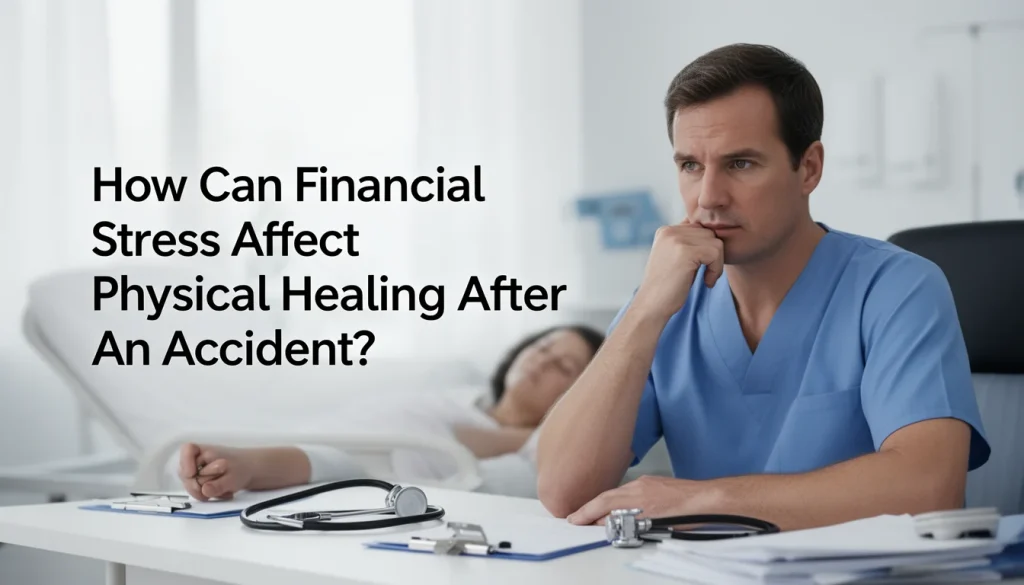
Healing isn t some automatic process that happens in a vacuum. Your body isn t a robot swapping out a dead battery; it’s constantly clashing with everything going on in your life. When those medical bills start piling up on the counter, your brain goes into a full-blown tailspin. That high alert feeling? It does a lot more than just ruin your sleep; it literally blocks your body from fixing itself.
A common cold often persists for weeks when a person is overwhelmed by a heavy workload. That same principle applies, though much more severely, to a traumatic injury. When a bank account is in the red, the body isn t just dealing with mental stress. It is facing a physical roadblock. Financial instability creates a physiological environment that keeps a person broken for longer, turning a standard recovery into a drawn-out struggle.
Why Does Financial Worry Trigger A Biological Response?
When you’re staring at a Past Due notice or wondering where your next paycheck is coming from, your brain goes into survival mode. This triggers the HPA axis, the body’s hardwired alarm to start dumping cortisol into the bloodstream. In a short-term crisis, cortisol is a lifesaver. But when financial worry won’t let up, that hormone stays present long enough to become toxic. It effectively acts as a corrosive on the immune system. The body becomes so preoccupied with a fight-or-flight survival state that the actual work of repair, knitting bones, and closing wounds gets pushed to the back burner.
This isn t just a feeling; it’s a physiological roadblock. When cortisol levels remain elevated, the body fails to produce the necessary chemical signals, specifically cytokines that trigger wound closure. The entire healing process effectively stalls out.
What Legal Principles Address These Hidden Damages?
The law actually catches on to something most people miss: an accident doesn’t stop hurting the moment the ambulance doors open. In places like South Carolina, we look at non-economic damages. That’s just a fancy legal way of saying the court recognizes your mental anguish and the fact that your life just isn’t as fun or easy as it was before the crash. These invisible scars, the relentless, grinding pressure of managing housing costs while immobilized, carry as much weight as a physical fracture. When financial instability results in a documented medical regression, such as a sudden pain flare-up or a wound that fails to close, the burden should not fall on the victim. These setbacks are not mere coincidences; they are compensable complications directly linked to the original trauma of the accident. That complication is a direct result of the accident, and the law says you can hold the responsible party liable for it.
Linking this financial hardship directly to a stalled physical recuperation requires a strategic legal procedure. A Columbia personal injury lawyer from reputable personal injury law firms like Stewart Law Offices can assist in gathering the necessary medical testimony and mental health records to prove these damages. This advocacy serves to detail various impacts of the injury, including both documented medical expenses and the documented psychological effects associated with the recovery process.
If you find that financial stress is hindering your physical recovery after a collision near Devine Street or anywhere in the Midlands in Columbia, you can visit their office at 10 Calendar Ct # 100, near First Citizens Bank, or call 803-743-4200 to speak with a personal injury attorney for a comprehensive review of your legal options.
How Does Economic Pressure Impact Treatment Compliance?
Financial strain forces a person into making brutal trade-offs. It forces a brutal choice between day-to-day survival, like keeping the lights on, and the strict demands of a medical recovery plan. This kind of pressure does more than just trigger anxiety. It effectively guts the recovery process before the body even gets a real chance to start healing. The real damage usually starts with small, desperate trade-offs that snowball into major physical regressions. These financial barriers don’t always announce themselves; instead, they surface through a series of practical choices that eventually derail the entire recovery process.
Skipping Physical Therapy Sessions
Skipping even any of the sessions can lead to permanent immobility or loss of range of motion. Muscles begin to atrophy when the guided movement provided by a professional is absent for too long.
Rationing Prescribed Medications
Trying to stretch a thirty-day prescription to last for sixty days is a flat-out dangerous gamble. When you start skipping doses to save a buck, the medication never actually reaches the levels it needs to stay in your system. You aren t just dealing with the pain, you’re leaving yourself wide open to life-threatening issues like blood clots. It’s a shortcut that can easily land you back in the emergency room.

How Can Victims Mitigate Financial Stress Today?
Getting a handle on the situation is one of the best things you can do for your cortisol levels. It gives your body the breathing room it actually needs to fix itself. A good first step? Stop letting the paperwork bury you. Get every medical bill and insurance letter into one folder, in order by date.
Columbia personal injury lawyer Brent P. Stewart argues that healing is about more than just medicine; it’s about cutting out the ‘noise’ that stops the body from doing its job. According to Stewart, when a person gets their obligations in order and starts talking to the right people, the situation stops feeling like chaos. That shift toward clarity is actually a huge part of physical recovery. Even something as small as a phone call to a billing office can lower a patient’s stress levels enough to make a difference.
Don’t underestimate how much a simple phone call can lower your heart rate. If you call the billing departments and ask for a medical hold or a payment plan, you can usually kill those aggressive collection calls that keep you up at night. Also, don’t wait to look into disability benefits or supplemental insurance. Getting even a little bit of cash flowing in can take the pressure off, letting you focus on the hard work of physical rehab instead of worrying about the bank account.
Frequently Asked Questions
Why does stress make my physical pain feel much worse?
Stress increases nervous system sensitivity, lowering your pain threshold and making physical sensations feel significantly more intense and frequent.
Can financial anxiety actually cause a wound to heal more slowly?
Yes, high cortisol levels interfere with the production of cytokines, which are necessary for the body’s tissue repair process.
Image by Vilkasss and TUREK90 from Pixabay
The editorial staff of Medical News Bulletin had no role in the preparation of this post. The views and opinions expressed in this post are those of the advertiser and do not reflect those of Medical News Bulletin. Medical News Bulletin does not accept liability for any loss or damages caused by the use of any products or services, nor do we endorse any products, services, or links in our Sponsored Articles.