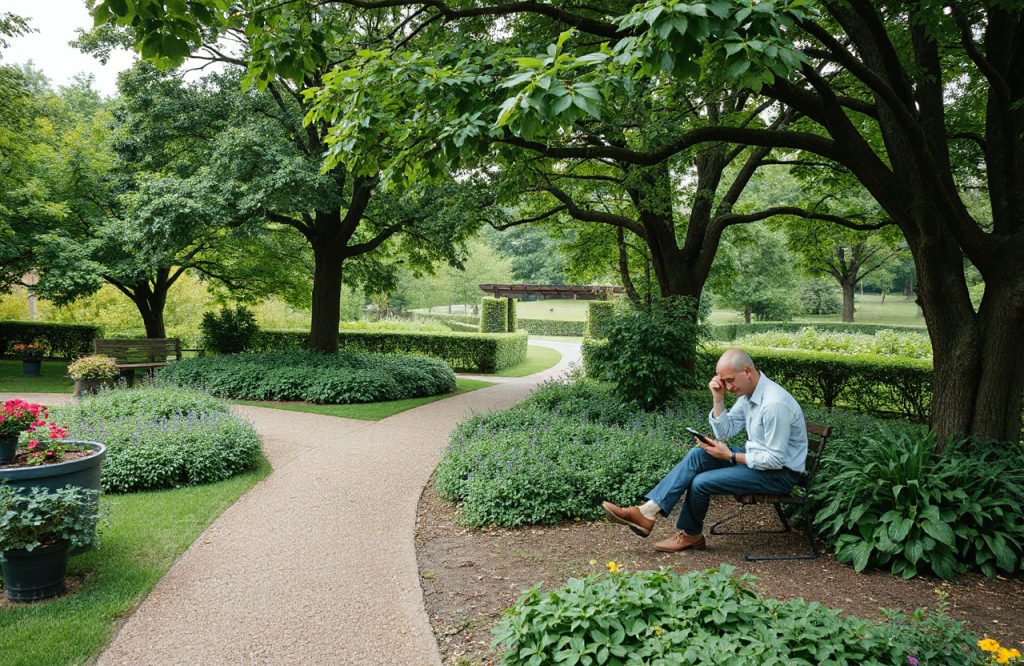
Impact of Green Environments on Students’ Stress Levels
Study Overview
A recent study published in BMJ Open examined the relationship between access to green environments and students’ perceived stress levels. Predictions indicate that by 2060, more than 66% of the global population will reside in urban areas, with Germany expected to reach 92%. This urbanization trend correlates with an increase in chronic job stress among the population.
Urban Living: Benefits and Challenges
While large cities provide advantages such as industrialization, economic growth, and enhanced livability, they can also lead to fewer social interactions and heightened psychological stressors. These factors may decrease individual productivity, result in absenteeism, and contribute to early retirement.
Role of Green Spaces in Well-being
Access to green spaces is thought to promote physical activity, enhance social connections, and facilitate recovery from demanding tasks. However, research on the impact of green environments on job satisfaction remains limited. The recent study focused on the accessibility of green spaces around participants’ homes and its relationship with work overload and job dissatisfaction.
Methodology
The researchers utilized participants’ addresses to measure the amount of green space surrounding their homes. They employed satellite imagery to assess the availability of green areas directly outside each participant’s residence. Additionally, the study accounted for stressors outside the workplace and academic settings, incorporating four subscales: social overload, lack of social recognition, chronic worrying, and stressful memories. These scales provided insights into self-perceived stress in non-work environments.
Occupational Status and Environmental Variables
Participants were categorized based on their occupational status, including employees, university students, vocational trainees, self-employed individuals, unemployed persons, and others. Each working participant fell into one of five job categories. The study also considered various environmental factors, such as the distance to sports facilities, proximity to the nearest urban green space, and the extent of tree coverage in the area.
Key Findings
The study confirmed previous research indicating that increased green space around participants’ homes correlates with reduced job stress, particularly for those transitioning from academic to professional life. Exposure to greener, less urbanized surroundings positively influences health by increasing opportunities for physical activity and access to recreational facilities. The presence of green spaces enhances recovery and recreation, which can mitigate stress related to academic and workplace environments.
Future Research Directions
Further studies could provide valuable insights for urban planning, promoting the development of workspaces and living conditions that support mental well-being.
Author and Reference
Written by Sonia Leslie Fernandez, Medical News Writer.
Reference: Herrera, R., Markevych, I., Berger, U., Genuneit, J., Gerlich, J., Nowak, D., … & Windstetter, D. (2018). Greenness and job-related chronic stress in young adults: a prospective cohort study in Germany. BMJ Open, 8(6), e021599.