Impact of High-Heeled Shoes on Women’s Health
Prevalence of High Heels in Fashion
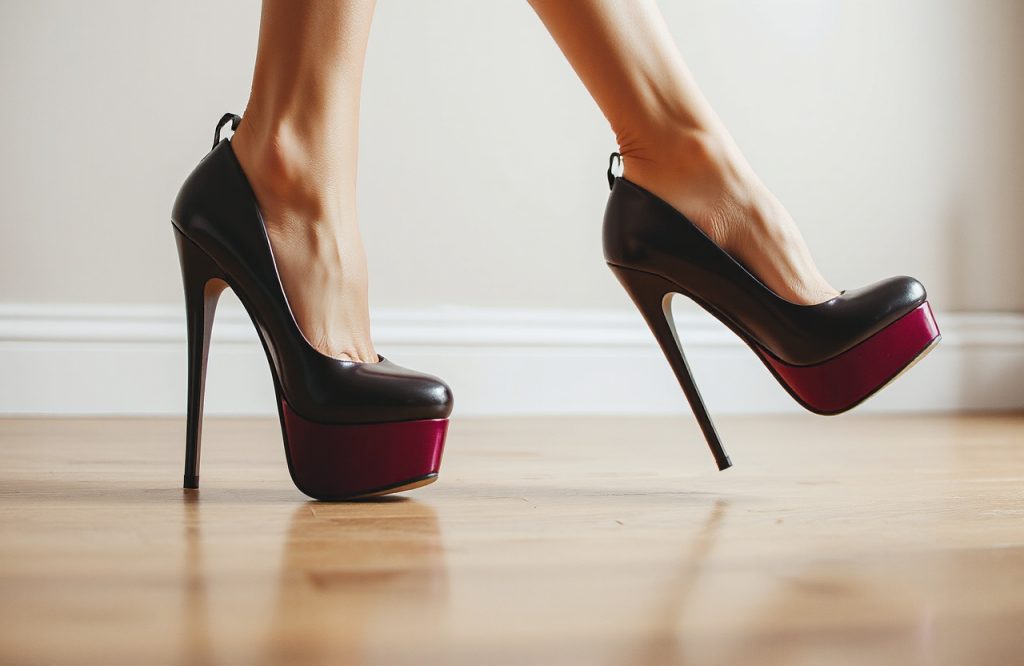
Despite the known negative health implications, many women continue to wear high-heeled shoes, which are a prominent feature in modern fashion. These footwear choices are frequently seen in professional settings, social events, and dining establishments, often at the cost of comfort.
Health Risks Associated with High Heels
The discomfort of high-heeled shoes extends beyond mere inconvenience. Wearing these shoes increases the likelihood of falls, lower limb fractures, heightened stress on the patellofemoral joint, and lower back pain. While some attribute lower back pain to lumbar lordosis, this viewpoint is subject to ongoing debate.
Understanding Lumbar Lordosis
Lumbar lordosis refers to the pronounced curve of the lower back, which can develop due to muscle imbalances, such as weak hamstrings and tight hip flexors, and is often linked to anterior pelvic tilt. The design of high-heeled shoes may contribute to lumbar lordosis; however, existing studies suggest that they do not alter lumbar lordosis when standing.
Research Study on Gait and High Heels
This ongoing debate prompted researchers to further examine the relationship between high-heeled shoes, lumbar lordosis, and walking patterns. In a study published in *Gait & Posture*, Baaklini et al. investigated how high heels influence pelvic and spinal kinematics in women while walking.
Study Design and Participants
The study involved women aged 20-55, with shoe sizes between 37 and 40, who had not previously undergone surgeries on their ankle, knee, hip, or spine. Participants were divided into two groups: an experienced group, who had worn narrow shoes with heels over 4 cm for at least 12 hours per week for a year, and an inexperienced group, who wore similar shoes a maximum of twice per month for less than 2 hours.
Methodology
Researchers employed a sophisticated motion capture system, outfitted with markers on the participants’ bodies and 22 cameras, to analyze gait under three conditions: barefoot, with a 4 cm heel, and with a 10 cm heel. This setup allowed for the assessment of curvature angles, rotation, and distance changes across different footwear.
Key Findings
The study revealed several noteworthy results. There were no significant differences in performance between the experienced and inexperienced groups, which aligns with previous research indicating that experience does not correlate with better biomechanical outcomes in high-heeled footwear.
When comparing pelvic biomechanics, a slight deterioration was noted when transitioning from barefoot to low-heeled shoes (4 cm), but the changes were minor enough to suggest that wearing 4-7 cm heels may not significantly compromise safety, balance, mobility, or comfort. Future research could focus on muscle strain and adaptation time to pinpoint when high heels become hazardous.
Conclusion on Lumbar Lordosis and Back Pain
Importantly, the study found that lumbar lordosis was not exacerbated by wearing high-heeled shoes. In fact, maximum lumbar curvature decreased from barefoot to low-heeled to high-heeled conditions, applicable to both inexperienced and experienced walkers. These findings suggest that the lower back pain often linked to high-heeled shoes is not due to lumbar lordosis but arises from other biomechanical factors.
Author’s Note
Written By: Wesley Tin, BMSc