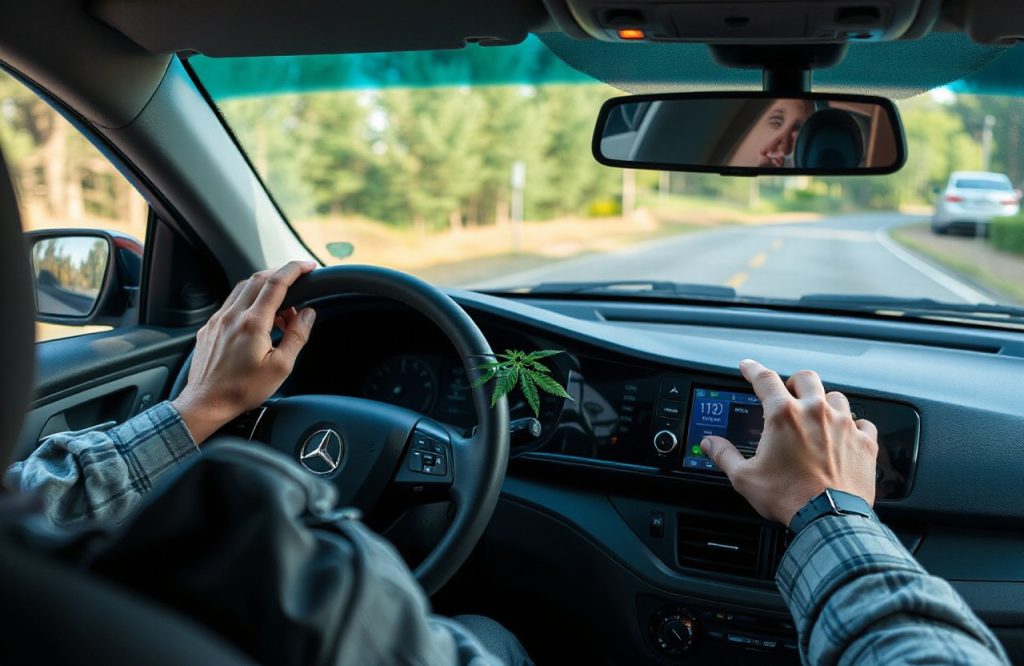
Marijuana: A Global Perspective
Prevalence and Legalization
Marijuana, a product derived from the cannabis plant, stands as the most commonly used illicit drug across the globe. Its usage is increasingly prevalent as more countries move towards legalizing its consumption. Additionally, marijuana is frequently identified in blood tests of impaired drivers.
Statistics on Impaired Driving
Data from the US Trauma Centre indicates that individuals involved in vehicle accidents often test positive for marijuana and alcohol. Young adults, who are more likely to use cannabis recreationally, also represent a demographic with a heightened risk of vehicular accidents.
Understanding Marijuana
Cannabis Composition
Marijuana originates from the Cannabis sativa or Cannabis indica plant, recognized as one of the earliest cultivated plants. The cannabis plant contains over 104 identified cannabinoids, which are the active components of cannabis products, alongside more than 400 other compounds.
Active Compounds
Tetrahydrocannabinol (THC) is the cannabinoid primarily responsible for the drug’s psychoactive effects. In contrast, cannabidiol (CBD) has gained attention for its non-psychoactive characteristics and potential therapeutic applications for neurological disorders and chronic pain. The chemical profile of cannabis is typically assessed by the concentrations of THC and CBD, with THC often determining the product’s potency. According to the US Drug Enforcement Administration (DEA), the average potency of cannabis products has risen significantly over the last decade.
Cannabis Product Forms
Cannabis products are generally classified into three categories: herb (dried flowers), resin, and oil. These forms vary in THC content, with cannabis oil typically being the most potent. Marijuana primarily consists of the dried flowers, leaves, stems, and fruit of the plant.
Consumption Methods
Cannabis can be consumed in several ways, including smoking, eating, drinking, or vaporizing. The onset and duration of effects vary by method. For instance, smoking allows for rapid absorption of THC into the bloodstream, leading to immediate effects, whereas consuming edibles results in slower THC absorption and delayed effects.
The Impact of Marijuana on Driving
Effects on the Endocannabinoid System
Marijuana interacts with the endocannabinoid system, which regulates various bodily functions such as appetite, blood pressure, and reward sensations. The brain contains numerous cannabinoid receptors where these interactions produce the drug’s primary psychological effects. However, further research is needed to fully understand the drug’s mechanisms.
Driving Impairments
The consumption of marijuana can lead to euphoria, relaxation, altered perception of time, increased sociability, and heightened appetite. However, it also impairs critical driving skills, including problem-solving, motor skills, short-term memory, and visual perception. As indicated by the National Institute on Drug Abuse, these impairments significantly heighten the risk of fatal accidents.
Research demonstrates that drivers with THC in their system exhibit slower reaction times and difficulty maintaining lane position compared to those who are not under the influence. Simulation studies reveal that sudden obstacles pose a greater crash risk for those driving while impaired by marijuana. Overall, evidence suggests that even low doses of THC can adversely affect automatic driving functions.
Combined Effects with Alcohol
The risks associated with driving under the influence of marijuana escalate when alcohol is also present in the bloodstream.
Negative Effects of Marijuana
Short-Term Effects
The consumption of cannabis products, particularly those with high THC concentrations, may lead to various negative effects, including dizziness, nausea, increased heart rate, and dry mouth. More severe reactions can involve panic attacks, which are a common emergency associated with marijuana use.
Long-Term Implications
Research indicates that a marijuana use disorder can develop, especially among those who begin using it in adolescence. Regular users of high-potency marijuana face a greater risk of experiencing temporary acute psychosis. For individuals with schizophrenia, prolonged use may exacerbate symptoms such as paranoia and hallucinations. Furthermore, frequent marijuana smokers may encounter respiratory issues and a heightened risk of lung infections.
References
Hartman, R. L., & Huestis, M. A. (2013). Cannabis effects on driving skills. Clinical Chemistry, 59(3), 478–492. https://doi.org/10.1373/clinchem.2012.194381
Lafaye, G., Karila, L., Blecha, L., & Benyamina, A. (2017). Cannabis, cannabinoids, and health. Dialogues in Clinical Neuroscience, 19(3), 309–316. https://doi.org/10.31887/DCNS.2017.19.3/glafaye
National Academy of Sciences. (2017). Health effects of cannabis and cannabinoids: The current state of evidence and recommendations for research. Retrieved from https://www.ncbi.nlm.nih.gov/books/NBK425762/?report=reader
National Institute on Drug Abuse. (2020). Marijuana research report. Retrieved from https://www.drugabuse.gov/download/1380/marijuana-research-report.pdf?v=d9e67cbd412ae5f340206c1a0d9c2bfd
Ogourtsova, T., Kalaba, M., Gelinas, I., Korner-Bitensky, N., & Ware, M. A. (2018). Cannabis use and driving-related performance in young recreational users: A within-subject randomized clinical trial. Canadian Medical Association Journal, 6(4), E453–E462. https://doi.org/10.9778/cmajo.20180164
Sewell, R. A., Poling, J., & Sofuoglu, M. (2009). The effect of cannabis compared with alcohol on driving. The American Journal on Addictions, 18(3), 185–193. https://doi.org/10.1080/10550490902786934
Turner, A. R., & Agrawal, S. (2020). Marijuana. Retrieved from https://www.ncbi.nlm.nih.gov/books/NBK430801/