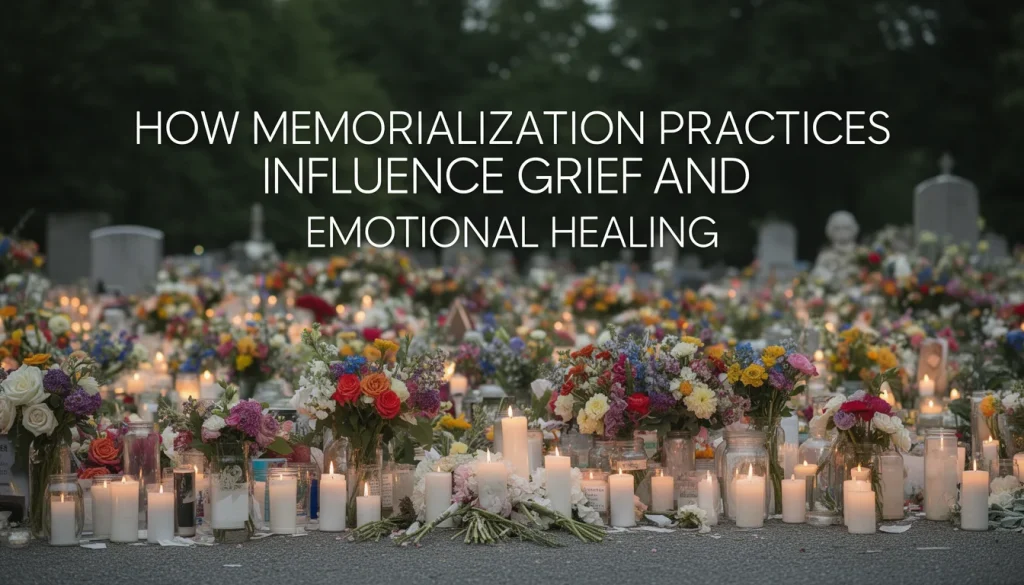
Grief and the comforting role of memorials
Grief is a universal, natural response to loss. Although the emotional trajectory differs from person to person, many people find steadying value in rituals and memorials that create continuity when life is rearranges around absence. Ceremonies such as funerals, anniversary observances, and physical memorials at sites associated with a loved one serve as emotional counterpoints to the relentless passage of time. These practices do not eliminate sorrow; rather, they support adaptation, encourage meaning-making, and can strengthen ties between people who share a loss. This essay examines psychological and public-health reasons why memorial traditions can help in emotional recovery.
Understanding grief as an adaptive process
Grief as a natural consequence of attachment
Grief arises from love, attachment, and social connection. Framing it as an adaptive and expected response reduces stigma and validates the wide range of feelings that accompany mourning. Recognizing grief as natural helps people and caregivers treat emotional reactions with compassion rather than viewing them as pathological interruptions to be hurriedly fixed.
Adjustment over erasure
Contemporary models of bereavement emphasize adaptation rather than completion. In contrast to older ideas that people must “finish” mourning or “get over” a loss, current understanding sees grief as an ongoing process that people integrate into their lives. Emotions experienced during bereavement can include sadness, yearning, reflection, gratitude, and gradual acceptance. The American Psychological Association defines grief as “the pain of experiencing significant loss, most likely the death of someone you love,” and notes that diverse emotional responses can still represent healthy adjustment. Healing, in this framework, is not about forgetting; it is about finding ways to carry the loss forward in ways that support emotional functioning and maintain connection to what was valued.
Psychological benefits of tangible memorials
Physical memorials as anchors for memory and identity
Tangible memorials—gravesites, plaques, benches, or other markers—act as physical embodiments of memory and personal identity. For many people, having a specific place to visit provides emotional footing during an unstable period. These spaces offer predictable opportunities for reflection and ritual, which can interrupt the unstructured, overwhelming aspects of grief in a stabilizing way.
Predictability supports emotional regulation
Predictable, structured environments are psychologically meaningful. Visiting a memorial on anniversaries or other meaningful days introduces rhythm and repetition into an otherwise disorienting time. Repetition is calming for many people because it reduces uncertainty; structured rituals and locations create a container in which feelings can be expressed and processed more safely.
Personalization and transgenerational remembering
Personalized memorials—through inscriptions, symbols, or culturally meaningful design—help translate memory into narrative. Names and dates confirm identity; chosen symbols communicate values, relationships, and aspects of a life lived. These tangible markers also support intergenerational transmission of stories. A memorial can be a focal point for storytelling, helping children and younger relatives understand family history and maintain continuity across generations.
How rituals promote emotional regulation
Structured ceremonies foster stability
Rituals are an ancient human response to loss. Funerals, memorial services, and other ceremonies use repeated elements—music, readings, prayers, or symbolic acts—to provide a shared framework for processing strong emotions. These elements create expectations about what will happen and how to behave, which can be reassuring when grief makes everyday living feel unpredictable. Even small personal rituals, such as lighting a candle or observing an anniversary in a particular way, can become consistent supports that help regulate emotion.
Social connection and collective healing
Grief frequently draws families and communities closer. Shared remembrance builds mutual understanding and solidarity. Memorial sites and communal rituals create focal points for visits, conversation, and storytelling—activities that strengthen social bonds and reduce isolation. The bereavement literature indicates that social support is a major contributor to resilience; feeling understood and supported by others who share one’s experience often improves emotional coping over time.
Practical considerations: affordability and decision-making
Reducing logistical stress
Practical choices made during bereavement—financial and logistical—affect emotional health. Economic strain compounds the mental load of loss; funerals and memorial costs can be substantial. Organizations that track funeral industry trends have highlighted the financial burden families may face. When families have access to a range of clear, affordable options that align with their emotional and cultural needs, decision-making becomes more manageable and can reduce additional anxiety during mourning.
Advance planning and informed choices
Advance planning and transparent information about options help families match memorial choices to their values and means. This reduces rushed decisions and fosters a sense of control at a time when many aspects of life feel uncontrollable. Practical planning can therefore be an important part of compassionate bereavement care.
Conclusion: memorial practices as pathways to resilience
Rituals of remembrance and physical memorials can support emotional adaptation after loss by providing grounding, structure, social connection, and meaningful continuity. They do not erase grief; instead, they create ways to incorporate loss into ongoing life with dignity and purpose. Through personalization, shared ritual, and practical planning, memorial practices can strengthen resilience and long-term emotional health by enabling thoughtful acknowledgment and collective remembrance. medichelpline presents this synthesis to highlight how memorial traditions function as both psychological supports and public-health resources in the wake of loss.