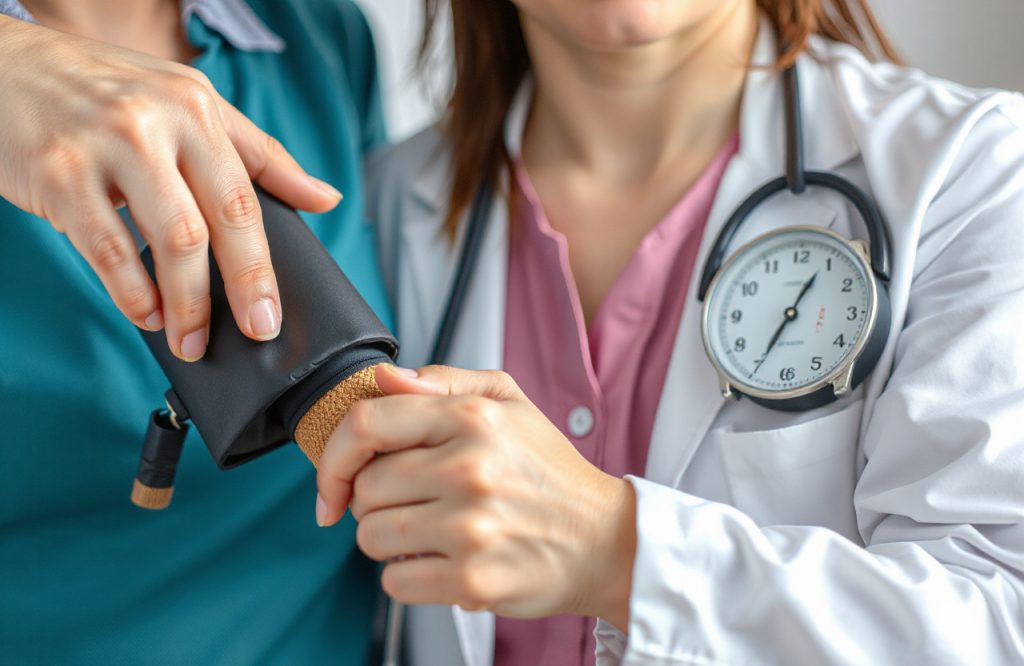
Effectiveness of Self-Monitoring Blood Pressure vs. Clinic Monitoring
Introduction
A comprehensive study conducted in the UK evaluated the effectiveness of self-monitoring blood pressure compared to traditional clinic monitoring for adjusting treatment to manage high blood pressure. High blood pressure is a significant risk factor for cardiovascular diseases, and antihypertensive medications play a crucial role in lowering blood pressure and mitigating associated risks. However, determining the appropriate medication for each patient can be a challenging and time-intensive process, often resulting in suboptimal blood pressure control. Typically, patients must attend multiple clinic visits for blood pressure assessments and medication adjustments.
Mixed Results of Previous Studies
Previous research on the efficacy of self-monitoring blood pressure for treatment adjustments has yielded inconsistent results. The recent UK study compared the outcomes of self-monitoring, with or without telemonitoring support, against standard clinical care in primary care practices. Findings from this study were published in The Lancet.
Study Overview
The study involved over 1,000 patients from 142 primary care practices across the UK. Participants had blood pressure readings exceeding 140/90 mmHg and were classified as not well-controlled according to standard clinic measurements. Each patient was willing to self-monitor and was randomly assigned to one of three groups: self-monitoring only, self-monitoring with telemonitoring support, or usual clinical care as the control group.
Methodology for Blood Pressure Assessment
Patients in the self-monitoring groups received training on using an electronic blood pressure monitor and were instructed to record their readings twice daily for the first week of each month.
– **Self-Monitoring Only Group**: Participants mailed their paper records of blood pressure readings to their general practitioners (GPs) and were advised to visit the clinic if readings were extremely high or low.
– **Telemonitoring Group**: Participants used an SMS text-based service to submit their readings, which included alerts prompting them to report their measurements and attend the clinic if readings fell outside target ranges. Their data was accessible via a web-based interface for GPs, who could monitor readings and calculate weekly averages.
The usual care group attended clinics as per their GP’s recommendations, with physicians reviewing the self-monitoring groups’ readings monthly and usual care patients as needed. Physicians had the discretion to adjust antihypertensive medications in all groups based on the recorded blood pressure readings. Follow-ups were conducted at 6 and 12 months to evaluate blood pressure outcomes.
Results of the Study
After 12 months, patients in both self-monitoring groups exhibited significantly lower blood pressure compared to the usual care group. While there was no notable difference in blood pressure levels between the self-monitoring alone and telemonitoring groups at the 12-month mark, the telemonitoring group demonstrated a quicker reduction in blood pressure by the 6-month assessment.
Conclusion
The researchers concluded that self-monitoring, whether supplemented with telemonitoring or not, significantly reduced blood pressure more effectively than adjustments based solely on clinic measurements. It is estimated that approximately 30% of hypertensive patients in the UK and other regions currently utilize blood pressure self-monitoring. This method could prove to be a valuable strategy for enhancing hypertension management within primary care environments.
Reference
McManus RJ, Mant J, Franssen M, et al. Efficacy of self-monitored blood pressure, with or without telemonitoring, for titration of antihypertensive medication (TASMINH4): an unmasked randomized controlled trial. Lancet 2018;391:949-59. doi:10.1016/S0140-6736(18)30309-X.