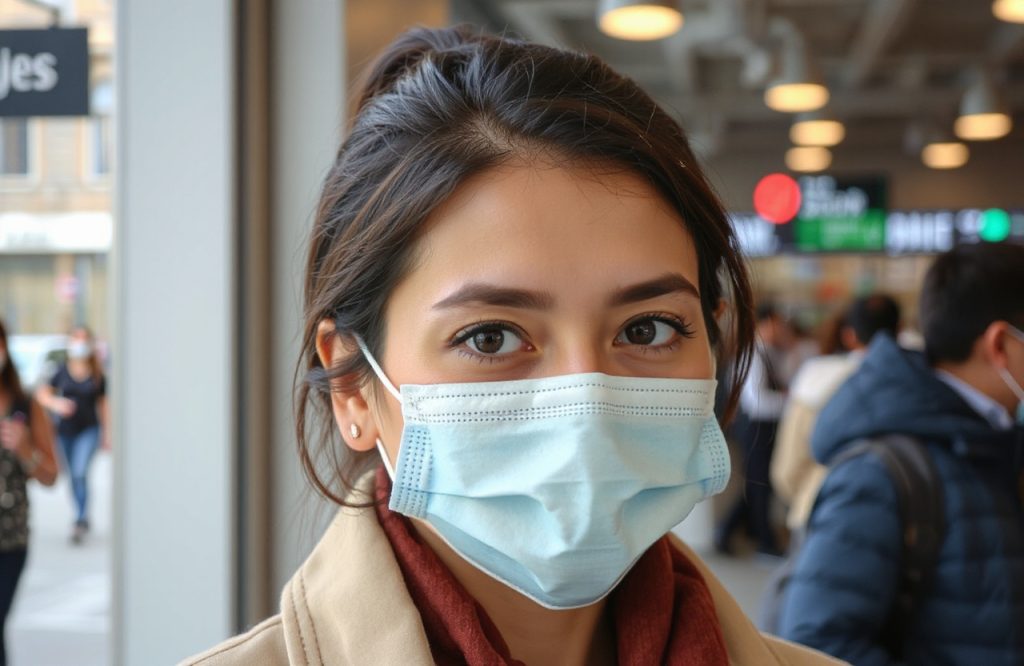
Evidence Supporting Mask Use in Public During COVID-19
Controversy Surrounding Mask Wearing
The debate over the effectiveness of masks during the COVID-19 pandemic continues, yet increasing research suggests that wearing masks in public, especially indoors where social distancing is challenging, can significantly reduce the risk of transmission.
Research Findings on Droplet Transmission
Recent studies have focused on the behavior of droplets released while speaking. Researchers employed a laser light scattering technique to assess how long these droplets remain airborne. During their experiments, they recorded a subject speaking for twenty-five seconds and continued monitoring the environment for 80 minutes post-speech to analyze the quantity of dispersed particles.
Their findings indicated that one minute of loud speaking could release approximately 1,000 droplets containing viral particles into the atmosphere. Moreover, the droplets were found to remain suspended in the air for over eight minutes, posing a transmission risk to individuals nearby. According to the researchers, these airborne particles have a high potential for disease transmission, particularly in enclosed spaces.
Reassessing Physical Distancing Guidelines
Some experts have pointed out that the current recommendation of maintaining a physical distance of 2 meters (6 feet) may not be sufficient in preventing the spread of COVID-19, especially in the absence of masks. They argue that this distance can only be deemed effective if everyone consistently wears face masks during daily activities.
Considerations for Mask Wearing
It is critical to acknowledge that wearing face masks may not be suitable for everyone. Masks should not be used by children under two years of age, individuals with breathing difficulties, or those who cannot independently remove their masks.
Current Recommendations from Health Authorities
The Centers for Disease Control and Prevention (CDC) and Health Canada currently advocate the use of non-medical face masks in public settings, particularly where maintaining physical distance is difficult, such as in stores or on public transport.
References
1. The airborne lifetime of small speech droplets and their potential importance in SARS-CoV-2 transmission. Valentyn Stadnytskyi, Christina E. Bax, Adriaan Bax, Philip Anfinrud. Proceedings of the National Academy of Sciences Jun 2020, 117 (22) 11875-11877; DOI: 10.1073/pnas.2006874117
2. Setti, L.; Passarini, F.; De Gennaro, G.; Barbieri, P.; Perrone, M.G.; Borelli, M.; Palmisani, J.; Di Gilio, A.; Piscitelli, P.; Miani, A. Airborne Transmission Route of COVID-19: Why 2 Meters/6 Feet of Inter-Personal Distance Could Not Be Enough. Int. J. Environ. Res. Public Health 2020, 17, 2932.
3. CDC. Considerations for Wearing Cloth Face Coverings. Available at: https://www.cdc.gov/coronavirus/2019-ncov/prevent-getting-sick/cloth-face-cover-guidance.html
4. Government of Canada. Non-medical masks and face coverings: About. Available at: https://www.canada.ca/en/public-health/services/diseases/2019-novel-coronavirus-infection/prevention-risks/about-non-medical-masks-face-coverings.html