Sponsored Links Disclaimer
The article below includes sponsored links to external sites, which are provided for convenience and informational purposes. The editorial team of the Medical News Bulletin did not participate in the creation of the content found on these linked sites and is not accountable for their accuracy or content. The opinions expressed in the sponsored links are those of the advertisers and do not represent the views of the Medical News Bulletin. The Medical News Bulletin disclaims any liability for losses or damages arising from the use of any products or services mentioned, nor do we endorse any products, services, or links found in these sponsored links.
Selfie Perception and Plastic Surgery Consultations
The Rise of Selfies
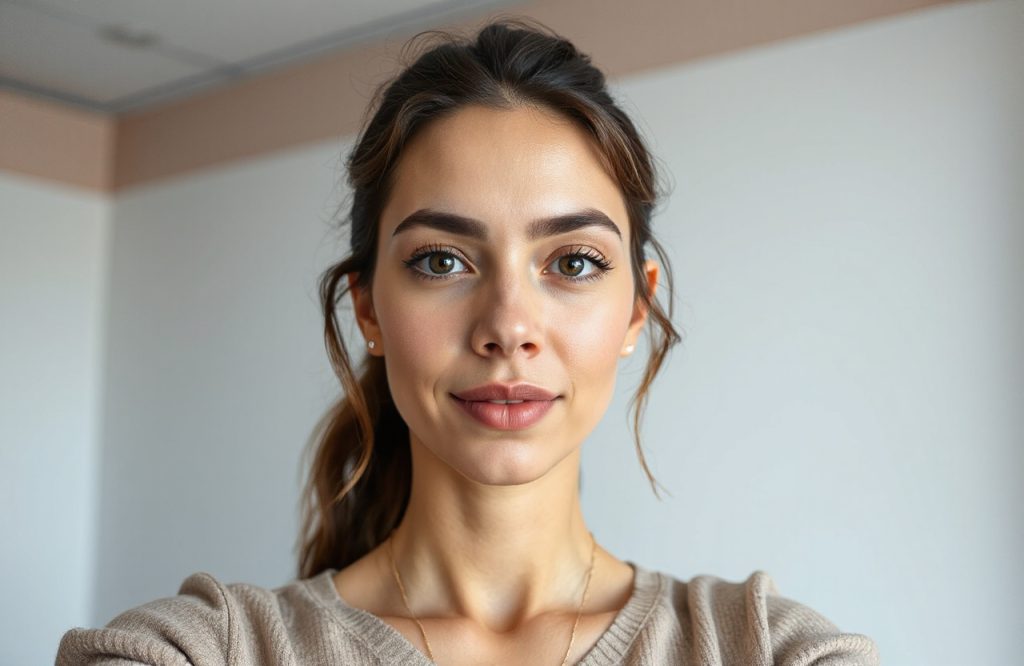
Selfies have become a ubiquitous part of modern life. Nearly everyone with a smartphone has taken one, and those with social media accounts often share them. However, many individuals express dissatisfaction with how they appear in selfies, prompting some to seek consultations for plastic surgery.
Common Complaints
A significant concern among those seeking surgical consultation is the perception that their noses appear disproportionately large in photographs. While some may attribute this to vanity or issues with self-image, it raises an important question: Is there a basis for this perception?
Research Insights
A research letter published in the March edition of JAMA Facial Plastic Surgery sheds light on this issue. The study utilized photographs taken at various distances to analyze the geometric relationships of facial features and sight lines. The researchers propose that the appearance of larger noses in photos is a result of the flattening effect that occurs when a three-dimensional image is converted to two dimensions.
Understanding Distortion
In real life, we perceive objects in three dimensions, but photographs lack depth, which can lead to distortion. The projection of the nose can be perceived as wider in a two-dimensional format, contributing to the illusion of a larger nose. Additionally, the distance from which a selfie is taken influences the angles and proportions of facial features. This explains why individuals often look better in professionally taken portraits, typically shot from around five feet away, where any distortion is minimized.
Selfie Distortion Effects
When taking a selfie at arm’s length, the distortion becomes more pronounced, making the nose appear larger in relation to other facial features, such as the cheekbones. While this perception may hold some truth, it does not accurately reflect the true three-dimensional dimensions of the nose.
Future Implications
Given the growing popularity of selfies for social media engagement, there may come a time when these perceptions influence beauty standards significantly. If beauty ideals begin to be defined by selfies rather than traditional portraits, the rationale for seeking plastic surgery consultations may become more legitimate.
Alternative Solutions
However, for now, simple solutions such as using a selfie stick or having someone else take your picture may suffice to alleviate concerns about appearance in selfies.
Reference
Ward, et al. “Nasal Distortion in Short-Distance Photographs.” Research Letter from JAMA Facial Plastic Surgery. Published online March 1, 2018.