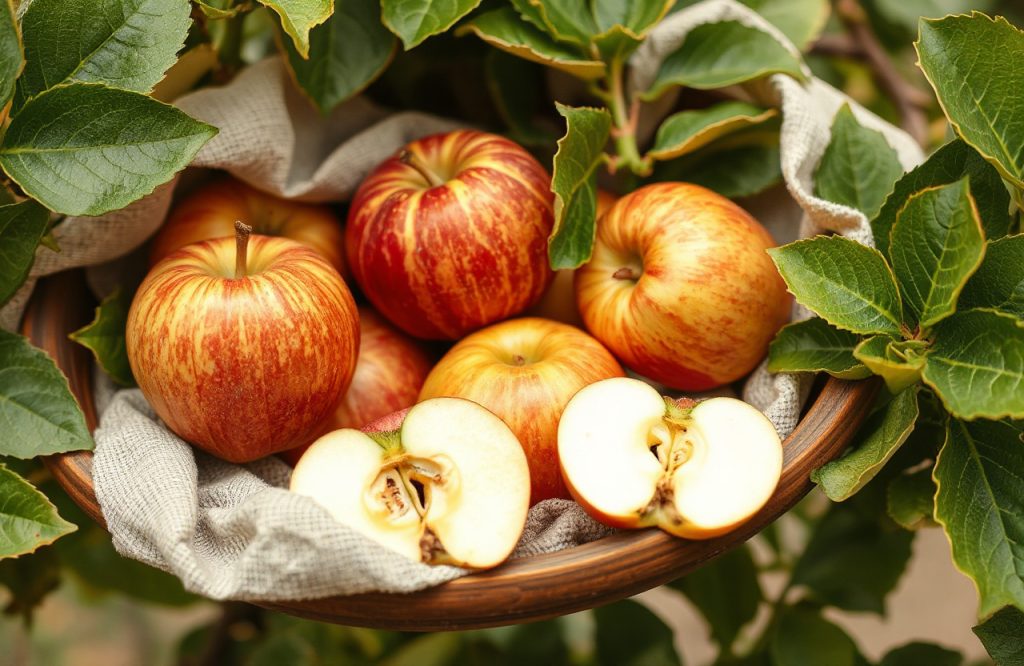
Health Benefits of Apples
Nutritional Profile
Apples are rich in essential nutrients, including vitamins C and E, potassium, magnesium, and fiber, while being low in fats. A diet abundant in fruits and vegetables may reduce the risk of chronic diseases. Research indicates that apples could play a role in cancer prevention, enhance heart health, and assist in cholesterol management.
The Role of Phytochemicals
The health benefits of apples are largely attributed to phytochemicals—specific plant molecules that help mitigate risks of cardiovascular diseases, cancer, and inflammation. Apples are particularly high in phytochemicals such as flavonoids, carotenoids, and phenols. Notably, apples are the second-largest source of phenols among fruits, contributing approximately 22% of dietary phenols.
Cancer Prevention
Anti-Proliferative Activity
Cancer is characterized by uncontrolled cell division, and studies show that apples exhibit the highest average anti-proliferative activity compared to other fruits. Research on fruit consumption and lung cancer found that participants with the highest apple intake had a 40-50% lower risk of lung cancer.
Different apple varieties display varying degrees of anti-proliferative activity. For example, the Red Delicious apple inhibited cell proliferation in liver cancer cells by 57%, while the Fuji apple showed a 39% inhibition. However, more research is needed to determine which apple variety is most effective in disease prevention.
Heart Health and Cholesterol Management
Impact of Flavonoids
Diet and lifestyle choices significantly influence body weight and cholesterol levels. Studies suggest that consuming apples can lower the risk of cardiovascular disease due to the presence of flavonoids, which offer protective effects against major cardiovascular conditions. Increased flavonoid intake has been linked to a reduced risk of stroke, and one study found that older men who consumed higher levels of flavonoids had a lower mortality risk from cardiovascular diseases. Similarly, women with the highest flavonoid intake experienced a 35% reduction in cardiovascular disease risk.
Effects on Blood Pressure and Cholesterol
Apples may also help regulate blood pressure and low-density lipoprotein (LDL) cholesterol levels. Oxidation of LDL is linked to atherosclerosis and heart disease. Antioxidants, such as those found in apple peels, can reduce lipid oxidation. One study reported that apple peels prevented LDL oxidation by 34%, while whole apples and apple flesh contributed 34% and 21%, respectively. This suggests that apple peels may offer greater nutritional benefits.
Anti-Inflammatory Properties
Phytochemicals in apples may also provide anti-inflammatory benefits, potentially reducing systemic inflammation and inflammation linked to chronic conditions. Apple pectin has been shown to inhibit the expression of inflammatory cytokines associated with chronic inflammatory bowel disease, reducing tumor necrosis factor-alpha (TNF-α).
Additional Health Benefits
Alzheimer’s Disease
Apple juice may have beneficial effects on cognitive function. It has the potential to preserve acetylcholine, a neurotransmitter crucial for memory, and might prevent the gene expression of amyloid β peptide, a protein associated with Alzheimer’s disease. Although research is still in its early stages, the implications are promising.
Weight Management
While apples alone do not guarantee weight loss, their high fiber content and low energy density can aid in weight management. Incorporating apples into a balanced diet may support weight loss goals.
Bone Health
Flavonoids in apples, such as phloridzin, may contribute to improved bone health. In laboratory studies, rats that received phloridzin showed a significant increase in bone mineral density. Furthermore, apple products may aid in reducing calcium loss.
Conclusion
In summary, apples are a nutritious addition to any diet, whether enjoyed as slices, juice, or whole. While they are not a standalone solution for disease prevention, regular consumption of apples and other fruits and vegetables supports overall health. Always consult your physician for personalized dietary advice and health concerns.
References
Berner Andrée Sandoval-Ramírez, Úrsula Catalán, Lorena Calderón-Pérez, Judit Companys, Laura Pla-Pagà, Iziar A. Ludwig, Ma Paz Romero & Rosa Solà (2020). The effects and associations of whole-apple intake on diverse cardiovascular risk factors. A narrative review, Critical Reviews in Food Science and Nutrition, 60:22, 38623875, DOI: 10.1080/10408398.2019.1709801
Boyer J, Liu RH. Apple phytochemicals and their health benefits. Nutr J. 2004 May 12;3:5. doi: 10.1186/1475-2891-3-5. PMID: 15140261; PMCID: PMC442131.
Heinecke J. W. (2006). Lipoprotein oxidation in cardiovascular disease: chief culprit or innocent bystander? The Journal of experimental medicine, 203(4), 813–816. https://doi.org/10.1084/jem.20060218
Hyson D. A. (2011). A comprehensive review of apples and apple components and their relationship to human health. Advances in nutrition (Bethesda, Md.), 2(5), 408–420. https://doi.org/10.3945/an.111.000513
Koutsos, A., Tuohy, K. M., & Lovegrove, J. A. (2015). Apples and cardiovascular health–is the gut microbiota a core consideration? Nutrients, 7(6), 3959–3998. https://doi.org/10.3390/nu7063959
Le Marchand L, Murphy S, Hankin J, Wilkens L, Kolonel L. Intake of flavonoids and lung cancer. J Natl Canc Inst. 2000;92:154–160. doi: 10.1093/jnci/92.2.154.
Liu RH, Eberhardt M, Lee C. Antioxidant and antiproliferative activities of selected New York apple cultivars. New York Fruit Quarterly. 2001;9:15–17.
Pearson D, Tan C, German B, Davis P, Gershwin M. Apple juice inhibits low density lipoprotein oxidation. Life Sci. 1999;64:1919–1920. doi: 10.1016/S0024-3205(99)00137-X.
Puel C, Quintin A, Mathey J, Obled C, Davicco MJ, Lebecque P, Kati-Coulibaly S, Horcajada MN, Coxam V Calcif Tissue Int. 2005 Nov; 77(5):311-8.
Carmona R. Bone health and osteoporosis: a report of the surgeon general. October 14, 2004. [cited November 2010]. Available from: http://www.surgeongeneral.gov/library/bonehealth
Image by S. Hermann & F. Richter from Pixabay