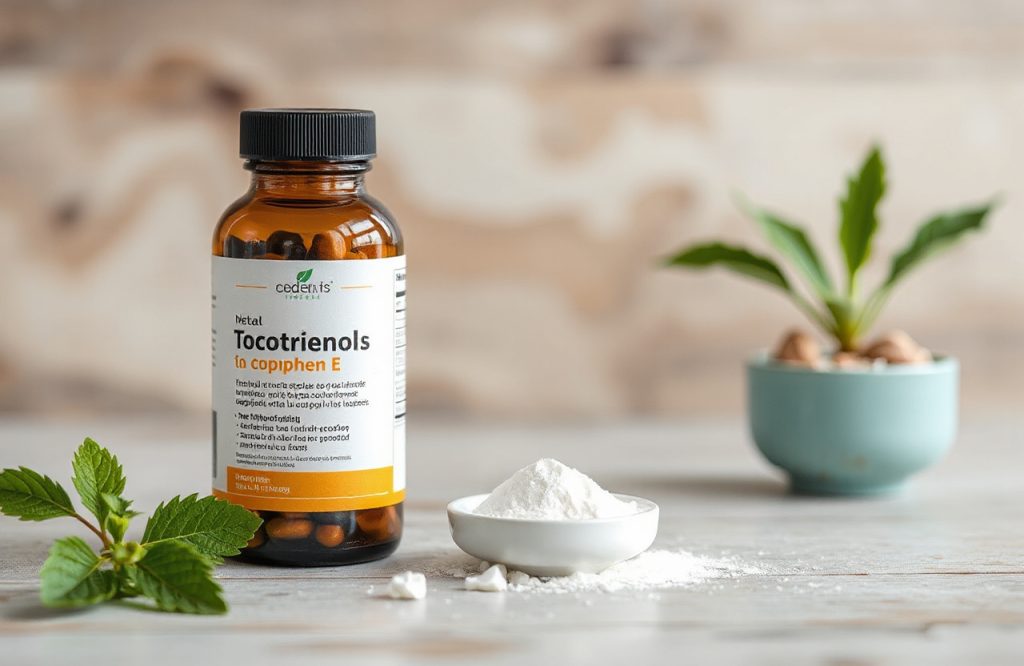
Understanding Vitamin E: Tocopherols and Tocotrienols
The Historical Focus on Tocopherols
For many years, research and supplementation related to vitamin E primarily focused on tocopherols, particularly alpha-tocopherol. This narrow perspective overlooked the tocotrienols, another vital component of the vitamin E family. While tocopherols and tocotrienols share structural similarities, they differ biologically and offer distinct health benefits. Recognizing these differences is essential for understanding nutritional requirements, as each form is more effective in certain scenarios.
Structural Differences and Functional Implications
At their core, tocopherols and tocotrienols possess the same chromanol head group, which grants them antioxidant properties. However, their side chains diverge significantly. Tocopherols have saturated side chains with three isoprenoid units linked by single bonds, resulting in a relatively rigid structure. Conversely, tocotrienols feature unsaturated side chains with three double bonds, making them more flexible and fluid. This structural variation significantly influences how these compounds interact within living organisms.
The flexibility of tocotrienol molecules allows them to associate more effectively with cell membranes. Their increased mobility within lipid layers enables tocotrienols to neutralize oxidative radicals more efficiently. Research indicates that tocotrienols can occupy the entire length of cell membranes, providing better insulation against peroxide attacks compared to tocopherols. Their fluidity also facilitates infiltration into tightly packed membranes, allowing tocotrienols to access areas where tocopherols are less present.
Both tocopherols and tocotrienols exist in four isomers: alpha, beta, gamma, and delta, which differ in the number and position of methyl groups on their chromanol rings. This leads to a total of eight distinct vitamin E compounds, each with unique properties and pharmacological effects. Although alpha-tocopherol is the predominant form in human tissues due to preferential retention by liver proteins, the gamma and delta forms of both subfamilies are often more potent antioxidants in vitro.
Antioxidant Activity: Comparing Potency and Mechanisms
Tocotrienols vs. Tocopherols in Antioxidant Effectiveness
In many studies, tocotrienols have demonstrated superior antioxidant capabilities compared to tocopherols in vitro. Research shows that tocotrienols can protect against lipid peroxidation 40-60 times more effectively than tocopherols. This enhanced activity is attributed to their ability to move freely within lipid layers and their unique interactions with free radicals. The unsaturated side chains of tocotrienols also offer additional sites for electron donation, boosting their radical-quenching potential.
However, translating these comparative strengths from laboratory settings to real-world health benefits presents challenges. Tocotrienols are absorbed in smaller amounts from the intestines and metabolized more quickly than tocopherols. Consequently, even with equivalent intake levels, tocotrienol blood concentrations tend to be significantly lower than those of tocopherols. Thus, while tocotrienols are more potent antioxidants on a molecular level, their practical health benefits may not always be proportionately greater than tocopherols due to bioavailability issues.
The liver plays a crucial role in vitamin E distribution through the alpha-tocopherol transfer protein (alpha-TTP), which has a high affinity for alpha-tocopherol. This preferential binding contributes to the dominance of alpha-tocopherol in human tissues, regardless of dietary intake. Tocotrienols lack the saturated tail recognized by alpha-TTP, leading to faster processing and removal from the body. Some researchers view this as a disadvantage, while others argue it may be beneficial for therapeutic applications requiring transient antioxidant effects without prolonged accumulation.
Exploring Additional Biological Activities of Tocotrienols
Beyond their antioxidant properties, emerging research suggests that tocotrienols possess unique biological activities unrelated to their antioxidative capabilities. These non-antioxidant effects contribute to the growing interest in tocotrienols for therapeutic use. Tocotrienols influence cellular signaling pathways, gene expression, and enzymatic activities, indicating their potential as true vitamin-like compounds with diverse mechanisms of action.
One notable effect of tocotrienols is their impact on cholesterol metabolism. Studies in animal models and cell cultures have revealed that certain tocotrienol isomers, particularly gamma and delta, can inhibit HMG-CoA reductase, the same enzyme targeted by statin medications for cholesterol reduction. This inhibition occurs at the gene expression level, offering cardiovascular benefits with potentially fewer side effects than traditional statins. Human trials have shown that tocotrienols can lead to mild but statistically significant cholesterol reductions, although individual responses vary.
Research into brain health and cognitive decline has highlighted tocotrienols’ neuroprotective properties. Animal studies suggest that tocotrienols can prevent damage to nervous tissue caused by atherosclerosis and may even reduce the area of brain damage following a stroke, provided there are sufficient tocotrienol levels in the affected tissues. These protective effects are thought to stem from anti-inflammatory mechanisms and enhanced energy production in the involved cells, extending beyond mere antioxidant activity. The superior ability of tocotrienols to penetrate the brain compared to tocopherols may further enhance their neuroprotective potential, though clinical benefits require additional research validation.
Dietary Sources and Supplementation Approaches
Natural Sources of Tocotrienols
Tocotrienols are found in various plant-derived foods, although their concentrations are typically much lower than those of tocopherols in the same sources. The primary natural sources of tocotrienols include palm oil and rice bran oil, where they are the predominant vitamin E components. Some cereal grains, such as barley and oats, also contain tocotrienols, but achieving therapeutic doses from these foods alone would require consuming impractically high amounts. Given the deficiency of tocotrienols in many Western diets, supplementation may be necessary for individuals seeking their benefits.
Supplementation Considerations
When considering tocotrienol supplementation, two main product categories are available: mixed vitamin E formulations that include both tocopherols and tocotrienols, and tocotrienol-specific products with little to no tocopherol content. This distinction is crucial, as high doses of alpha-tocopherol can interfere with tocotrienol absorption and tissue accumulation through competitive mechanisms. Individuals seeking the specific benefits of tocotrienols, such as cholesterol management or neuroprotection, may find pure tocotrienol formulations more effective by eliminating this competition.
Dosing for tocotrienols should be approached differently than for tocopherols. A standard daily dose for mixed tocopherols typically ranges from 200 to 400 IU, while tocotrienol products often suggest single servings between 50 and 300 milligrams. These variations reflect different measurement conventions and usage methods. Research on tocotrienol dosing for cholesterol management generally recommends 200 to 300 milligrams per day, while neuroprotection studies have examined both high-dose short-term and low-dose long-term supplementation. As with any supplement, dosing should be tailored to individual needs and health goals, ideally in consultation with a knowledgeable healthcare provider.
Complementary Roles of Tocopherols and Tocotrienols
Rather than viewing tocopherols and tocotrienols as competing options, it is essential to recognize their complementary roles in supporting health through different mechanisms. Tocopherols, particularly in their mixed natural forms, serve as primary antioxidants, providing long-term protection and storage in tissues. Their evolutionary significance is evident in the body’s preference to retain them for maintaining membrane integrity and combating chronic oxidative stress.
In contrast, tocotrienols offer distinct benefits due to their superior membrane distribution, effective antioxidant activity, and additional non-antioxidant effects that influence cellular processes. Their transient presence may be particularly advantageous for acute interventions, as there is no need for long-term accumulation. The ability of tocotrienols to regulate cholesterol production, modulate inflammatory processes, and protect brain cells underscores their diverse capabilities beyond conventional antioxidant roles.
To ensure adequate vitamin E intake, a strategic approach that combines both tocopherols and tocotrienols may be most effective. Unsupplemented tocopherols can serve as the primary source of cellular antioxidant defenses, while supplementation with tocotrienols can provide targeted health benefits. This multifaceted strategy acknowledges the complexity of vitamin E biology and avoids reductionist thinking that has sometimes hampered nutritional science.
As research continues to illuminate the distinct roles of tocopherols and tocotrienols, it becomes increasingly clear that vitamin E is not a singular nutrient but rather a complex family of compounds that collectively support various aspects of human health through complementary mechanisms.