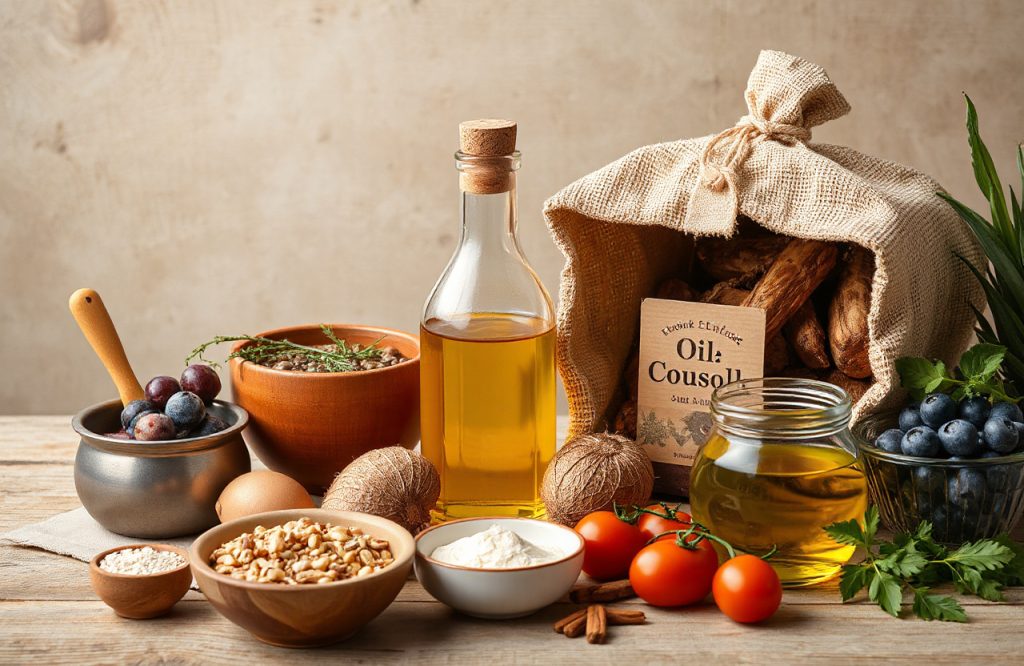
Impact of Cooking Oils on Cholesterol Levels
Understanding Cholesterol and Heart Health
Have you ever considered how the cooking oil you select influences your cholesterol levels? This article explores which oils can aid in reducing bad cholesterol and diminish the risk of cardiovascular disease.
Highlights of the Study
– Learn how LDL cholesterol impacts heart health.
– Discover the oils most effective in lowering bad cholesterol.
– Understand the significance of fatty acid composition in cholesterol management.
– Explore a study that compared 13 different oils and fats.
According to the Centers for Disease Control and Prevention, over 30 million Americans are affected by high cholesterol. The prevalence of high levels of LDL cholesterol, often termed bad cholesterol, is even more pronounced. Factors such as genetics, poor dietary choices, physical inactivity, smoking, and obesity contribute to the likelihood of elevated cholesterol levels.
Why is LDL Cholesterol Considered Bad?
LDL cholesterol tends to adhere to arterial walls, and when present in excessive amounts, it can result in the accumulation of fatty plaque, potentially leading to heart attacks or strokes. Conversely, HDL cholesterol, known as good cholesterol, combats LDL cholesterol by removing it from artery walls and transporting it to the liver for elimination from the body. Increasing HDL and decreasing LDL cholesterol are crucial steps in lowering the risk of cardiovascular disease, which remains the leading global cause of death.
Modifiable Risk Factors for Cardiovascular Disease
Dyslipidemia, characterized by abnormal blood lipid levels, is a primary modifiable risk factor for coronary heart disease. Blood lipids include HDL cholesterol, LDL cholesterol, and triglycerides. Research indicates a connection between dietary fatty acids, blood lipid levels, and cardiovascular disease risk. Monitoring blood lipid levels plays a vital role in preventing and managing coronary heart disease, as these levels can be influenced by dietary and lifestyle modifications.
Strategies for Lowering Bad Cholesterol
It is widely acknowledged that substituting saturated fatty acids in one’s diet with monounsaturated (MUFA) or polyunsaturated fatty acids (PUFA) can effectively reduce bad cholesterol levels. However, the relationship between specific oils and fats that should be consumed for optimal cholesterol management is not well understood. Most studies have focused on a single food source at a time, leaving the identification of the most beneficial oil for improving blood lipid levels unresolved.
Study on Oils and Blood Lipid Levels
A study published in the Journal of Lipid Research conducted a network meta-analysis to evaluate the effects of 13 different oils and solid fats on blood lipids. Researchers from the German Institute of Human Nutrition analyzed 54 randomized controlled trials involving 2,065 participants. This network meta-analysis enables researchers to simultaneously assess multiple interventions, providing both direct and indirect comparisons of the oils and fats studied.
The oils examined included safflower, sunflower, rapeseed, hempseed, flaxseed, corn, olive, soybean, palm, coconut oil, as well as lard, beef fat, and butter. The researchers assessed the impact of consuming equal caloric amounts from various oils on participants’ total cholesterol, LDL cholesterol, HDL cholesterol, and triglyceride levels over a minimum of three weeks.
Effectiveness of Vegetable Oils
The statistical analysis ranked the oils based on their effects on blood lipid levels. Results indicated that safflower oil, rapeseed oil, sunflower oil, and flaxseed oil were the most effective in reducing bad cholesterol. In contrast, butter and lard were found to be the least effective for lowering bad cholesterol and triglycerides. While soybean, corn, and palm oils were most effective in decreasing triglycerides, coconut oil ranked highest for improving good cholesterol levels.
Fatty Acid Composition and Cholesterol Management
The presence of omega-3 and omega-6 polyunsaturated or monounsaturated fatty acids in vegetable oils plays a crucial role in their cholesterol-lowering effects. The findings affirm that fatty acid composition is a significant predictor of the cholesterol-lowering capabilities of various oils and solid fats.
Implications for Cardiovascular Disease Prevention
This study highlights that vegetable oils may help lower bad cholesterol levels. Substantial evidence supports the notion that high LDL cholesterol is a risk factor for cardiovascular disease. Thus, the findings of this meta-analysis are critical for cardiovascular disease prevention. Nevertheless, the study has limitations; it focused solely on blood lipids, which are a causal risk factor for cardiovascular disease rather than definitive outcomes. Furthermore, the indirect comparisons in the network meta-analysis resulted in an overall low quality of evidence-based conclusions.
Recommendations for Dietary Changes
In conclusion, the study’s results align with current guidelines advocating for the replacement of saturated fats with unsaturated, fatty-rich oils. Compared to butter and lard, the consumption of oils such as safflower, sunflower, rapeseed, flaxseed, corn, olive, soybean, palm, and coconut oils is more effective in lowering bad cholesterol. Researchers recognize the need for further studies to confirm these findings due to the limitations inherent in network meta-analysis.
Reference: Lukas Schwingsshack et al., Effects of oils and solid fats on blood lipids: a systematic review and network meta-analysis. JLR, July 13, 2018. Doi: http://doi.org/10.1194/jlr.P085522