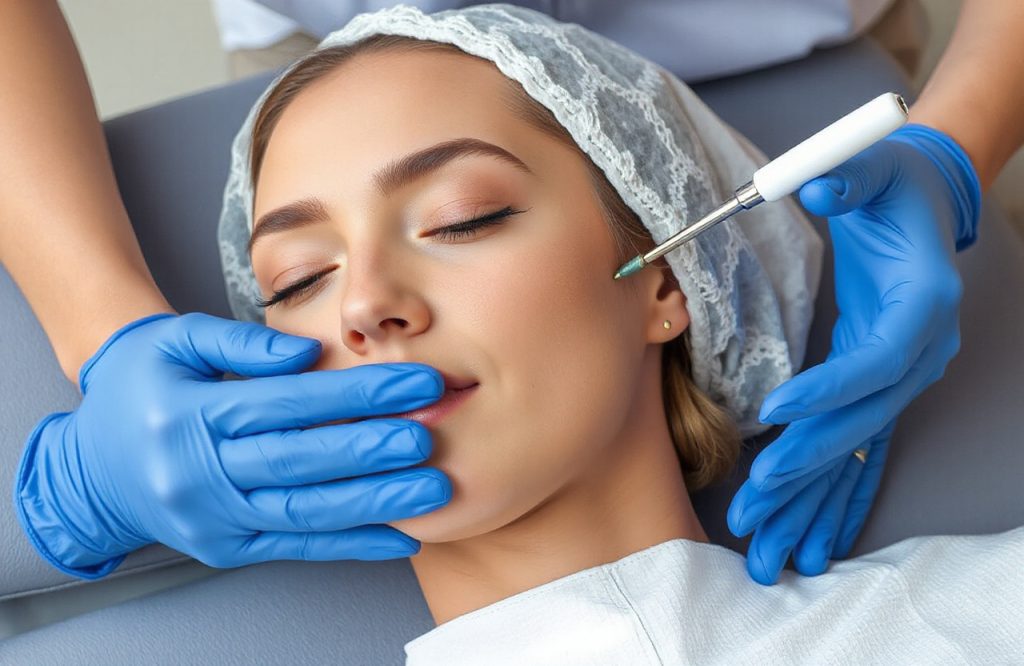
Chemical Peels for Acne Scars
Overview
Chemical peels, also referred to as chemexfoliation, are a prevalent treatment option for managing acne scars. This procedure involves the application of one or more chemical agents of varying strengths to the skin’s surface, resulting in a controlled chemical injury. This process encourages both epidermal and dermal regeneration, leading to improved skin texture and overall appearance. Chemical peels may also be combined with other treatments to enhance clinical outcomes.
Types of Chemical Peels
Chemical peels are categorized based on their depth of penetration:
Superficial Peels
Superficial peels primarily target the epidermis, the outermost layer of skin, and may extend to the epidermal-dermal interface. These peels are suitable for treating mild acne scars and conditions like melasma. They work by reducing epidermolysis and promoting collagen deposition, resulting in a thicker epidermis and a more even distribution of melanin.
Medium and Deep Peels
Medium and deep peels penetrate deeper, affecting the epidermis and part of the dermis. They denature epidermal keratin and dermal proteins, making them effective for treating deeper acne scars. Typically, these peels are completed in a single session.
Agents Used for Chemical Peels
The choice of chemical peel agent depends on the patient’s skin type and the nature of the acne scars. The required depth of penetration is influenced by the concentration and pH of the agent used. Common effects of these agents include:
– Reduction of sebum production
– Comedolytic effects, aiding in the removal of dead skin cells
– Keratolysis, leading to skin peeling or exfoliation
– Anti-inflammatory and antibacterial properties
Combination peels may be utilized to minimize side effects and lower the risk of complications.
Commonly Used Agents
1. **Salicylic Acid (SA)**: Effective for treating active acne and reducing inflammatory lesions. Side effects can include dryness and a burning sensation. A 30% SA concentration is typically used for superficial peels every three to four weeks.
2. **Glycolic Acid (GA)**: Known for its exfoliant properties, GA is also anti-inflammatory and antibacterial. A concentration of 10% to 30% is applied for three to five minutes at two-week intervals. Combining GA with micro-needling enhances results for acne scars.
3. **Pyruvic Acid (PA)**: Stimulates collagen production, often resulting in stinging and burning sensations. A concentration of 40% to 70% is commonly used for moderate acne scars.
4. **Lactic Acid (LA)**: Offers skin lightening and moisturizing effects. A 92% pure LA is used for superficial acne scars, improving texture and pigmentation.
5. **Mandelic Acid (MA)**: Ideal for superficial peels, MA penetrates the skin slowly. Concentrations of 20% to 50% are used for rejuvenation and lightening.
6. **Jessner Solution (JS)**: A combination of salicylic acid, resorcinol, lactic acid, and ethanol, typically used as a preparatory peel to enhance penetration of other agents.
7. **Trichloroacetic Acid (TCA)**: Recognized as the gold standard for chemical peels, TCA is versatile in depth depending on the concentration used. It effectively increases collagen and dermal volume but may cause hyperpigmentation, especially in darker skin types.
8. **Phenol**: Effective for deep chemical peels but is administered with caution due to potential systemic absorption and serious side effects.
General Procedure
Chemical peels are regarded as safe and effective for treating acne scars and other skin issues. The process begins with a pre-procedure consultation, which includes assessing skin color to anticipate any pigmentation changes post-peel. Photographs may be taken for comparison.
Pre-peel care, or priming, is essential for preparing the skin and may involve treatments conducted two to four weeks prior to the peel itself. Patients are advised to limit sun exposure and use sunscreen to enhance treatment outcomes.
References
1. Kontochristopoulos G, Platsidaki E. Chemical Peels in Active Acne and Acne Scars. Clinics in dermatology. 2016;35(2):179-182. doi:10.1016/j.clindermatol.2016.10.011
2. Lee KC, Wambier CG, Soon SL, et al. Basic chemical peeling: Superficial and medium-depth peels. Journal of the American Academy of Dermatology. 2019;81(2):313-324. doi:10.1016/j.jaad.2018.10.079
3. O’Connor AA, Lowe PM, Shumack S, Lim AC. Chemical peels: A review of current practice. Australasian journal of dermatology. 2018;59(3):171-181. doi:10.1111/ajd.12715
4. Sharad J. Combination of microneedling and glycolic acid peels for the treatment of acne scars in dark skin. Journal of cosmetic dermatology. 2011;10(4):317-323. doi:10.1111/j.1473-2165.2011.00583.x