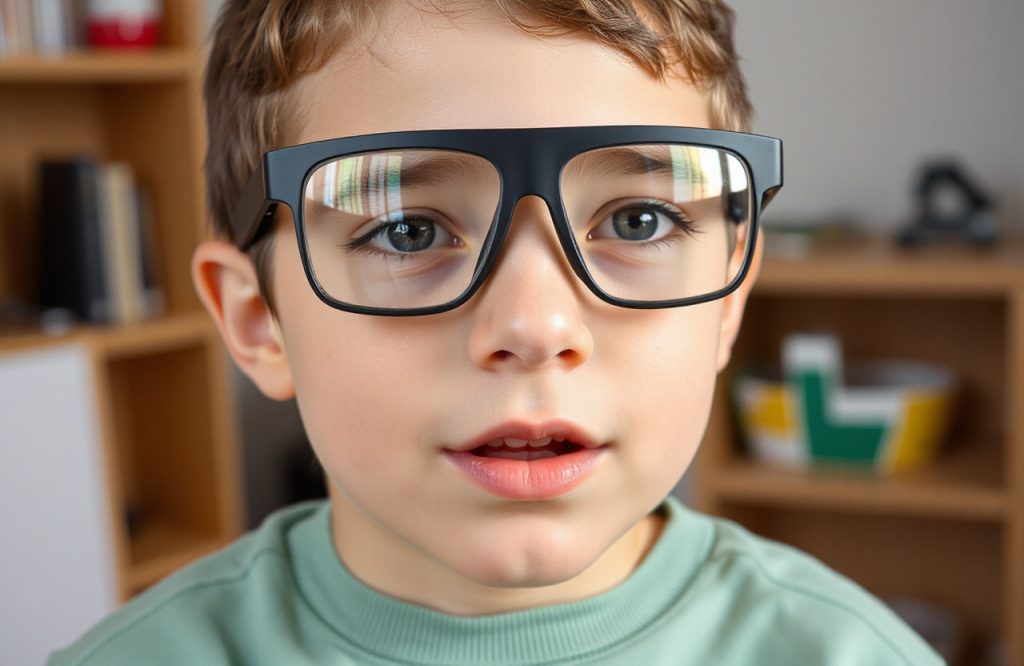
Understanding Autism and Its Impact
Prevalence and Challenges
Autism affects approximately 1 in 59 children in the United States. Children diagnosed with autism often face challenges in social interactions and communication. They may struggle to recognize facial expressions and maintain eye contact.
The Importance of Early Intervention
Research indicates that early initiation of behavioral therapies can lead to significantly better long-term outcomes for children with autism. However, conventional behavioral interventions are often criticized for being lengthy and reliant on specialized therapists. Additionally, a shortage of trained professionals has resulted in wait times for therapy that can extend up to 18 months.
Innovative Research at Stanford University
Exploring Google Glass as a Therapeutic Tool
Researchers at Stanford University have investigated the potential of Google Glass as an alternative therapy tool for children with autism. The focus of their study was to assess whether this wearable device could assist children in recognizing facial expressions and enhancing their social skills.
Development of a Specialized App
The Stanford team created an app designed to provide children with real-time cues regarding the facial expressions of those around them. The Google Glass device, which can connect to a smartphone via a wireless network, features a glass-like frame, a camera for recording the wearer’s perspective, a speaker, and a small screen for delivering audio and visual information.
Functionality of Superpower Glass
When children wear the device in social settings, the app identifies and names the emotions displayed by the people they interact with. To make the therapy more engaging for children, the device has been branded as “Superpower Glass.”
Therapeutic Modes of Use
Free Play
During free play, children utilize Google Glass while engaging in activities with family members. The device offers visual or audio cues upon recognizing an emotion on a person’s face.
Game Modes
Two interactive game modes are included in the program:
1. **Guess My Emotion**: In this mode, a parent acts out a facial expression corresponding to one of eight core emotions, while the child attempts to identify it. This game aids families and researchers in tracking improvements in the child’s ability to recognize emotions.
2. **Capture the Smile**: In this mode, children give clues about the emotion they wish to express until the other person acts it out. This approach provides insights into the child’s understanding of various emotions.
Research Findings and Implications
Home-Based Study Overview
The pilot study, published in *npj Digital Medicine*, involved 14 families who took the device home to evaluate its effectiveness as a social learning tool for children with autism. Families were instructed to complete three or more 20-minute sessions per week. On average, the device was used in homes for 72 days.
Assessment and Feedback
Parents completed questionnaires at the beginning and end of the study to provide detailed insights into their child’s social skills. Additionally, interviews were conducted to gather feedback from families regarding their experiences with the device.
Positive Outcomes Observed
Results indicated that after consistent use over one to three months, children with autism who used the device exhibited increased eye contact and improved social interactions. Families of children with more severe autism reported a preference for the game modes over free play, suggesting that Google Glass may offer a valuable home-based behavioral therapy option.
Cautions and Future Directions
While the findings are promising, researchers noted that the results lacked a control group, making them inconclusive. Nonetheless, the study provided essential insights into the engagement of parents and children with the device, leading to plans for a larger, randomized study to further explore its efficacy.
References
Jena Daniels, Jessey N. Schwartz, Catalin Voss, Nick Haber, Azar Fazel, Aaron Kline, Peter Washington, Carl Feinstein, Terry Winograd, Dennis P. Wall. Exploratory study examining the at-home feasibility of a wearable tool for social-affective learning in children with autism. npj Digital Medicine, 2018; 1 (1) DOI: 1038/s41746-018-0035-3
Google Glass helps kids with autism read facial expressions. Stanford Medicine News Center website, http://med.stanford.edu/news/all-news/2018/08/google-glass-helps-kids-with-autism-read-facial-expressions.html. Accessed August 13, 2018.
Photo from Wikimedia Commons: https://commons.wikimedia.org/wiki/File:Google_Glass_Main.jpg