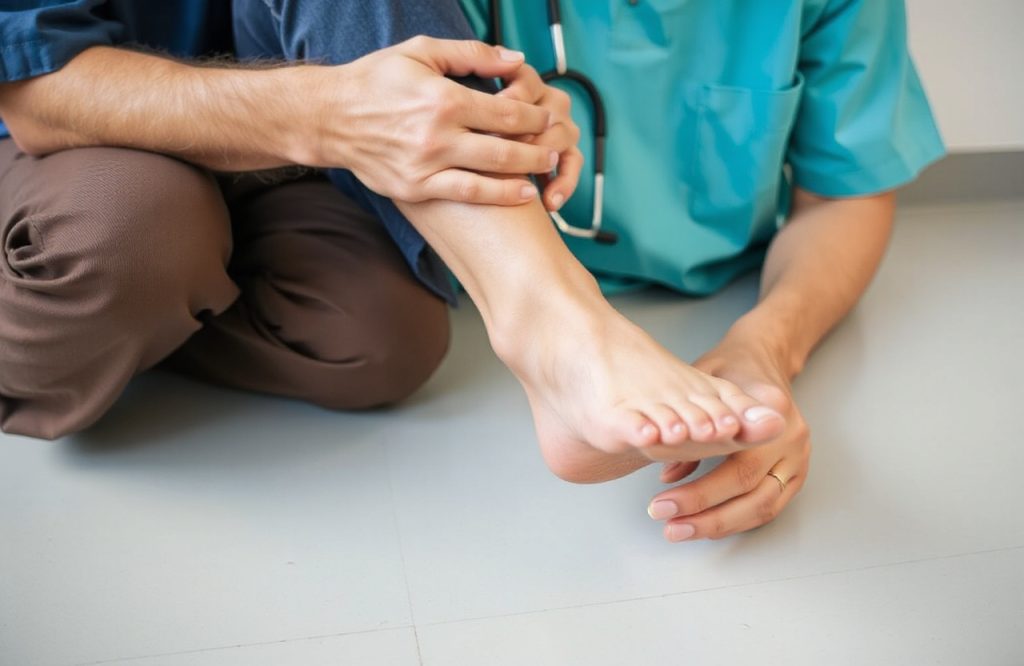
Study on the Impact of Foot Care Program for the Elderly
Introduction
A recent study has assessed the effects of a newly developed foot care program targeting foot issues prevalent among the elderly. Older individuals often face increased foot problems, attributed to decreased self-care. Maintaining healthy feet is crucial for overall functioning and fall prevention, particularly within the geriatric population.
Background
Previous research has highlighted the connection between foot positioning and various chronic health issues. This includes the impact of foot positioning on lower extremity pain and the significance of toe muscles in balance and fall risk among older adults. Additional studies have indicated that proper foot care can enhance blood circulation, reduce muscle fatigue, and improve walking abilities.
Study Objective
Unlike many studies focused on elderly individuals with chronic medical conditions, this research aimed to evaluate the effectiveness of foot care education among a generally healthy geriatric population. The study also sought to compare outcomes with a similar group that did not receive foot care awareness training.
Study Design
Conducted in Japan, the study involved 21 healthy women aged over 60, divided into two groups: an intervention group consisting of 11 participants and a control group of 10. Participants in the intervention group attended two 90-minute sessions covering foot structure, function, care techniques, and practices such as examination, washing, nail clipping, toe exercises, massage, and selecting appropriate footwear. The control group did not receive any of these instructions.
Methodology
Evaluations were performed six months before and after implementing the program. Researchers measured foot morphology, plantar pressure distribution, and assessed nine subjective foot movements along with physical functions. The findings were recently published in BMC Research Notes.
Results
The average ages of the intervention and control groups were 72 and 74 years, respectively. Among the intervention group, nine out of 11 participants engaged in foot care weekly, resulting in a 65.6% implementation rate. Improvements were observed in the intervention group concerning foot movements, shape, pressure points, and balance. Notably, 90% of participants reported enhancements in foot shape, and none experienced falls during the follow-up period. In contrast, 40% of the control group experienced falls, and only 30% demonstrated improvements in foot morphology.
Conclusion
The authors concluded that a structured foot care program could assist the elderly in alleviating foot problems by enhancing foot movements and balance, thereby reducing fall risk and improving mobility.
Author Information
This study was written by Nima Makhdami, M.D.
References
(1) Omote, S., Watanabe, A., Hiramatsu, T., Saito, E., Yokogawa, M., Okamoto, R., … & Tsukasaki, K. (2017). A foot-care program to facilitate self-care by the elderly: a non-randomized intervention study. BMC Research Notes, 10(1), 586.
(2) Menz HB, Morris ME, Lord SR. Foot and ankle risk factors for falls in older people: a prospective study. J Gerontol A Biol Sci Med Sci. 2006;61:866–70.
(3) Riskowski, J. L., Dufour, A. B., Hagedorn, T. J., Hillstrom, H. J., Casey, V. A., & Hannan, M. T. (2013). Associations of Foot Posture and Function to Lower Extremity Pain: Results From a Population‐Based Foot Study. Arthritis care & research, 65(11), 1804-1812.