The Role of Digital Displays in Healthcare Navigation
Imagine the Scenario
Picture yourself rushing to the hospital because your Uncle Bob, known for his belief that his homemade hot sauce can cure anything, has finally acknowledged his need for real medical assistance. As you enter the hospital, your stress levels peak. In such moments, a friendly digital display can be a valuable tool for navigating through the hospital.
Digital Signage: The Unsung Hero
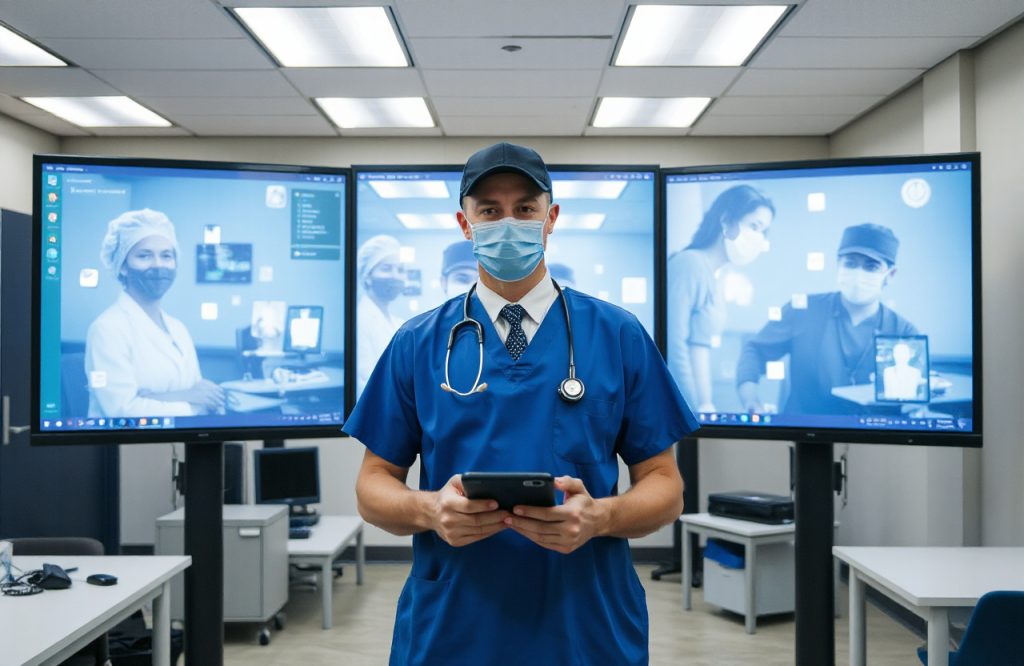
Healthcare digital signage has emerged as a crucial component of medical communication. It acts like a hospital’s nervous system, linking everyone from anxious parents to busy surgeons. These dynamic displays are changing the way facilities disseminate important information, transforming confusing hospital layouts into accessible spaces for all visitors.
Transforming Patient Navigation and Wayfinding
The Old Navigation Methods
Remember the outdated days of navigating hospitals with faded paper maps and confusing color-coded lines that led you astray? Those tools often directed patients to supply closets instead of critical departments like Radiology.
The Rise of Interactive Displays
Digital displays have made those frustrating navigation methods obsolete. Interactive wayfinding kiosks now offer personalized navigation assistance, providing step-by-step directions without the risk of leading you into the hospital’s basement. Users can search for specific departments or doctors and even send directions directly to their phones, reducing the reliance on paper.
Real-Time Updates
Throughout hospitals, networked directional displays provide crucial guidance at decision points and automatically update when departments change locations. They also adapt information based on the time of day, ensuring that visitors have the most accurate directions available.
Enhancing Patient Engagement
Transforming Waiting Rooms
Beyond navigation, digital displays have revitalized waiting rooms, turning them from dull spaces filled with outdated magazines into platforms for health education. While waiting for medical news, patients can learn about healthy habits and lifestyle changes, effectively receiving valuable information during their wait.
Personalized Patient Information
In private settings, advanced displays can show personalized information relevant to patients. For instance, during a hospital stay, in-room displays can introduce patients to their care team with photos and names, enhancing familiarity and comfort.
Boosting Operational Efficiency and Staff Communication
Real-Time Dashboards for Staff
Digital displays also benefit hospital staff by providing real-time dashboards that track emergency department wait times and patient volumes. This information acts like a performance leaderboard for healthcare teams.
Connecting Healthcare Teams
In staff areas, digital hubs keep healthcare professionals connected, sharing shift assignments and critical announcements. During emergencies, these networks are essential for coordinating staff deployment and managing patient surges efficiently.
The Psychological Benefits of Digital Displays
Addressing Hospital Anxiety
Hospital visits often come with anxiety, a feeling that can be overwhelming. Digital displays serve as psychological aids, offering transparency that can reduce stress. Seeing your name on a queue display with an estimated wait time can provide reassurance, similar to the comfort of tracking a flight at an airport.
The Illusion of Control
These displays exploit what psychologists describe as “the illusion of control.” Even when information does not change the outcome, having access to it can alleviate anxiety and make patients feel more empowered in their situations.
The Future of Healthcare Display Technologies
Embracing Digital Transformation
As the healthcare sector continues to evolve digitally, display technologies will play an increasingly vital role in enhancing the hospital experience. Future systems may incorporate artificial intelligence to assist patients with navigation before they even ask for help.
Conclusion
Ultimately, hospitals that adopt these advanced technologies are not merely following trends; they are fostering environments where information flows seamlessly. In healthcare, effective communication is not just a convenience; it is a crucial indicator of progress.