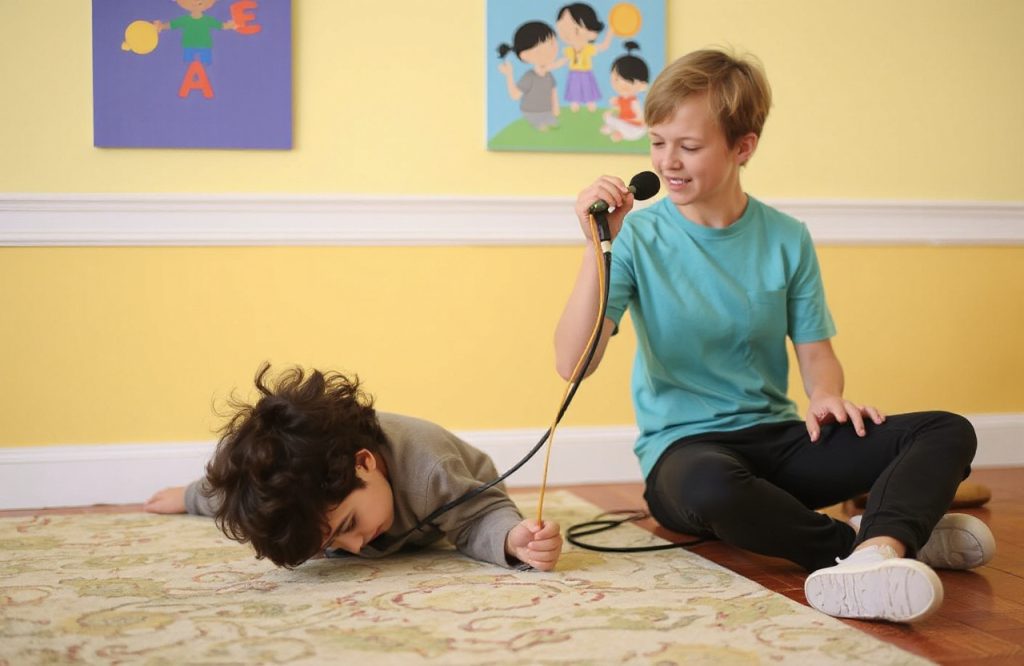
Investigating Improvisational Music Therapy for Autism
Overview of Autism Spectrum Disorder
A recent clinical study explored the impact of improvisational music therapy on social communication skills in children diagnosed with autism spectrum disorder (ASD). ASD is a developmental condition characterized by a range of symptoms and varying degrees of disability. Children with this disorder often encounter challenges in communication and social interactions, frequently exhibiting repetitive behaviors or fixating on specific objects, actions, or phrases. Although numerous therapeutic interventions have been crafted and assessed for their effectiveness in addressing ASD symptoms, substantial evidence supporting their overall efficacy remains limited.
Understanding Improvisational Music Therapy
Improvisational music therapy is a therapeutic approach currently employed in North America and Europe. This therapy involves spontaneous music creation, where the child and therapist engage in singing, playing instruments, and movement. The methodology is completely centered around the child, following their interests to promote social communicative skills.
Clinical Trial Outcomes
Randomized clinical trials have indicated that music therapy positively influences developmental outcomes, such as social interaction, parent-child relationships, and joint attention. However, most of these studies have been short-term, lacking follow-up assessments. Consequently, it remains uncertain whether the benefits persist post-therapy. Additionally, the ideal frequency of music therapy sessions for children with autism and whether the results can be applied to other contexts or individuals are still unknown.
Assessing the Impact on Children with Autism
To address these uncertainties, the Trial of Improvisational Music Therapy’s Effectiveness for Children With Autism (TIME-A) was conducted. This assessor-blinded, randomized clinical trial aimed to evaluate the effects of improvisational music therapy on social communication skills in children with ASD. In such a study, the researcher collecting outcome data is unaware of the participants’ conditions, reducing the risk of bias.
An International Multicenter Trial
The international multicenter trial took place across nine countries and ten centers from November 2011 to November 2015, with follow-up assessments conducted from January 2012 to November 2016. Results were published in JAMA. Researchers enrolled 364 children aged 4 to 7 years who met the diagnostic criteria for ASD. Parents or guardians completed baseline assessments, including the social affect scale of the Autism Diagnostic Observation Schedule (ADOS), which served as the primary outcome measure. They also provided demographic information and details on concurrent treatments, along with follow-up assessments at two, five, and twelve months after randomization.
Study Design and Groups
Children were randomly assigned to one of three groups: a low-intensity music therapy group (one session per week) combined with standard care, a high-intensity music therapy group (three sessions per week) alongside standard care, and a group receiving standard care only. Standard care comprised routine services available locally, excluding music therapy, along with informational resources and parent counseling sessions focused on ASD concerns. Thirty-minute music therapy sessions tailored to each child’s needs were held in outpatient settings, such as clinics, kindergartens, and family homes, over a five-month timeframe. Therapists employed singing and instrumental play to engage the children.
Findings on Symptom Severity
The study found that music therapy did not lead to reductions in symptom severity among participants. While the average ADOS social affect score decreased during the five-month intervention for both the high- and low-intensity music therapy groups and the standard care group, the changes were minimal and did not show significant differences among the groups. These findings contrast with previous studies that suggested benefits of music therapy for children with ASD.
Study Limitations and Conclusions
Despite the study’s robust randomized, assessor-blinded design, alongside its size and duration, the researchers identified several limitations that may have hindered their ability to detect differences among the groups. They recognized potential inconsistencies in implementation across various global settings, whereas earlier studies typically focused on single settings. Additionally, previous research utilized different outcome measures, suggesting that functional outcomes—such as the ability to engage in learning, work, and relationships—might have a more substantial real-life impact than symptom severity alone. The researchers also proposed that, although their trial duration was longer than many others, it might not have been sufficient to effect significant changes in social affect scores. Overall, the findings do not support the effectiveness of improvisational music therapy for reducing symptoms in children with autism spectrum disorder.
Author Information
Written by Suzanne M. Robertson, Ph.D.
Reference
Bieleninik, Łucja, et al. “Effects of improvisational music therapy vs enhanced standard care on symptom severity among children with autism spectrum disorder: the TIME-A randomized clinical trial.” JAMA 318.6 (2017): 525-535.