Understanding Security Gaps in Pharmaceutical IT Systems
The Impact of Cyberattacks on the Industry
Security vulnerabilities in pharmaceutical IT systems can lead to severe repercussions. A notable incident occurred in 2017 when Merck & Co. was hit by malware that disabled 30,000 computers worldwide and halted production. This attack resulted in losses amounting to $870 million. In such a highly regulated sector, establishing a robust IT infrastructure is not merely advantageous; it is crucial for survival.
The Adoption of AI in Pharmaceutical IT
Despite the increasing urgency for modernization, AI-powered enterprise software remains scarce in the pharmaceutical sector, with adoption rates below 1 percent in 2024. However, experts predict that this number will soar to 33 percent by 2028, indicating a significant shift towards digital transformation in pharma IT. Concurrently, unresolved production challenges persist, leading to delays, compliance failures, and unexpected costs. This article examines how leading pharmaceutical companies are upgrading their IT systems to address these issues.
Regulatory Compliance in Pharma IT Systems
Essential Regulations for IT Infrastructure
Pharmaceutical companies are required to adhere to stringent regulatory standards for their IT systems in global markets. These regulations are foundational to pharma IT operations, directly impacting patient safety, data integrity, and business continuity.
FDA and EMA Requirements
The FDA and the European Medicines Agency (EMA) establish comprehensive frameworks governing pharma IT infrastructure. For instance, the FDA’s 21 CFR Part 11 outlines criteria for electronic records and signatures, ensuring their reliability aligns with traditional paper records. This regulation encompasses the entire computerized system, including hardware, software, personnel, and documentation.
The EMA’s “Guideline on computerized systems and electronic data in clinical trials,” effective September 2023, mandates that biotech and pharmaceutical companies confirm compliance when accessing electronic data. It emphasizes data integrity through ALCOA++ principles and addresses contemporary challenges such as:
– Implementation of cloud solutions
– Data migration processes
– The use of electronic signatures instead of traditional wet ink signatures
The qualification of IT infrastructure is vital, as its components can influence regulatory data integrity, availability, and confidentiality. According to ISPE GAMP guidance, the validated status of GxP applications may be compromised if the IT infrastructure is not reliably controlled.
HIPAA Compliance in Clinical Data Management
Pharmaceutical IT solutions must also ensure the protection of patient data in accordance with HIPAA compliance. This law establishes national standards for electronic healthcare transactions and addresses vulnerabilities in clinical data management.
HIPAA breaches have impacted over 176 million patients in the U.S., with most incidents arising from employee negligence rather than external hacking. The HIPAA Security Rule outlines three key safeguard categories:
– Administrative safeguards: Policies, procedures, and training programs that ensure regulatory compliance.
– Physical safeguards: Access controls that protect systems containing patient data.
– Technical safeguards: Technologies designed to secure electronic health records.
Additionally, HIPAA mandates that pharmaceutical companies implement risk assessment processes to evaluate potential threats to the confidentiality, integrity, and availability of protected health information. This risk-based approach enables companies to adopt security measures that align with their size, capabilities, and specific risks.
Overcoming Legacy Infrastructure Limitations
Challenges Posed by Outdated Systems
Many pharmaceutical companies continue to struggle with outdated infrastructure, despite substantial investments in their facilities. Aging IT and operational technology (OT) systems hinder innovation, reduce efficiency, and create operational bottlenecks.
Common issues associated with legacy systems include:
– Limited remote management capabilities: Older infrastructure often lacks remote access features, compelling IT teams to be present on-site for troubleshooting and maintenance. This limitation became particularly critical during the COVID-19 pandemic, which accelerated digital transformation timelines by nearly a decade. The distributed nature of pharma IT environments complicates centralized management, increasing the risk of inconsistent standards and security practices.
– Lack of visibility in outdated manufacturing systems: Legacy systems frequently operate in isolation, lacking integration across departments. Outdated ERP platforms fail to provide real-time insights into profitability or manufacturing costs, resulting in poor coordination and overstocked inventory. Modern OEE software can bridge these visibility gaps by delivering real-time performance metrics and actionable insights.
– Integration challenges with modern IT solutions: Fragmented systems and siloed databases hinder interoperability. These barriers delay clinical trials, escalate maintenance costs, and impede access to new technologies like AI and advanced analytics. While 40 to 50 percent of leading pharmaceutical firms have invested in modernizing IT applications, many still encounter difficulties in achieving measurable returns. Integration middleware can connect legacy systems with new technologies, but a fragmented upgrade approach often leaves critical data pipeline gaps.
Cybersecurity and Data Protection in Pharma IT
Increasing Cybersecurity Threats
Pharmaceutical operations are increasingly susceptible to cybersecurity threats that can disrupt production and compromise sensitive data. Merck’s 2017 NotPetya attack serves as a stark reminder, causing $870 million in damages and exposing vulnerabilities in IT/OT integration that rendered manufacturing systems prime targets.
Ransomware and Supply Chain Risks
Reports indicate that 10% of pharmaceutical companies are at high risk for ransomware attacks, with medium-sized firms being particularly vulnerable. The consequences extend beyond financial losses; downtime in this critical sector jeopardizes patient care and drug availability. Supply chain vulnerabilities present additional entry points for attackers, with data indicating that 63% of breaches in the pharma sector result from inadequate access controls. Last year, 45% of organizations experienced data breaches due to third-party involvement.
Security Patch Management Challenges
As industrial control systems transition from proprietary platforms to commercially available equipment, patch management has become increasingly complex. Pharmaceutical facilities face challenging questions such as:
– Which systems require specific patches?
– When is the optimal time to install updates that necessitate system reboots?
– How can patches be customized for different systems?
The case of Eli Lilly, which operates 15 distributed control systems, illustrates these challenges. Their automated patch management system streamlined update processes, saving significant time and reducing human error.
Data Protection Compliance Requirements
Pharmaceutical companies are obligated to comply with stringent data protection regulations. The HIPAA Security Rule mandates the implementation of “reasonable and appropriate administrative, physical, and technical safeguards” to secure electronic health data. Organizations must ensure data remains secure, accurate, and accessible while guarding against anticipated threats.
In Europe, compliance with GDPR standards requires technical and organizational measures (TOMs) to protect personal data. Violations can result in fines of up to €20 million or 4% of annual global turnover, underscoring the importance of robust data protection in pharmaceutical IT systems.
AI-Driven IT Operations in Leading Facilities
Leveraging AI for Enhanced Efficiency
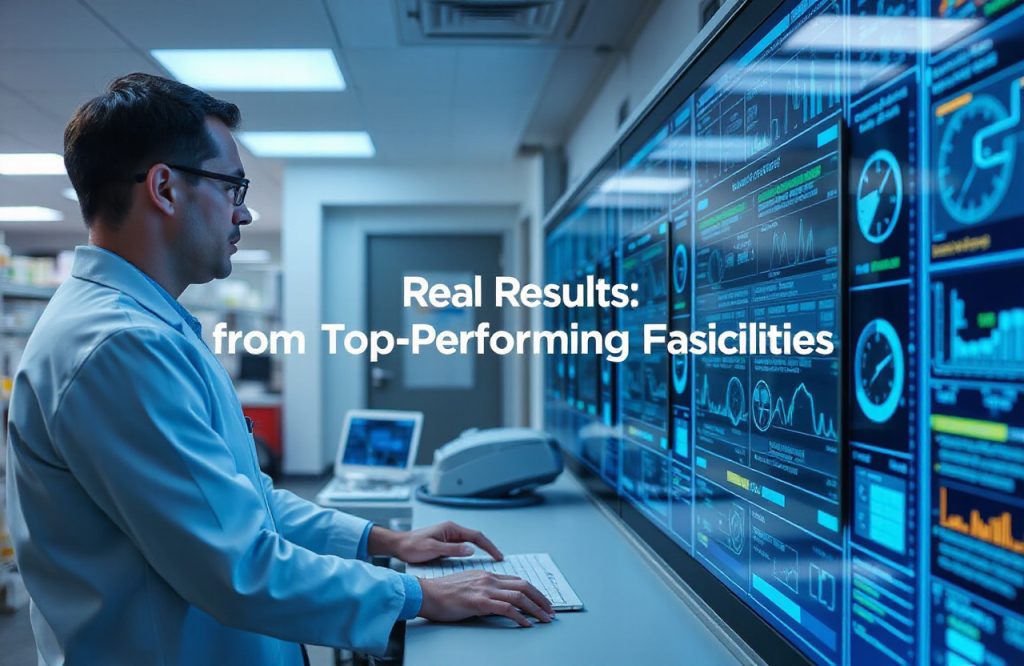
High-performing pharmaceutical facilities are increasingly adopting AI to optimize IT operations, enhance system reliability, and reduce manual workloads. These cutting-edge tools effectively address key operational challenges while helping organizations maintain compliance.
Notable AI-driven solutions in use today include:
– Predictive analytics for downtime prevention: AI-powered maintenance systems analyze historical data and real-time sensor inputs to predict potential equipment failures before they occur. For instance, Pfizer transitioned from a traditional preventative maintenance approach to predictive models utilizing Proficy Historian and industrial analytics, resulting in reduced downtime, improved efficiency, and enhanced yield. The company reported a 20 to 50 percent reduction in maintenance planning time and a 10 to 20 percent increase in equipment uptime.
– AI copilots for ticket management: AI copilots revolutionize IT support by automating ticket triage, routing, and classification. This automation allows support teams to focus on more complex issues. Additionally, these tools generate concise case summaries and assess customer sentiment, providing accurate responses in natural language.
– Agentic AI for monitoring and patch scheduling: Agentic AI autonomously manages system monitoring and patch deployment. It reviews device configurations, prioritizes patches based on risk, and anticipates potential vulnerabilities. These machine learning systems continuously monitor pharmaceutical IT environments and initiate patching as required, reducing manual effort, minimizing human error, and enhancing overall security.
Conclusion
Pharmaceutical companies confront increasing pressure to modernize their IT infrastructure while ensuring compliance, security, and operational efficiency. The risks associated with outdated systems are no longer theoretical; real-world incidents have demonstrated how swiftly vulnerabilities can disrupt production, compromise sensitive data, and endanger patient safety.
As the industry shifts towards more connected and intelligent systems, forward-thinking organizations are investing in AI-driven solutions, robust cybersecurity measures, and improved integration across departments. Modernizing pharmaceutical IT infrastructure is no longer optional; it has become a business-critical strategy that distinguishes proactive operations from those that lag behind.