The Impact of Point-of-Care Diagnostics
Enhancing Immediate Care
Envision a rural clinic lacking an on-site radiologist or an emergency room operating at maximum capacity. In such scenarios, the capability to conduct imaging on-site can significantly reduce waiting times, allowing for timely intervention. Point-of-care (POC) diagnostics facilitate immediate testing at the patient’s location, effectively eliminating the delays and logistical complications associated with transporting individuals or equipment.
Portability of Wireless Handheld Ultrasound Devices
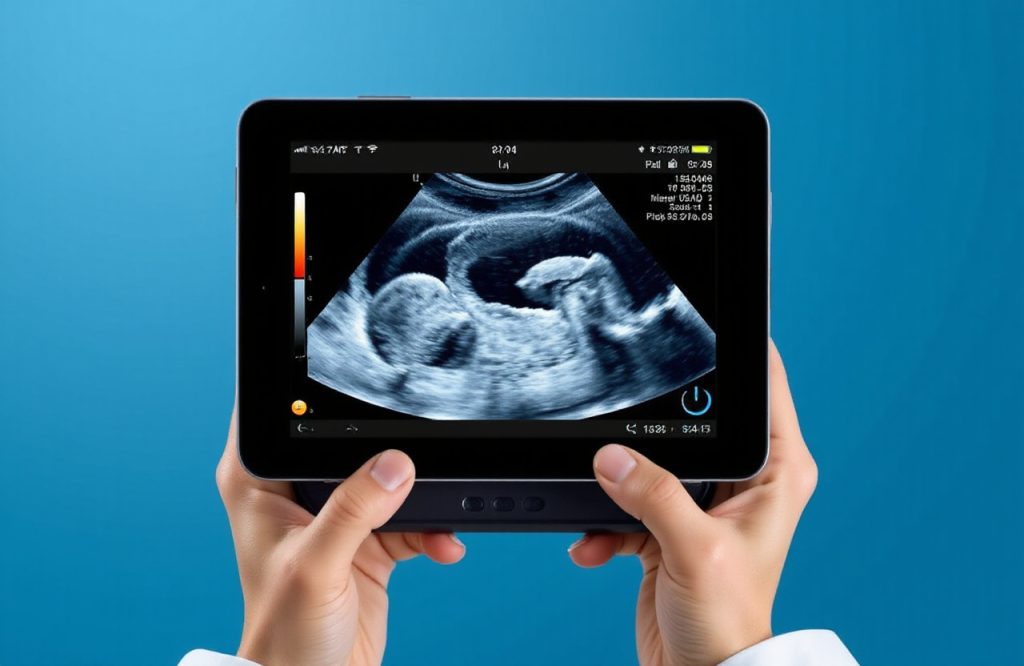
Wireless handheld ultrasound devices encapsulate essential imaging capabilities in a compact design that fits in your pocket. These devices eliminate tangled cables and cumbersome carts, resulting in a more efficient, flexible, and accessible diagnostic option.
The Importance of Portability in Modern Diagnostics
Transforming Care Delivery
In contemporary diagnostics, portability reshapes care delivery. Traditional portable ultrasound systems often depended on carts and cables, which restricted their usability based on available space. In contrast, wireless handheld devices are compact enough to fit into a coat pocket while providing high-resolution images in mere seconds.
By connecting to a smartphone or tablet, these devices transform everyday technology into powerful diagnostic tools. This design allows healthcare providers to navigate seamlessly through crowded environments, whether in an emergency room, an ICU, or a small clinic, adapting easily to their workflow.
Key Features of Wireless Handheld Ultrasound Devices
Seamless Integration into Workflow
What distinguishes wireless handheld ultrasound devices is their ability to integrate smoothly into existing workflows. These devices can be utilized in various settings, from the ICU to rural clinics, without the need for cumbersome equipment.
The absence of wires or heavy carts allows for greater mobility, enabling clinicians to focus on patient care. The latest models enhance this experience with features like real-time image sharing, secure cloud storage, and AI-assisted functionalities, advancing diagnostics in modern medicine.
Advantages for Clinics and Practitioners
Immediate Treatment Decisions
Handheld ultrasound technology empowers clinicians to make prompt treatment decisions. Providing immediate answers during initial visits fosters patient confidence in their care and leads to improved follow-up interactions.
Additionally, the cost-effectiveness of wireless handheld devices cannot be overlooked. Unlike traditional imaging systems, which require significant investment in infrastructure and specialized staff, handheld devices are more affordable, easier to set up, and can be utilized in various healthcare environments.
Building Trust and Compliance
Trust in handheld ultrasound technology is growing, bolstered by clear regulatory standards like the FDA Guidance on Ultrasound Imaging Devices. These guidelines ensure that smaller devices maintain high safety, performance, and clinical effectiveness standards comparable to larger imaging systems.
Challenges in Adoption
Training and Costs
Despite their advantages, the adoption of handheld ultrasound devices presents challenges. Proper training remains crucial, as the quality of scans depends on the clinician’s skills and judgment. Additionally, ongoing costs such as cloud storage, AI enhancements, and software updates should be considered.
Privacy and Limitations
Privacy is another critical factor, as many systems utilize wireless connections and online data storage, necessitating adherence to HIPAA regulations. Furthermore, while handheld devices excel in quick imaging, they may not be suitable for complex cases that require advanced imaging techniques.
The Future of Portable Imaging
Advancements and Applications
The use of handheld ultrasound technology continues to expand. AI is already improving image capture and reporting, and as algorithms evolve, they will become even more beneficial, especially for clinicians with limited imaging experience.
Hardware enhancements, such as higher resolution and longer battery life, are increasing the versatility of each new model. These innovations pave the way for broader applications in home care, telemedicine, and community health, where prompt and reliable imaging is critical for patient outcomes.
Conclusion
Wireless handheld ultrasound devices are not merely a compact alternative; they signify a notable advancement in accessible and responsive healthcare. By eliminating logistical challenges, these devices enable clinicians to provide faster and more informed care across various settings, from hospitals to community clinics and patients’ homes. As technology continues to evolve, handheld ultrasound will increasingly play a vital role in the future of diagnostic medicine.
Disclaimer
The editorial staff of Medical News Bulletin had no involvement in the preparation of this post. The views and opinions expressed herein belong to the advertiser and do not reflect those of Medical News Bulletin. Medical News Bulletin does not assume responsibility for any losses or damages resulting from the use of products or services mentioned, nor does it endorse any products, services, or links in sponsored articles.