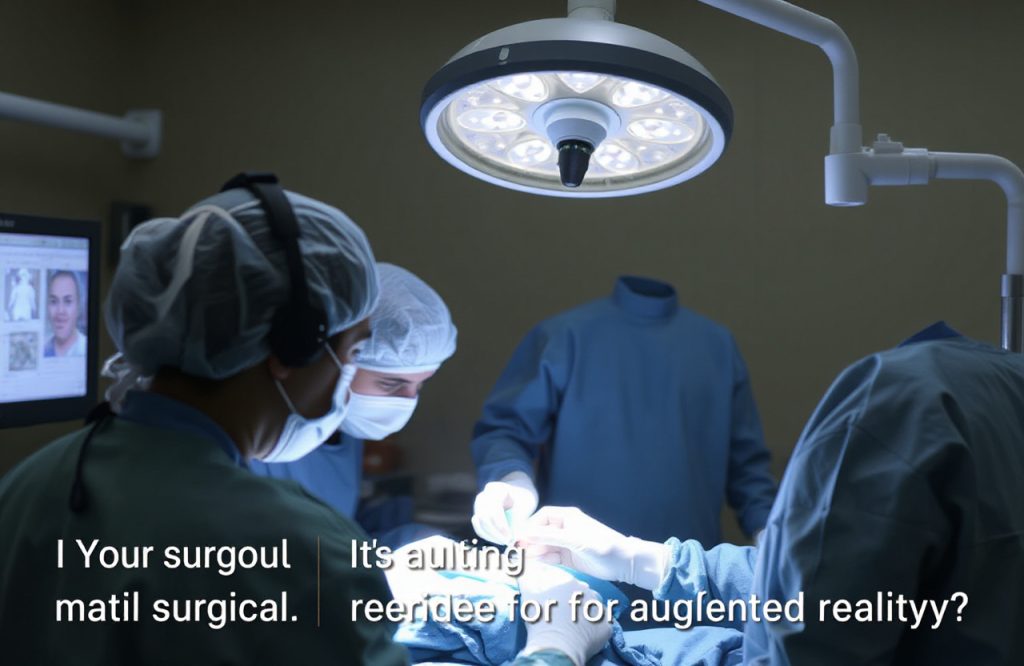
The Future of Surgical Training: Augmented Reality Integration
Transforming Traditional Methods
In the near future, medical students may no longer gather around a video display to learn surgical techniques. Instead, they could don Augmented Reality (AR) glasses that provide real-time guidance on where to position their fingers for suturing. While traditional training methods, including lectures, apprenticeships, and cadaver dissections, remain essential, the integration of advanced technologies like artificial intelligence and augmented reality is poised to revolutionize surgical training outcomes.
With dynamic and immersive simulations, AR and Mixed Reality (MR) education is already showing superior results compared to conventional mannequins and simulation models. This cutting-edge technology enables unlimited practice and the fine-tuning of surgical skills in a safe environment. Furthermore, the inclusion of haptic feedback and advanced modeling through MR and Extended Reality (XR) enhances the training experience.
Evaluating the Commitment to AR/MR Technologies
Despite the potential benefits, some may question whether investing in AR/MR technology is worthwhile. The financial and time commitments required for implementation can be significant. To address these concerns, we have compiled the latest information on AR, MR, and their impact on surgical training.
Understanding Augmented Reality in Surgical Training
Defining Augmented Reality
Augmented Reality refers to an advanced mode of simulation where digital components are integrated into the physical environment, allowing for haptic interactions while users remain aware of their surroundings. Mixed Reality, or MR, involves real-time interaction between physical and digital elements. Although often used interchangeably, AR and MR have distinct features.
In essence, AR combines virtual elements with real-life scenarios. Useful data, such as feedback, tools, and anatomical structures, can be overlaid on the actual operating table, allowing surgical trainees to practice in digital operating rooms. Instructors and peers can also engage remotely, providing immediate assistance.
How to Implement Augmented Reality in Surgical Training
Creating Realistic Simulations
Augmented Reality offers lifelike surgical simulations that immerse trainees in environments closely resembling actual surgeries. Through AR, surgeons can visualize anatomical details in three dimensions, enhancing their understanding of anatomy and surgical procedures. This technology allows students to receive real-time feedback, effectively bridging theoretical knowledge with practical application.
Enhancing Patient Safety
By utilizing AR surgical training models, educational institutions can offer learners the chance to refine their abilities without compromising patient safety. Unlike traditional methods that required trainees to operate on live patients, simulations can replicate various anatomical variations, enabling repeated practice that builds confidence and alleviates anxiety.
Providing Real-Time Assistance
AR technology allows instructors to provide real-time guidance during procedures. Mentors can share visuals of the surgical field, offering valuable corrections and advice. Additionally, essential data, such as vital signs and anatomical landmarks, can be superimposed on the surgical field, enhancing the accuracy of surgical techniques.
Facilitating Learning Beyond the Classroom
Traditionally, medical education occurs in lecture halls and clinical settings. With AR, trainees can learn in any environment, as head-mounted displays are portable and easy to use for simulations. This experiential learning approach is more engaging, as studies indicate that learners prefer simulation-based training.
Evaluating the Effectiveness of Augmented Reality in Surgical Training Outcomes
Leading AR/MR Devices in Surgical Training
Prominent devices facilitating AR and MR surgical training include Microsoft HoloLens, Google Glass, Magic Leap, and software platforms like ProMis AR Simulator and ImmersiveTouch. With advancements in technology and decreasing costs, more medical training centers are beginning to integrate AR into their curricula.
Assessing Training Improvements
Research indicates that AR and MR technologies are enhancing surgical training outcomes across various specialties.
General Surgery Improvements
In one study, surgical trainees using the Microsoft HoloLens with a virtual reality laparoscopic simulator showed improved movement efficiency, reduced error rates, and overall better performance. Participants demonstrated a statistically significant 10% improvement in performance scores while using AR tools.
Telementoring Enhancements
Another study highlighted the benefits of real-time instruction using AR for leg fasciotomies. Participants using the System for Telementoring with Augmented Reality exhibited greater confidence and a 10% higher performance score, with a significant reduction in errors.
Skill Enhancement in Surgical Precision
AR simulations have also proven effective in improving procedural skills. In a study on appendectomies, trainees’ performance improved significantly by the tenth procedure, with times nearly matching that of experienced consultants.
Neurosurgery Advancements
In neurosurgery, AR technology has demonstrated its effectiveness in improving precision during burr hole procedures. Learners using AR identified drill positions and angles with greater accuracy compared to traditional methods.
Spine and Orthopaedic Surgery Applications
AR has shown promise in spine surgery by enhancing the precision of surgical techniques and reducing learning curves. In orthopaedics, it aids in achieving proper fracture reduction and implant placement, illustrating its potential across various fields.
Conclusion: Augmenting, Not Replacing Traditional Training
While AR is emerging as a transformative tool in surgical training, it does not replace traditional hands-on training methods. The financial commitment and integration challenges may delay widespread adoption. Nevertheless, AR and MR technologies provide realistic and effective platforms for developing surgical skills, ultimately aiming for better-trained surgeons and improved patient outcomes worldwide.