The Growing Availability of Virtual Reality for Well-Being
Benefits of Virtual Reality in Enhancing Well-Being
The accessibility and affordability of virtual reality (VR) technology are on the rise, with studies highlighting its effectiveness in promoting well-being. Various VR tools can be utilized across different contexts to enhance individual wellness.
Virtual Reality in the Workplace
Nature Experiences Through VR
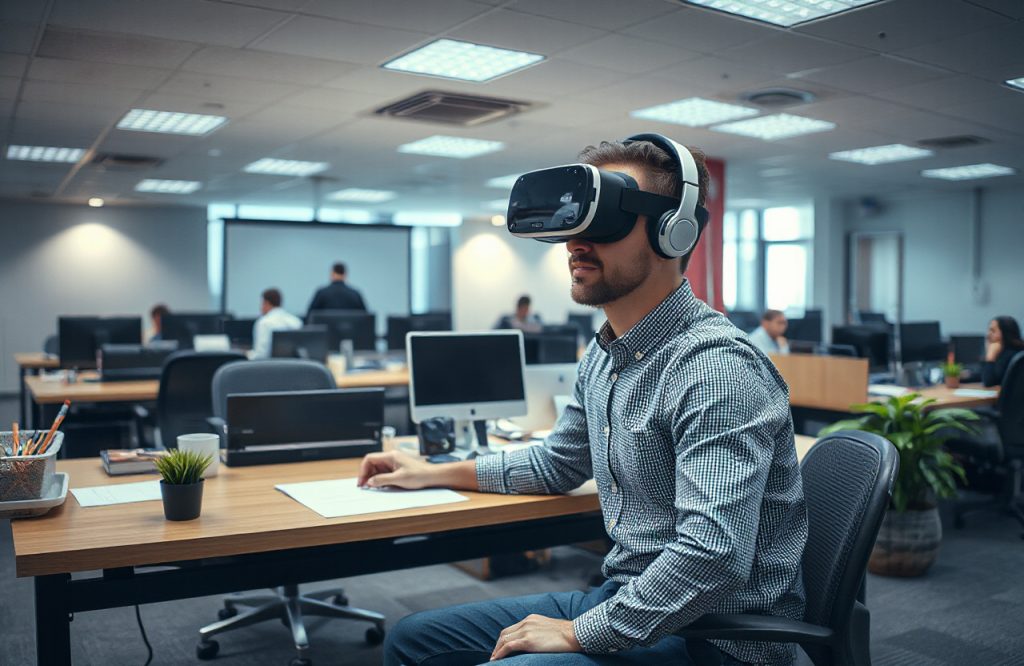
Natural environments and green spaces are recognized as cost-effective methods for improving well-being. However, access to these spaces is often limited for those living in urban areas. Utilizing VR headsets in the workplace offers employees a valuable opportunity to experience the advantages of nature.
Impact on Clinicians in Fast-Paced Environments
VR tools are particularly beneficial for clinicians working in high-stress trauma services. These tools can boost positive feelings such as happiness while reducing negative emotions like anxiety. For instance, a recent study involved participants donning VR headsets for 30 minutes to immerse themselves in a virtual meadow. They could explore and interact with this environment using controllers, providing a much-needed break from their demanding work. Clinicians reported lower stress levels and an overall sense of calm post-experience.
Virtual Reality During the COVID-19 Pandemic
Applications in Rehabilitation Settings
VR technology proved successful in rehabilitation contexts, offering sensorimotor and cognitive exercises for patients with conditions such as diabetes, arthritis, spinal and brain injuries, cerebral palsy, stroke effects, and age-related deficits. The COVID-19 pandemic spurred new research and applications of VR, as isolation often led to sedentary lifestyles and mental health challenges.
Enhancing Physical and Psychological Well-Being
During the pandemic, many individuals turned to VR exercise at home to improve both physical and psychological health. A study conducted in China revealed positive results from using VR alongside traditional exercise equipment or even independently. Participants engaged in activities like swimming, sailing, jogging, and hiking, which contributed to their overall health. Additionally, VR fitness games emerged as an engaging and motivating exercise alternative, providing valuable feedback for goal-setting and performance, which is crucial for sustaining long-term exercise habits.
Virtual Reality and Dementia
Improving Well-Being for Persons with Dementia
A review of 19 studies investigating the effects of VR on the well-being of individuals with dementia (PwD) yielded encouraging findings. These studies indicated that VR interventions could enhance mobility, reduce the risk of falls, and improve cognitive function among PwD.
Practicing Daily Activities Safely
VR also facilitates safe practice of everyday tasks. For example, one study involved participants using a virtual coffee maker to simulate making coffee, allowing for skill assessment without the risk of burns. Moreover, VR can promote independence by enabling social interactions in a stigma-free environment, thus enhancing social-emotional behavior.
The Future of Well-Being Through Virtual Reality
Research Directions and Stakeholder Involvement
VR tools hold significant potential for promoting well-being and providing accessible methods for leading a healthy, meaningful life. However, further research is needed to determine optimal usage parameters, including the ideal time, frequency, and duration of VR tool usage for various contexts. Engaging diverse healthcare stakeholders in the design process will enhance the validity and applicability of VR technologies.
References
Adhyaru, J.S. and Kemp, C., 2022. Virtual reality as a tool to promote wellbeing in the workplace. Digital Health, 8, p.20552076221084473.
Peng, X., Menhas, R., Dai, J. and Younas, M., 2022. The COVID-19 pandemic and overall wellbeing: mediating role of virtual reality fitness for physical-psychological health and physical activity. Psychology Research and Behavior Management, 15, p.1741.
Appel, L., Ali, S., Narag, T., Mozeson, K., Pasat, Z., Orchanian-Cheff, A. and Campos, J.L., 2021. Virtual reality to promote wellbeing in persons with dementia: A scoping review. Journal of Rehabilitation and Assistive Technologies Engineering, 8, p.20556683211053952.