New Method for Extracting Proteins to Combat HIV Transmission
Overview of HIV/AIDS Impact
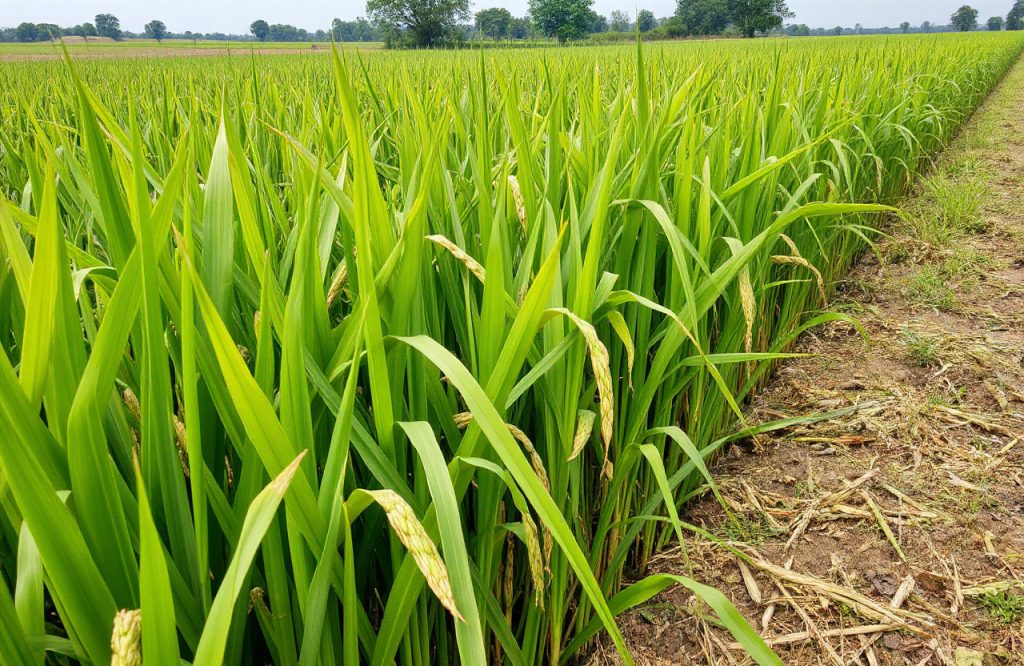
A research team at Iowa State University has developed a novel technique to extract three proteins from transgenic rice plants, potentially preventing HIV transmission into human cells. According to The Joint United Nations Programme on HIV and AIDS, approximately 37 million people globally are living with HIV/AIDS. In 2016 alone, over 1 million individuals died from HIV/AIDS-related illnesses. The majority of those affected reside in low- and middle-income countries, with more than 25.5 million individuals living in sub-Saharan Africa. Notably, about 19 million of these cases are in East and Southern Africa, where 44% of new global HIV infections occur.
Current Trends in HIV/AIDS
While there has been a decline in HIV/AIDS-related deaths due to the widespread use of antiretroviral drugs, the virus continues to pose a significant threat, with 2 million new cases reported last year. The absence of effective vaccines means that prevention strategies rely heavily on barrier methods and abstinence, which have had limited success.
Innovative Research Findings
Recent scientific advancements have indicated that neutralizing monoclonal antibodies and lectins can prevent HIV transmission. However, traditional recombinant protein production methods often require advanced technical skills and are prohibitively expensive for use in developing countries. To address this challenge, the Iowa State University researchers focused on extracting proteins from transgenic rice plants, presenting a cost-effective solution for producing microbicides aimed at at-risk populations.
Research Funding and Publication
The research received support through a federal grant from the U.S. National Cancer Institute, and the findings were recently published in the Proceedings of the National Academy of Sciences. The extraction of functional HIV-neutralizing proteins from plants offers a practical alternative for treating HIV/AIDS in resource-limited settings, as transgenic rice is relatively inexpensive to cultivate.
Experimental Results
The researchers conducted tests on the extracted proteins in a buffer solution, demonstrating that all three proteins exhibited strong binding capabilities on the HIV envelope. This resulted in a significant synergistic effect in neutralizing HIV-1. The rice plant extracts could potentially be formulated into a topical antimicrobial gel, designed for application prior to intercourse to prevent sexual transmission of HIV.
Future Research Directions
Further studies are necessary to evaluate the safety and efficacy of this therapy before it can be introduced to the market.
Author and Reference
Written by Man-tik Choy, Ph.D.
Reference: Vamvaka, E. et al. Unexpected synergistic HIV neutralization by a triple microbicide produced in rice endosperm. Proceedings of the National Academy of Sciences. 2018; 201806022. DOI: 10.1073/pnas.1806022115.
Related Topics of Interest
– Navigating the Ethics to Find a Cure for HIV
– Reducing HIV Risk: Pre-Exposure Prophylaxis Using Anti-Retroviral Drug
– Perinatal HIV Infection in Infants Born in the United States