Study Investigates Retinal Thickness as a Predictor of Dementia
The Challenge of Predicting Dementia
Currently, there is no medical test capable of predicting an individual’s likelihood of developing dementia. Dementias, especially Alzheimer’s disease, represent a significant cause of disability and mortality among older adults. Detecting early signs of dementia is crucial, as early intervention may enhance treatment outcomes. Researchers are actively exploring various medical assessments to identify these early indicators.
Potential Risk Factors
Preliminary research has identified certain conditions, such as age-related hearing loss and high blood pressure, as factors that may increase the risk of dementia. Another area of interest is the potential link between retinal nerve damage and early signs of dementia. The neural damage associated with dementias like Alzheimer’s may similarly impact the neurons in the retina.
Retinal Nerve Thickness and Alzheimer’s Disease
Recent studies indicate that patients with Alzheimer’s disease exhibit thinner retinal nerve layers compared to healthy individuals. However, it remains unclear whether this thinning occurs prior to the onset of dementia or as a consequence of the disease.
The Rotterdam Study
Long-Term Monitoring of Participants
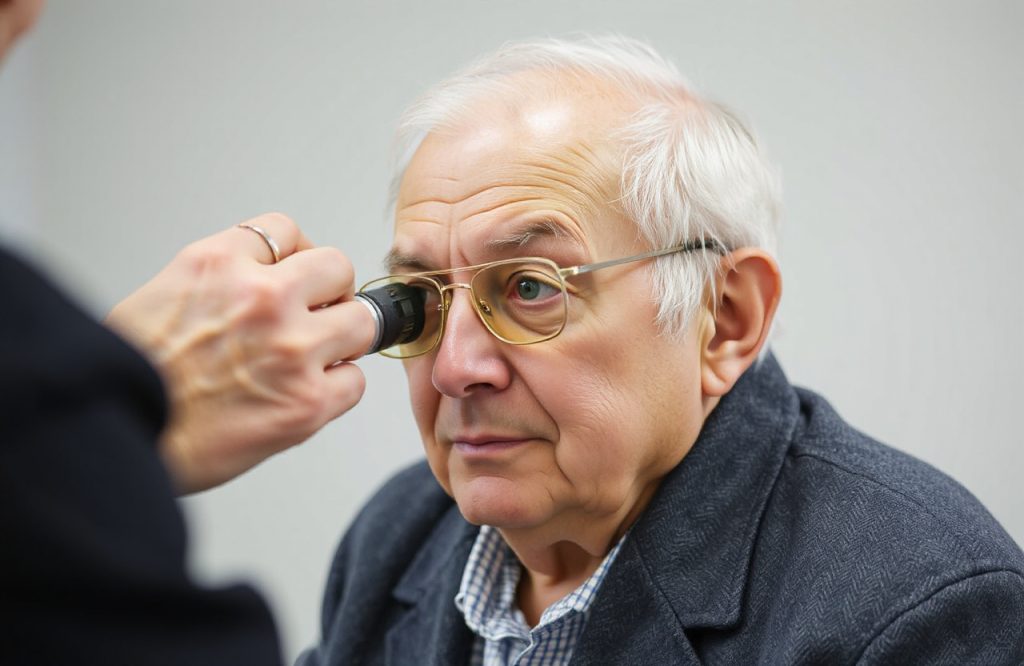
To investigate this, researchers in the Netherlands initiated a comprehensive study in 2007, monitoring thousands of residents in Rotterdam. Participants underwent medical examinations every few years, which included non-invasive retinal optical coherence tomography to measure retinal nerve thickness. The researchers analyzed medical records to identify individuals who later developed dementia, comparing their retinal nerve thickness at the study’s outset with that of participants who did not develop dementia.
Findings on Retinal Nerve Thinning
The results revealed that participants with thinner retinal nerve layers were significantly more likely to develop Alzheimer’s disease or other forms of dementia. Specifically, the lowest quarter of participants in terms of retinal nerve thickness were 2.5 times more likely to experience dementia compared to those in the highest quarter.
Implications for Future Research
Limitations of the Study
Although the study presents promising findings, it is important to note its limitations. The research did not include individuals with existing eye conditions such as glaucoma or age-related macular degeneration, nor did it consider those with high blood pressure or prior strokes. Consequently, the study population was relatively healthy, potentially excluding many individuals at higher risk for dementia.
Future Directions
Despite these limitations, the researchers suggest that retinal nerve thinning holds significant promise as a potential marker for dementia risk. The non-invasive nature of optical coherence tomography makes it a viable option for routine clinical use. However, further studies with larger cohorts of dementia patients are essential to refine retinal nerve thickness measurements and other early indicators into effective predictive tools.
Reference
Mutlu, U., Colijn, J. M., Ikram, M. & et al. Association of retinal neurodegeneration on optical coherence tomography with dementia: A population-based study. JAMA Neurology (2018).