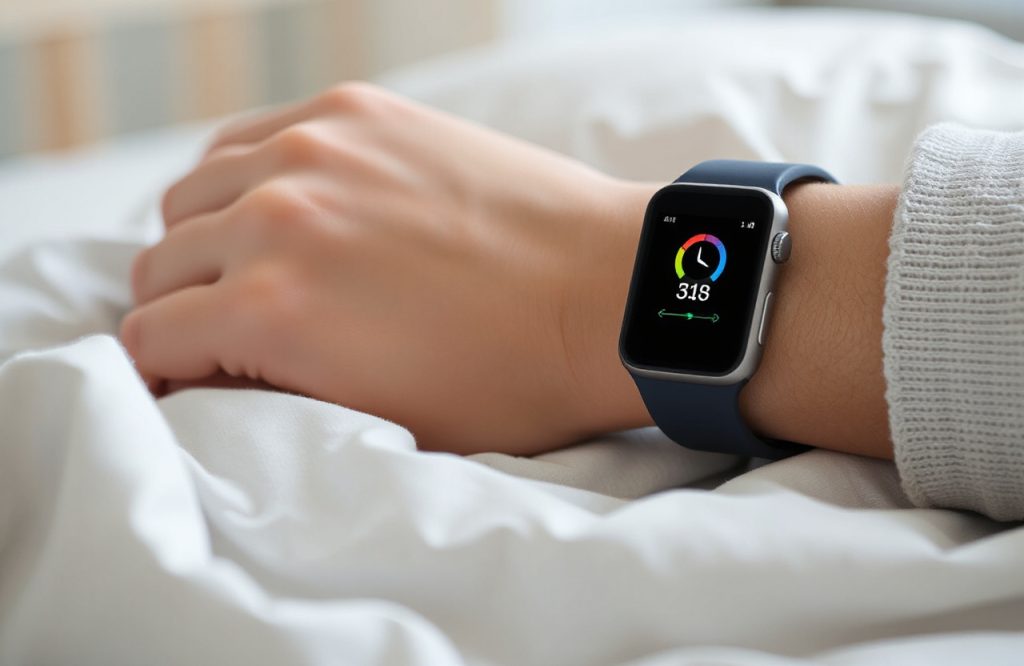
Understanding Sleep Apnea
Definition and Impact
Sleep apnea is a sleep disorder marked by irregular breathing patterns, characterized by numerous pauses and restarts in breathing. This condition not only diminishes sleep quality but can also impair cognitive functions, including concentration, memory, decision-making, and executive function. Additionally, quality sleep plays a crucial role in maintaining physical health by:
- Facilitating healing and repair of the cardiovascular system
- Regulating the endocrine system
- Managing blood sugar levels
- Supporting growth and development
- Enhancing the immune system
Detection of Sleep Apnea
Traditional Diagnosis Methods
Sleep apnea is typically diagnosed through a sleep study. Polysomnography is recognized as the gold standard for sleep assessments. However, it has certain drawbacks, including high costs, the need for medical supervision, and the requirement to conduct the study in a clinical or hospital setting.
Emerging Technologies
Wearable devices have emerged as alternative tools for sleep assessment, offering objective and continuous measurements in everyday environments. For instance, the Fitbit Charge 2 has shown promising results in clinical settings, demonstrating comparability to polysomnography.
American Academy of Sleep Medicine Position
In 2018, the American Academy of Sleep Medicine acknowledged the potential of consumer sleep technologies but emphasized the necessity for validation and FDA oversight before such devices can be used for diagnosing and managing sleep disorders.
Can Fitbit Detect Sleep Apnea?
Research Findings
Various studies have explored whether Fitbit devices can accurately identify sleep apnea. One study involving 65 adult patients with obstructive sleep apnea compared the Fitbit Charge 2 and Fitbit Alta HR against polysomnography. The findings indicated:
- Both Fitbit models exhibited an acceptable level of sensitivity
- Both models demonstrated poor specificity
Another study focused on a pediatric population with obstructive sleep apnea, involving 22 patients. This research revealed that the Fitbit overestimated total sleep time, limiting its validity. Similarly, the Normal mode of the Fitbit Ultra was assessed in a group of 63 pediatric patients and showed good sensitivity and accuracy, although it also suffered from poor specificity and overestimated total sleep time and sleep efficiency. The Sensitive mode of the Fitbit Ultra exhibited acceptable specificity but underestimated sensitivity and accuracy regarding total sleep time and sleep efficiency.
Systematic Review Insights
A systematic review evaluating the accuracy of various Fitbit models for sleep assessment concluded that while these devices have potential for sleep staging—distinguishing between sleep and wake states—they often provide gross estimates that result in inadequate specificity for clinical applications.
Future Considerations for Wearable Devices
Despite the promising benefits that wearable devices like Fitbit may offer, several steps must be taken before they can be integrated into clinical practice:
- Quality improvement initiatives must be implemented
- Standardized algorithms need to be developed
- Engagement from healthcare professionals throughout the development and implementation process is essential
- Clinical validation data must be collected
- FDA regulations should be established
As it stands, current guidelines do not endorse the use of Fitbit for detecting sleep apnea, and further conclusions about its effectiveness are premature.