New Study Links White Matter Changes to Autism and ADHD Symptoms
Understanding the Role of White Matter in the Brain
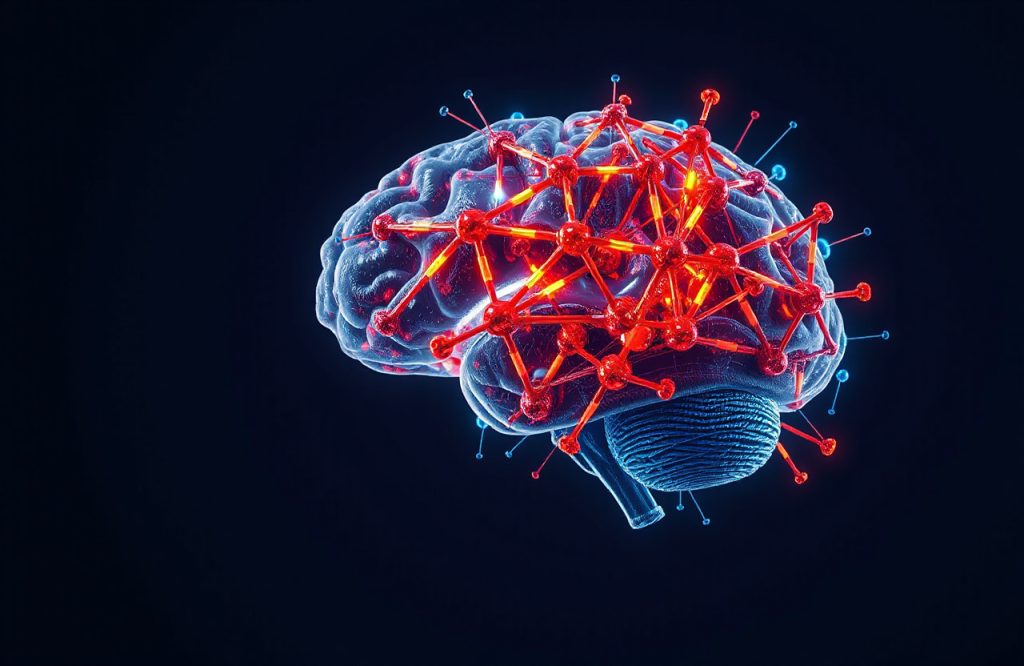
White matter is a crucial tissue located deep within the brain, composed of millions of nerve bundles. This tissue is named for the white-colored myelin layer that encases the nerve fibers, which is essential for proper brain function.
Consider white matter as a subway system within the brain, facilitating connections between the various regions of gray matter. When this system is well-planned and efficiently constructed, communication between areas is swift and seamless. Conversely, a poorly designed subway system leads to slow travel and inaccessible regions, mirroring the effects of compromised white matter.
Normal white matter contributes to standard perception, thought, and movement by ensuring fast and reliable signal transmission. Recent technological advances, such as Diffusion Tensor Magnetic Resonance Imaging (DTI), allow researchers to identify abnormalities in the brain’s white matter connectivity by tracking water movement within the brain.
Autism and ADHD: Prevalence and Overlap
Autism Spectrum Disorder (ASD) and Attention Deficit/Hyperactivity Disorder (ADHD) rank among the most prevalent pediatric neurodevelopmental disorders. According to the U.S. Centers for Disease Control and Prevention, approximately one in 68 children is diagnosed with some degree of ASD, while the American Psychiatric Association estimates that around five percent of American children have ADHD.
There is an increasing recognition of clinical overlap between ASD and ADHD, with white matter abnormalities frequently observed in both conditions. However, the exact, and potentially shared, underlying pathology remains to be fully understood.
Recent Findings on White Matter Abnormalities in Children
A recent study published in JAMA Psychiatry by researchers from New York University’s Department of Child and Adolescent Psychiatry examined DTI data from 174 children aged 6 to 13 years. Among the participants, 69 children were diagnosed with ASD, 55 with ADHD, and 50 were typically developing. The majority of participants were male, which aligns with general trends in the diagnosis of ASD and ADHD.
The study identified significant white matter abnormalities in children with autism and ADHD. The researchers concluded that a higher severity of autistic traits correlated with lower integrity of white matter connectivity in the corpus callosum, the structure that connects the left and right hemispheres of the brain, facilitating communication between them.
These findings support the theory that shared underlying brain mechanisms may contribute to the traits observed in both disorders. The researchers aim for this enhanced understanding of ASD, ADHD, and white matter abnormalities to inform improved diagnostic practices and lead to the development of targeted, effective treatments.
Conclusion
This study sheds light on the intricate relationship between white matter integrity and the severity of symptoms in children with autism and ADHD. As research in this area continues, it holds promise for better diagnostic and therapeutic strategies to support affected individuals.
Reference
Aoki, Y., Yoncheva, Y. N., Chen, B., Nath, T., Sharp, D., Lazar, M., … & Di Martino, A. (2017). Association of White Matter Structure With Autism Spectrum Disorder and Attention-Deficit/Hyperactivity Disorder. JAMA Psychiatry; DOI: 10.1001/jamapsychiatry.2017.2573.