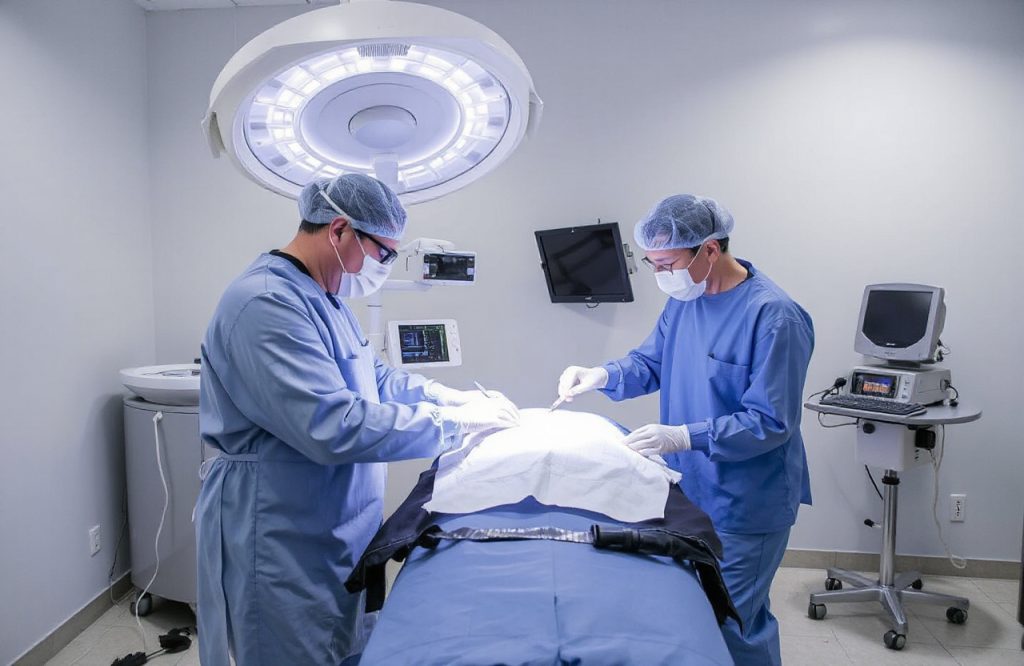
Cryolipolysis: An Overview
What is Cryolipolysis?
Cryolipolysis, commonly known as “cool sculpting” or “fat freezing,” is a widely recognized cosmetic procedure aimed at reducing fat. Introduced in 2008, it received FDA approval for use in multiple treatment areas between 2010 and 2016. The growing interest in cryolipolysis as a non-surgical approach for body contouring presents a viable alternative to invasive procedures like liposuction, which often carry higher risks of complications. This technique appeals to both men and women for treating areas such as the abdomen, inner thighs, arms, ankles, lumbar rolls, enlarged male breasts, and submental areas (double chin).
Mechanism of Cryolipolysis
Cryolipolysis is a non-invasive method that utilizes the natural sensitivity of adipose tissues to cold injury. This technique selectively induces apoptosis (cell death) of adipocytes (fat cells) by maintaining a temperature of -10°C at the dermis-fat interface for approximately 45 minutes. The application of controlled cold to the skin surface leads to the targeted destruction of fat cells, resulting in a decrease in superficial fat thickness. An inflammatory response peaks at 30 days post-treatment, leading to the death of adipocytes. Importantly, surrounding water-rich tissues remain unaffected, preserving dermal viability.
Treatment Process
There is no standardized device or treatment protocol for cryolipolysis, and the ideal number of sessions varies per body region. The procedure generally involves applying a suction cup applicator to the treatment area. This surface applicator does not penetrate the dermis, ensuring uniform cooling at a specific temperature for a designated duration. The vacuum suction extracts heat and curtails blood flow to the tissue, inducing crystallization in the targeted adipose tissue, which triggers apoptosis and an inflammatory response.
After treatment, the targeted tissue may initially feel stiff, but it typically softens quickly with manual massage as blood flow increases, leading to localized warming. Within three months, macrophages clear the damaged adipocytes. The procedure is designed to spare surrounding nerves, muscles, vessels, and skin, allowing multiple sites to be treated during a single session with a favorable safety profile. Research indicates that patients receiving multiple treatment cycles tend to experience the most significant reduction in skinfold thickness.
Patient Selection Criteria
The ideal candidate for cryolipolysis should be in good health, possess normal renal function, and have skin characteristics that align with the treatment. Although specific selection criteria such as age, sensitivity, or risk pathologies are not well-defined, research indicates that the procedure is safe for all skin types, even with repeated treatments.
Side Effects of Cryolipolysis
Cryolipolysis is recognized for its safety and serves as a compelling alternative to surgical options for localized fat reduction. It offers rapid recovery and minimal downtime. Research studies have not reported significant side effects such as hematomas, infections, blistering, or changes in pigmentation. However, the procedure should be avoided in areas with severe varicose veins, dermatitis, or other skin lesions. It is also contraindicated for individuals with cold-sensitive conditions like Raynaud’s Syndrome or cryoglobulinemia.
Common side effects reported by patients typically resolve within weeks and may include:
– Redness
– Bruising
– Discomfort
– Temporary numbness
Research Insights
Numerous clinical and case studies support the safety and efficacy of cryolipolysis. However, the assessment of clinical outcomes has mainly relied on subjective methods such as ultrasound, caliper measurements, and patient satisfaction surveys. These approaches can introduce bias and may not reliably document changes, especially when fat thickness alterations are minimal.
Outcomes from clinical studies show considerable variability based on treatment sites and study designs. Most research focuses on fat thickness reduction, with limited evaluations of contour changes or skin texture. The specific areas most responsive to treatment and the types of patients who benefit the most remain unclear.
Currently, the majority of research lacks objective, quantitative analysis of changes in the subcutaneous fat layer. Given the subjective nature of the results and the absence of rigorous outcome measurements, stating that cryolipolysis is a definitive alternative to liposuction for body contouring may be premature. Nonetheless, cryolipolysis is gaining recognition as a promising procedure for localized fat reduction due to its ease of use, minimal side effects, and high patient satisfaction rates. It is particularly suited for individuals seeking non-invasive fat reduction for moderate adiposities that do not respond to diet or exercise.
References
1. Pennycook K, Lemchak D, Julian C. Cryolipolysis—An update. Dermatological reviews. 2020;1(4):118-122. doi:10.1002/der2.46
2. Honeybrook A, Bloom JD, Woodard C, Bernstein EF. Three-Dimensional Photography for Measuring Volumetric Changes After Submental Cryolipolysis. The American journal of cosmetic surgery. 2018;35(3):135-142. doi:10.1177/0748806818754440
3. Ingargiola MJ, Motakef S, Chung MT, Vasconez HC, Sasaki GH. Cryolipolysis for Fat Reduction and Body Contouring: Safety and Efficacy of Current Treatment Paradigms. Plastic and reconstructive surgery (1963). 2015;135(6):1581-1590. doi:10.1097/PRS.0000000000001236
4. Atiyeh BS, Fadul J, Chahine F. Cryolipolysis (CLL) for Reduction of Localized Subcutaneous Fat: Review of the Literature and an Evidence-Based Analysis. Aesthetic plastic surgery. 2020;44(6):2163-2172. doi:10.1007/s00266-020-01869-x
5. Meyer PF, Davi Costa E Silva J, Santos de Vasconcellos L, de Morais Carreiro E, Valentim da Silva RM. Cryolipolysis: patient selection and special considerations. Clinical, cosmetic and investigational dermatology. 2018;11:499-503. doi:10.2147/CCID.S146258