Understanding Dermal Fillers: Price vs. Results
The Value of Dermal Fillers
An expensive dermal filler does not necessarily guarantee superior results. Contrary to earlier studies, recent research indicates comparable outcomes between two types of hyaluronic acid that vary in both structure and cost.
The Role of Hyaluronic Acid
Hyaluronic acid is a natural substance found in the human body, serving as a protective layer around cells in various tissues, particularly in cartilage and skin. In cartilage, it enhances resistance to compression and allows for smooth movement between adjacent cartilages. In the skin, it envelops dermal cells, contributing to skin shaping, fullness, and a youthful appearance, while also playing a significant role in wound healing.
Synthesis of Hyaluronic Acid
Hyaluronic acid can be synthesized through genetically modified bacteria, producing a form known as non-animal hyaluronic acid. This synthesized version has numerous medical and cosmetic applications approved by the FDA, including dermal fillers where hyaluronic acid is a key ingredient.
Applications of Dermal Fillers
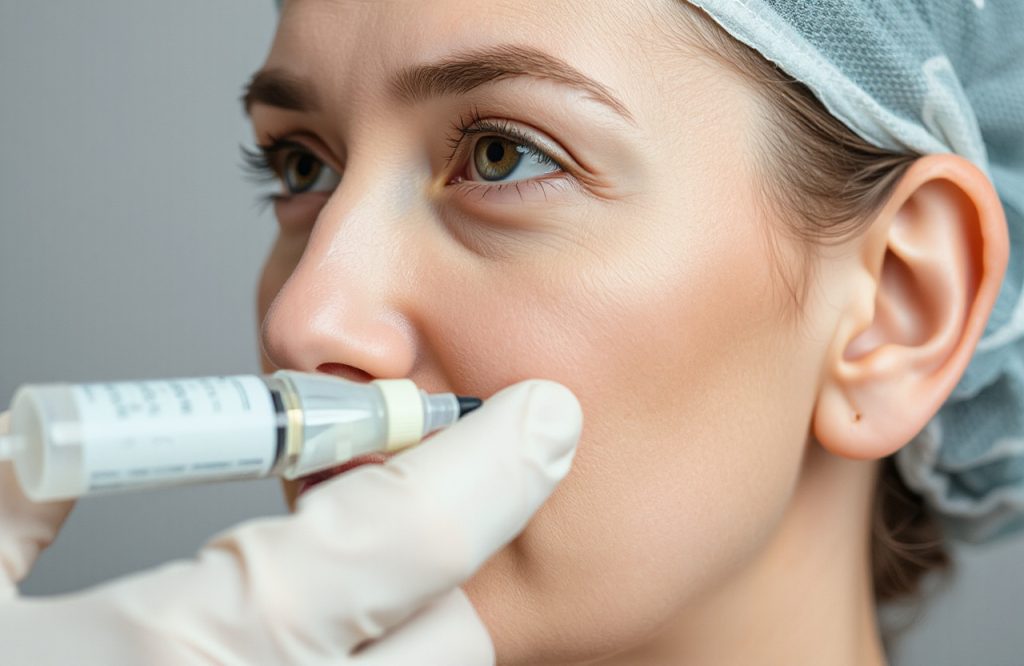
Dermal fillers are widely used as injectables for restoring youth to aging faces. They can effectively smooth facial wrinkles, fill in folds, and enhance the volume of cheeks and lips. The effects of these fillers typically last from six months to a year, necessitating additional injections to maintain skin fullness.
Clinical Study on Hyaluronic Acid Fillers
A study published in *Dermatologic Surgery* examined the efficacy of two hyaluronic acid fillers for lip and perioral enhancement. The first filler, VYC-15L (Juvederm Volbella XC), is a non-animal cross-linked hyaluronic acid, while the second, NASHA (non-animal stabilized hyaluronic acid), is a more expensive and advanced option. The primary distinction between these fillers lies in the biological structure, with NASHA being more robust due to its stabilization process.
Study Findings
The study involved 225 randomized adults who received either VYC-15L or NASHA for lip and perioral enhancement. The effectiveness of VYC-15L was assessed at three months and one year, using the Lip Fullness Scale (LFS) for comparison with NASHA. The results indicated that both fillers yielded similar outcomes.
Furthermore, when evaluating safety and complications, researchers noted that VYC-15L caused less disruption to normal daily activities compared to NASHA treatment. These findings suggest that VYC-15L is non-inferior to NASHA, demonstrating its safety and effectiveness for lip and perioral enhancement.
Conclusion
The research challenges the assumption that higher-priced dermal fillers deliver better results, highlighting the efficacy of VYC-15L as a viable alternative to more expensive options in cosmetic procedures.
Authored By
Andreh Kaba, M.D.