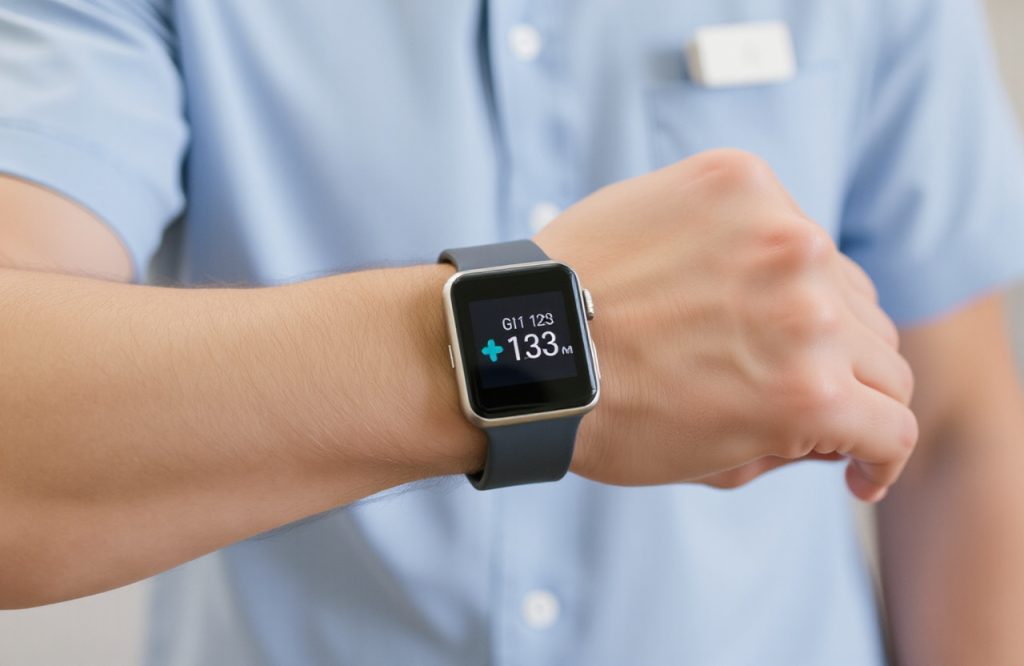
Overview of Fitbit and Wearable Activity Trackers
Popularity and Market Growth
As of 2019, Fitbit had 28 million active users, and around 19% of Americans owned a wearable activity tracker. Fitbit devices have established themselves as leading fitness trackers, and the activity-tracking device market is anticipated to expand significantly. Shipments of wearable activity trackers worldwide are projected to reach 631.7 million by 2024.
Variety of Fitbit Models
Fitbit offers a range of models, typically worn on the wrist like a watch. These devices can track various physical metrics, including exercise intensity, inactivity, steps taken, heart rate, blood pressure, and sleep quality.
Measuring Physical Data
Tracking Technology
Fitbit devices utilize several tracking sensors to monitor physical data. Commonly, they incorporate accelerometers or gyroscopes to assess activity levels. Additionally, GPS and barometers enhance the accuracy of activity and movement measurement. While the sensors differ in accuracy, they are designed to conserve battery life.
Health Data Monitoring
Heart Rate Measurement
Fitbit devices also track health metrics, such as heart rate. Heart rates are measured using electrocardiogram (ECG) or photoplethysmography (PPG) sensors. ECG sensors determine heart rates by assessing the heart’s electrical activity, though those found in wrist-worn trackers may not be as accurate as chest-strap sensors. PPG sensors gauge heart rates by measuring changes in blood vessel volume. Research indicates that both types of sensors exhibit acceptable accuracy compared to clinical ECG measurements.
Additional Health Metrics
While not commonly available in wristband form, activity trackers can also measure blood pressure, fluid electrolytes, and cardiac output.
Value of Fitness Trackers in Healthcare
Monitoring Health Conditions
Healthcare professionals have recognized the potential of fitness trackers for monitoring health conditions. These devices offer a more accurate assessment of an individual’s activity levels, allowing healthcare practitioners to rely on their data rather than subjective recollections. Quantifying exercise intensity provides real-time insights that can motivate users to adopt healthier behaviors and achieve fitness goals. Given that heart disease is a leading cause of death globally, the insights from these devices are particularly valuable.
Detecting Atrial Fibrillation (AFib)
Atrial fibrillation (AFib) is a common yet often undetected condition characterized by irregular heartbeats. It can lead to severe complications, such as stroke or heart failure, and affects millions worldwide without showing obvious symptoms. Given the prevalence of AFib, healthcare practitioners have explored whether Fitbit devices can detect this condition.
The Fitbit Heart Study
Study Design and Methodology
In 2020, Fitbit conducted the Fitbit Heart Study, a large-scale clinical trial where participants wore Fitbit activity trackers and reported heart data. Those showing signs of AFib were notified and connected to healthcare providers for virtual consultations. The trackers utilized PPG technology to measure blood flow and heart rates, enabling the Fitbit algorithm to assess heart rhythm and detect AFib occurrences.
Study Results
The results demonstrated that Fitbit’s algorithm achieved a 98.8% success rate in detecting AFib and was 100% accurate in identifying normal heart rhythms. Consequently, the FDA granted 510(k) clearance for the device. The AFib detection algorithm is available on the Fitbit Sense, the company’s first wearable featuring an ECG app, which also includes an electrodermal activity sensor for stress management and offers up to six hours of battery life.
Conclusion
While activity trackers are not replacements for regular medical check-ups, they can effectively detect AFib, affirming the question, “Can Fitbit detect AFib?” with a definitive yes. It is crucial to view these devices as part of a comprehensive personal health strategy. The data they provide can encourage users to adopt more active lifestyles. Always consult a healthcare professional before starting a new diet or exercise program.