The Dangers of Hogweed in North America
Understanding Hogweed
Hogweed, an invasive plant originally from Asia, poses significant risks to both the environment and human health. It was likely introduced to North America as an ornamental garden plant before becoming a harmful invasive species.
The Risks Associated with Hogweed
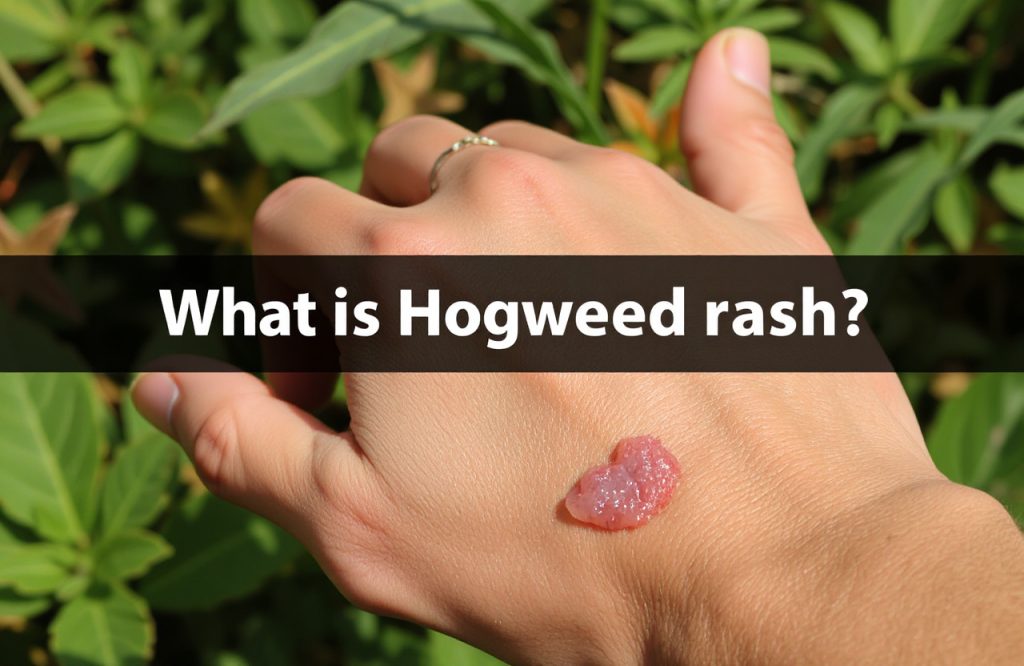
This plant can cause severe skin reactions, known as hogweed rash or phytophotodermatitis, which may lead to painful burns and permanent scarring. The sap of hogweed contains toxic chemicals that can result in skin lesions and even blindness if it comes into contact with the eyes.
Immediate Response to Hogweed Exposure
If you come into contact with hogweed sap, it is crucial to rinse the affected skin with water immediately and shield it from sunlight. Treatments for hogweed-related burns may involve steroids or, in severe cases, skin grafts.
Identifying Hogweed Rash
Symptoms of Hogweed Rash
Hogweed rash typically starts as skin irritation and can escalate to a painful blistering condition. The sap’s toxicity, when combined with sunlight exposure, can lead to purple or black scars on the skin.
Preventing Hogweed Burns
To reduce the risk of hogweed burns, avoid direct contact with the plant’s sap. Public awareness of hogweed’s dangers is increasing, which is expected to improve first-aid responses. After any contact, wash the skin with mild soap and water, and cover the area to protect it from UV rays.
Treatment for Hogweed Burns
Effective Treatment Options
Treatment for hogweed burns resembles that for chemical burns. Healthcare professionals often prescribe oral or topical steroids to alleviate inflammation. In more severe cases, intravenous steroids may be required for effectiveness, and skin grafts may be necessary for third-degree burns.
Seeking Medical Attention
It is essential to act swiftly after exposure to hogweed sap by rinsing the skin thoroughly and avoiding sunlight for at least 48 hours. If you experience a hogweed rash, seek medical attention promptly.
References
O’Neill, C. (2007). Giant Hogweed (Heracleum mantegazzianum)-Poisonous Invader of the Northeast NYSG Invasive Species Factsheet Series: 07-1. Sea Grant New York, 1–8.
Health Hazards & Safety Instructions for Giant Hogweed (with graphic photos) – NYS Dept. of Environmental Conservation. (n.d.). Retrieved July 26, 2021, from https://www.dec.ny.gov/animals/72556.html
Baker, B. G., Bedford, J., & Kanitkar, S. (2017). Keeping pace with the media; Giant Hogweed burns — A case series and comprehensive review. Burns, 43(5), 933–938. https://doi.org/10.1016/J.BURNS.2016.10.018
Probert, S. M., Lacey, J., & Gautam, S. (2013). Giant Hogweed burns. Archives of Disease in Childhood, 98(7), 544. https://doi.org/10.1136/ARCHDISCHILD-2012-303229
Giant Hogweed Heracleum mantegazzianum. (n.d.). Invasive and Exotic Species – Boston. Retrieved July 27, 2021, from http://www.bio.brandeis.edu/fieldbio/Verrill_Wolf/pages/Giant_Hogweed.html
Pfurtscheller, K., & Trop, M. (2014). Phototoxic plant burns: Report of a case and review of topical wound treatment in children. Pediatric Dermatology, 31(6), e156–e159. https://doi.org/10.1111/PDE.12396
Chan, J. C. Y., Sullivan, P. J., O’Sullivan, M. J., & Eadie, P. A. (2011). Full thickness burn caused by exposure to giant hogweed: Delayed presentation, histological features and surgical management. Journal of Plastic, Reconstructive and Aesthetic Surgery, 64(1), 128–130. https://doi.org/10.1016/J.BJPS.2010.03.030