Understanding Hospital-Acquired Infections
Prevalence and Importance of Knowledge
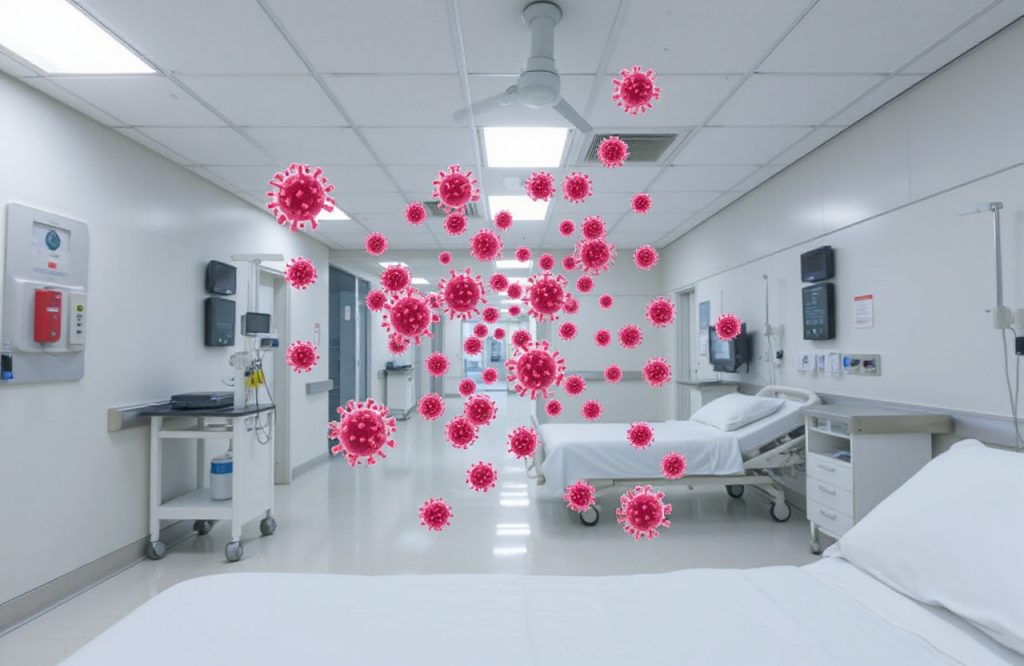
Hospital-acquired infections (HAIs) are increasingly common today. Gaining insight into their origins and modes of transmission is essential for preventing infections. A recent study examined the bacteria present on hospital surfaces, patients, and staff in a newly constructed hospital over the course of one year.
The Role of the Immune System
An individual’s immune system serves as a defense against foreign bodies and organisms. For optimal immune function, exposure to a diverse range of microorganisms is crucial. However, in developed countries, people tend to spend most of their time indoors. This limited exposure can lead to underdeveloped immune systems. Consequently, the restricted microbial environment has contributed to a rise in immunological disorders such as allergies, asthma, and various immune-related connective tissue diseases.
Research Overview
Researchers Simon Lax and colleagues investigated the origins and proliferation of bacteria on hospital surfaces, patients, and staff. While previous studies have focused on intensive care units and neonatal departments, this research aimed to assess the entire hospital ecosystem. The study was conducted at the newly built Centre for Care and Diversity under the University of Chicago, which admits patients for a wide range of medical and surgical conditions.
Study Methodology
The researchers collected samples from various locations within the hospital, starting two months prior to its opening and continuing for a year after it began admitting patients. In total, they gathered 6,523 samples from multiple areas throughout the facility.
Findings on Bacterial Presence
After the hospital opened, the surfaces in the lobbies and nurses’ stations exhibited a higher bacterial count than nearby surfaces, such as floors and walls. Notably, the bacteria predominant at the nurses’ station were similar to those found on human skin. Interestingly, the bacterial count at the nurses’ station decreased before opening, while new bacterial strains emerged and diversified. The diversity of bacterial samples from the lobby floor was also notable.
Operating Room Observations
Operating rooms (ORs) presented a low abundance of highly diverse bacteria, attributed to the controlled foot traffic in and out of these areas. The researchers noted that the bacterial diversity and quantity were consistent across different surfaces within the OR.
Bacterial Diversity in Patient Rooms
Within patient rooms, the study explored the correlation between bacterial diversity on various surfaces and patients. The aim was to identify potential pathways for the transmission of hospital-acquired infections. The findings revealed that the bacteria in patient rooms closely resembled those on the patient’s skin within a day of admission, with the highest bacterial counts located on bed rails. Furthermore, reduced patient mobility correlated with lower bacterial similarities between patients and bed rails.
Impact of Treatment on Bacterial Composition
The diversity of bacteria varied among patients based on their treatment regimens. Pre-admission antibiotics and chemotherapy were found to affect the bacterial composition of the patients. Notably, patients admitted through the emergency room had a lower bacterial composition compared to those who were scheduled for physician appointments.
Conclusion and Future Directions
The study’s results are crucial for understanding how bacteria distribute and spread within a hospital environment. Further research is necessary to identify the various pathways through which patients may contract hospital-acquired infections. These findings initiate an important dialogue aimed at raising awareness among healthcare professionals about bacterial distribution in hospital settings.
Author
Written By: Dr. Apollina Sharma, MBBS, GradDip EXMD.